Today we remember …
| 30th November 1917
W Hermon, College Staff. Lance-Corporal, 5th Bn, Royal Berkshire Regiment. Killed in action in the Battle of Cambrai. The story of Radley’s ‘Servants Memorial‘ can be read as No. 15 in 100 Radley Objects. |
Today we remember …
| 30th November 1917
W Hermon, College Staff. Lance-Corporal, 5th Bn, Royal Berkshire Regiment. Killed in action in the Battle of Cambrai. The story of Radley’s ‘Servants Memorial‘ can be read as No. 15 in 100 Radley Objects. |
Today we remember …
| 10th November 1917
Gilbert Vawdrey, C Social 1911. 2nd Lt, 2nd Bn, Welsh Regiment. Killed in action, Passchendaele He was a Prefect and a member of Radley’s first Rugby XV. In 1916, he went to Sandhurst. He obtained his commission in the Welsh Regiment in August of the same year, and went to the front in September, 1916, where he has been ever since. A senior officer writes : – “At the time he was killed he was carrying a most important message, and was on his way to headquarters. During the whole day he had been doing most gallant and useful work.“ Aged 20 AND John Boswell, E Social 1904. Gunner, E Company, Tank Corps. Killed in action near Gaza, Palestine He served as a career officer with the Royal Bucks Hussars Yeomanry from 1909-1911. In 1911 he went to Ceylon (modern Sri Lanka) as a planter. He re-joined his regiment in 1915. He suffered from a stammer which may have caused him to resign his commission. He applied to join the newly formed Tank Corps, and served with E Corps under Allenby in Palestine. He married Alfreda Hurley in 1916. Aged 28 |
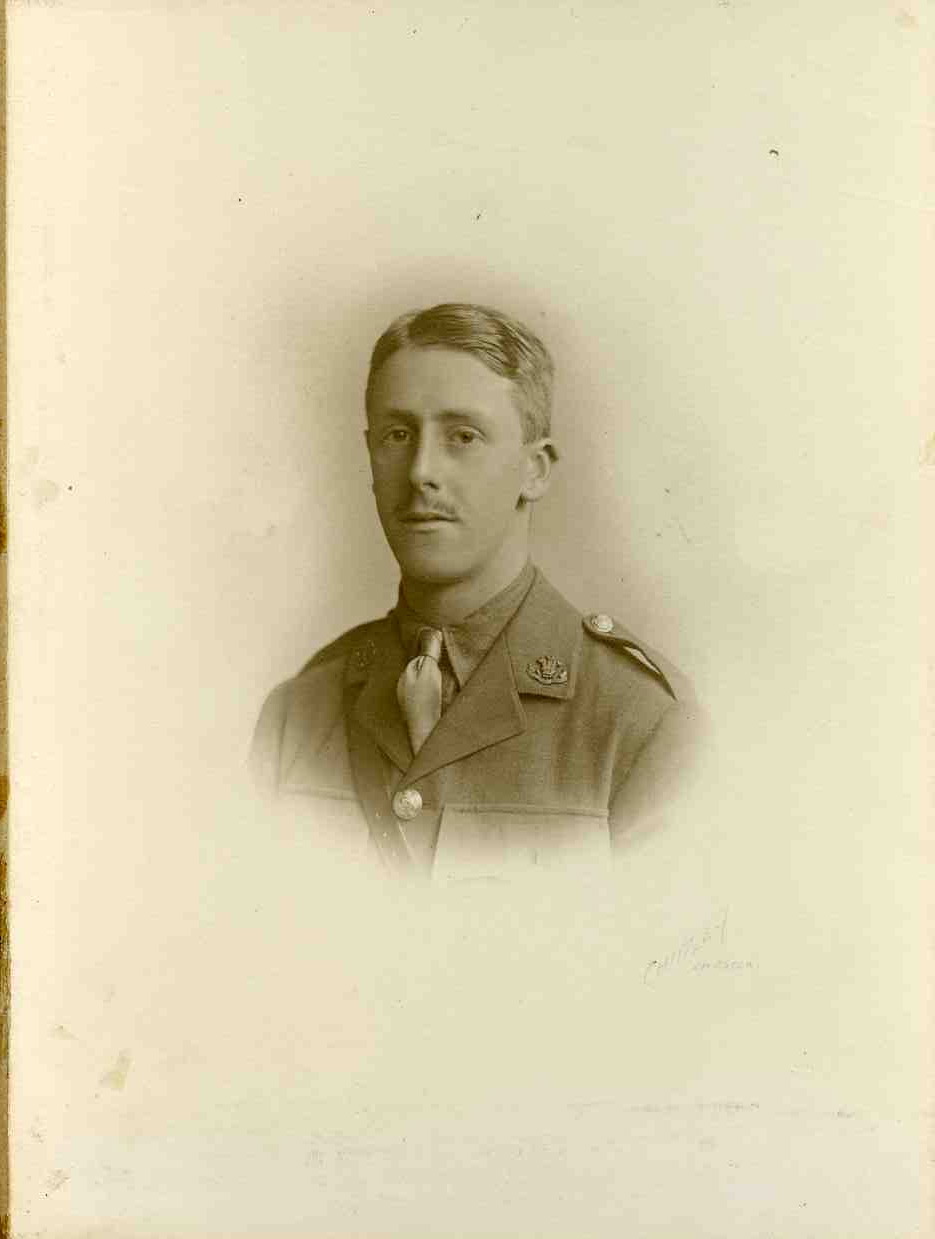 2nd Lt Gilbert Vawdrey, Welsh Regt. kia Passchendaele 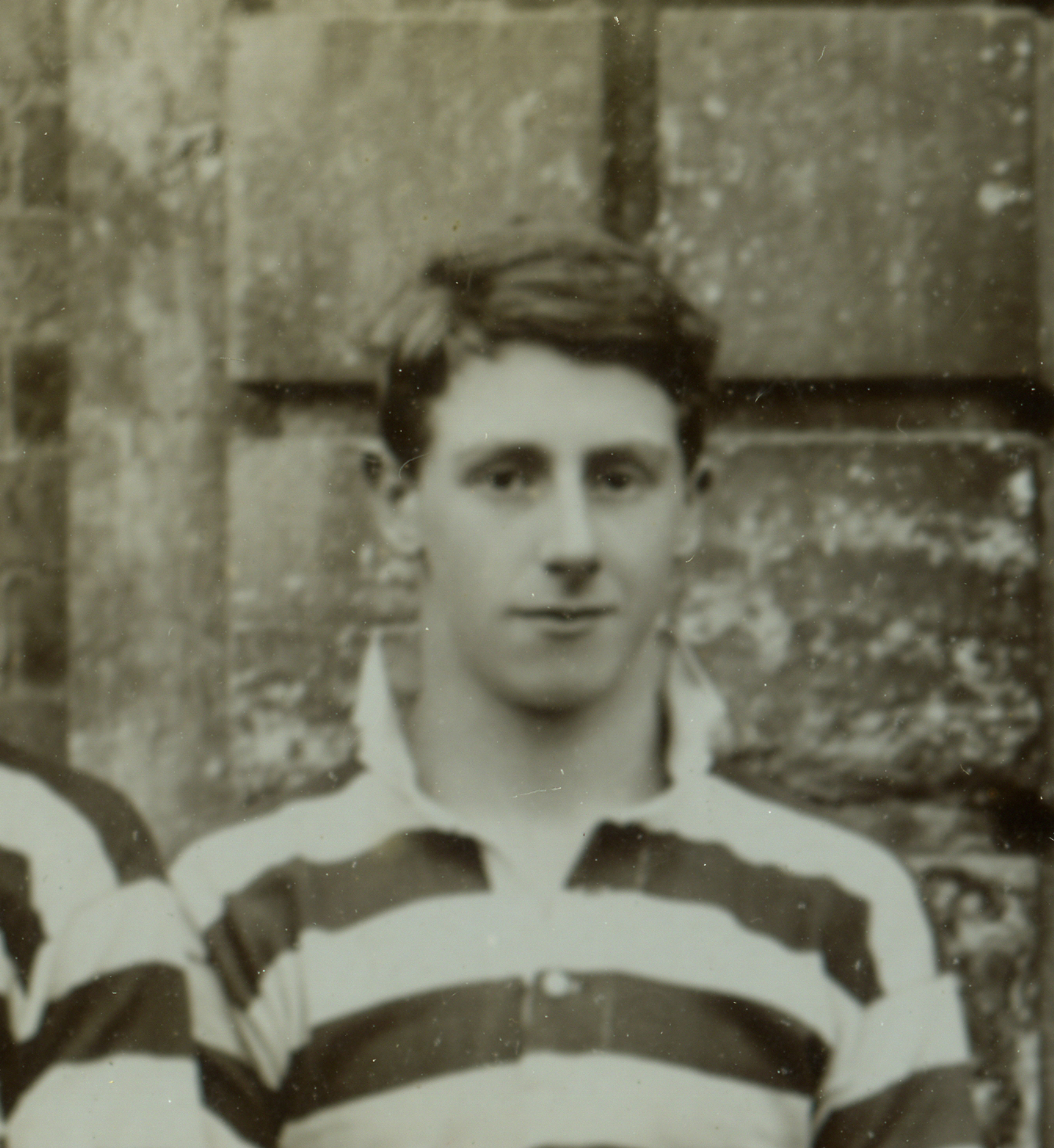 Gilbert Vawdrey, member of Radley’s earliest Rugby XV, 1914 |
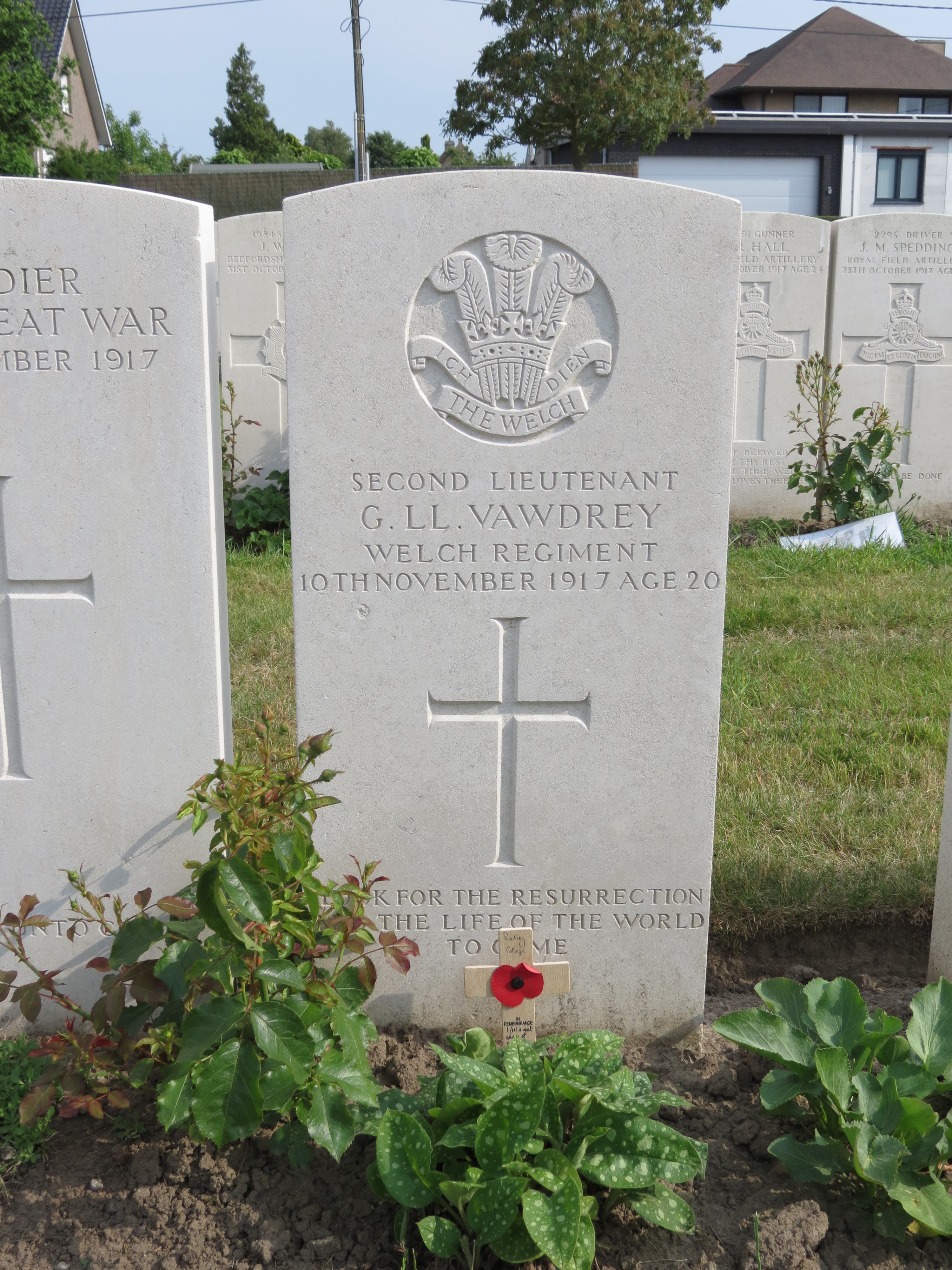
The grave of Gilbert Vawdrey ar Duhallow. Photographed for Marching in Memory, July 2015
Today we remember …
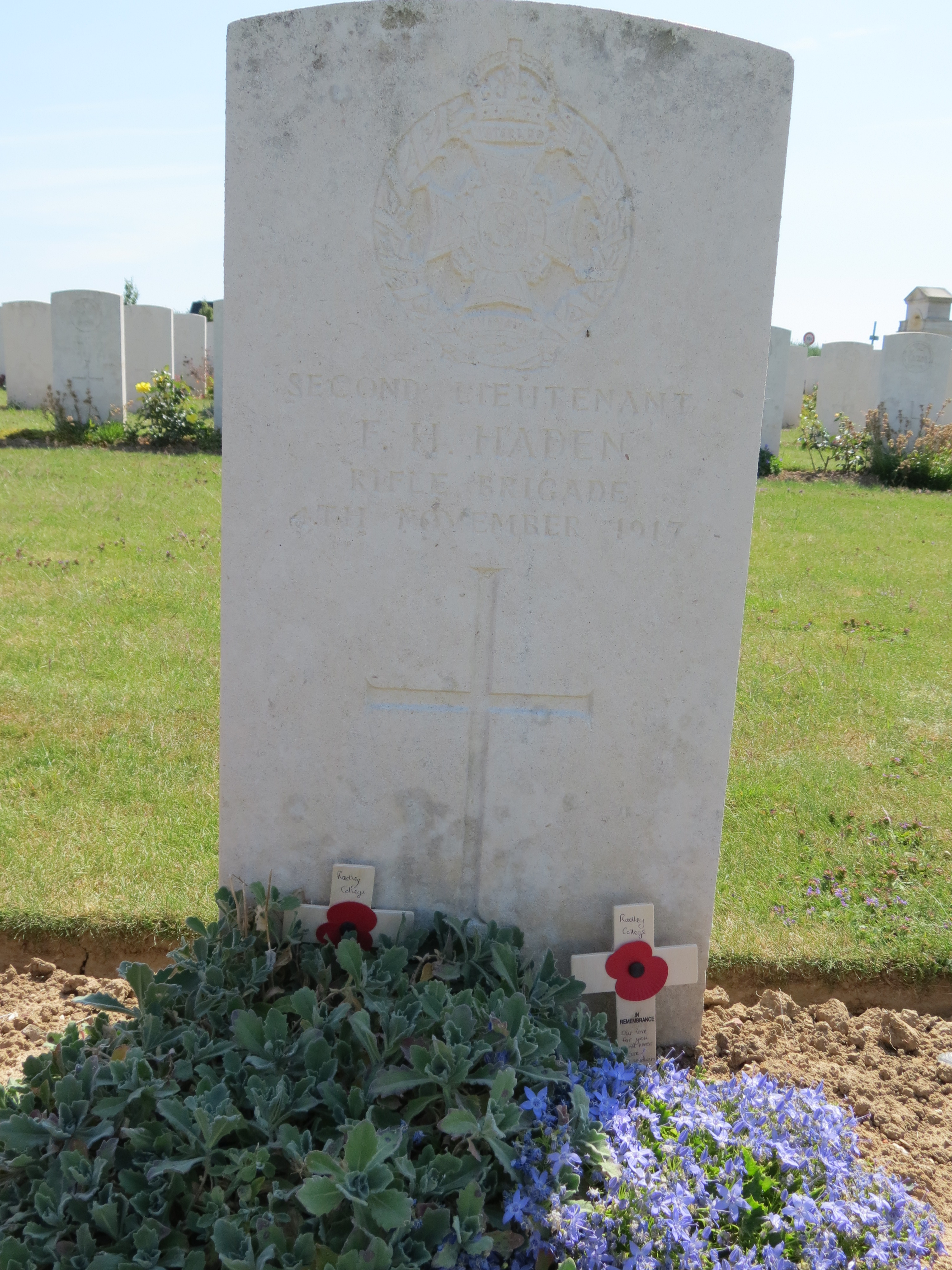
The grave of Frederick Haden at Monchy-le-Preux. Photographed for Marching in Memory, July 2015
| Battle of Passchendaele / 3rd Battle of Ypres
4th November 1917 Frederick Haden, H Social 1913. 2nd Lt, 11th Trench Mortar Battery. Killed in action, Passchendaele Last year he passed the entrance examination at Trinity College, Cambridge, and the “Little Go,” but had not gone into residence. He went to the front on June 8, and after a short time with his battalion was attached to the T.M. Battery. His Captain expresses “the deepest sympathy and sorrow felt by the officers N.C.O.’s, and men of the battery, with whom he was a great favourite, and also the share in your loss, in that we have lost a most capable and efficient officer.” The C.F. writes: “I had known him since his earliest days in this division, and known him for a quiet, charming boy a faithful Churchman, and quite fearless. Humanly speaking, we can ill-afford boys like that; they carry in them the promise of a tremendous manhood.” Aged 19 AND |
 2nd Lt Frederick Haden. kia Passchendaele |
|
George Wilson, MC, F Social 1903. Major, 282nd Bde, Royal Field Artillery. Died of gas poisoning, Passchendaele After school, he joined the London Stock Exchange. He married in 1912. He joined up as a Territorial in August 1914, eventually going out to the Western Front in October 1915. He was mentioned in despatches and promoted to the rank of acting Major. He was one of four brothers. His eldest brother (who also won the Military Cross) was killed in action in May 1916; his youngest brother died of wounds in November 1916. His only surviving brother was serving at the Front with the Royal Field Artillery when George died of gas poisoning. Aged 27 |
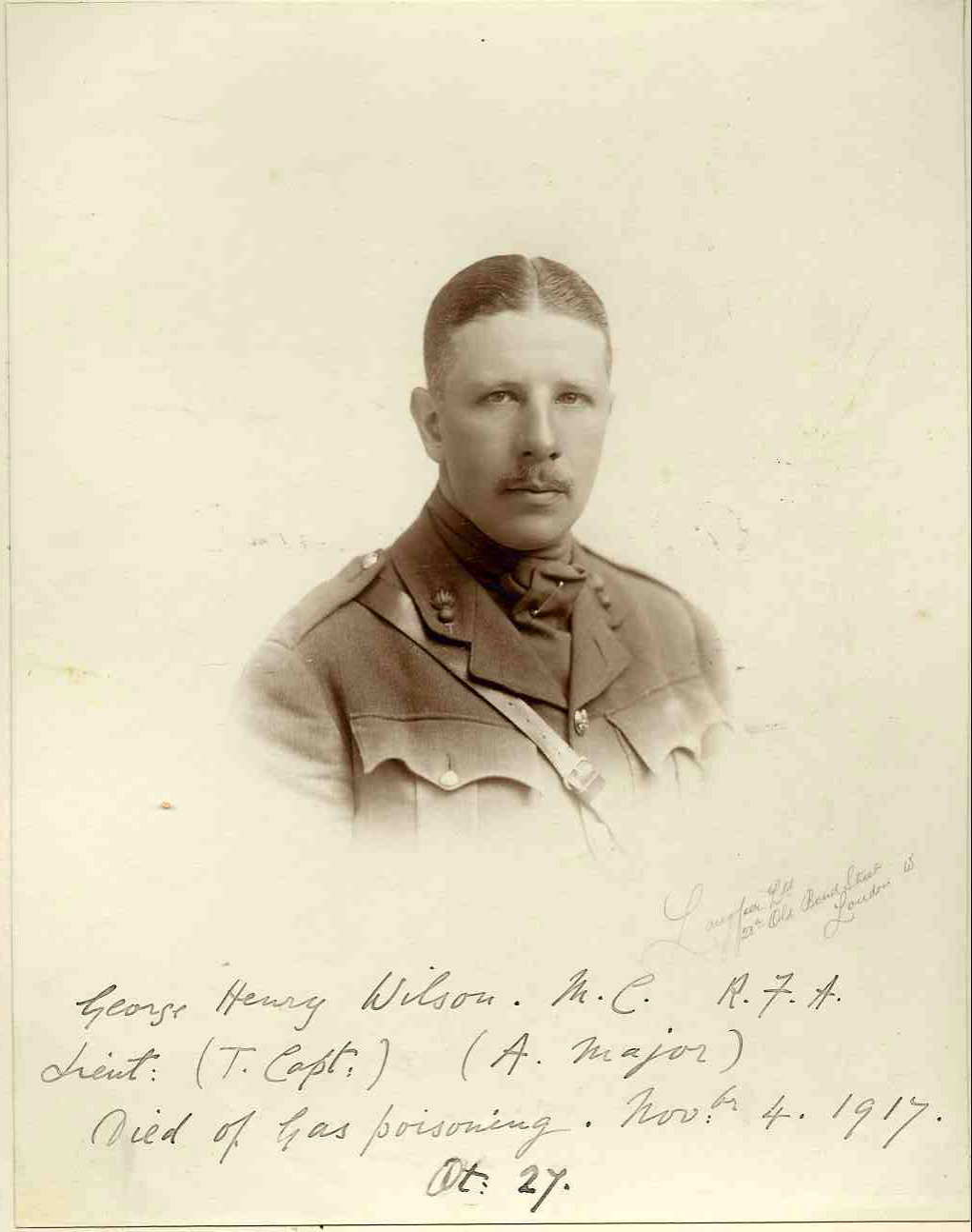 Major George Wilson, Royal Field Artillery. Died of gas poisoning, Passchendaele |
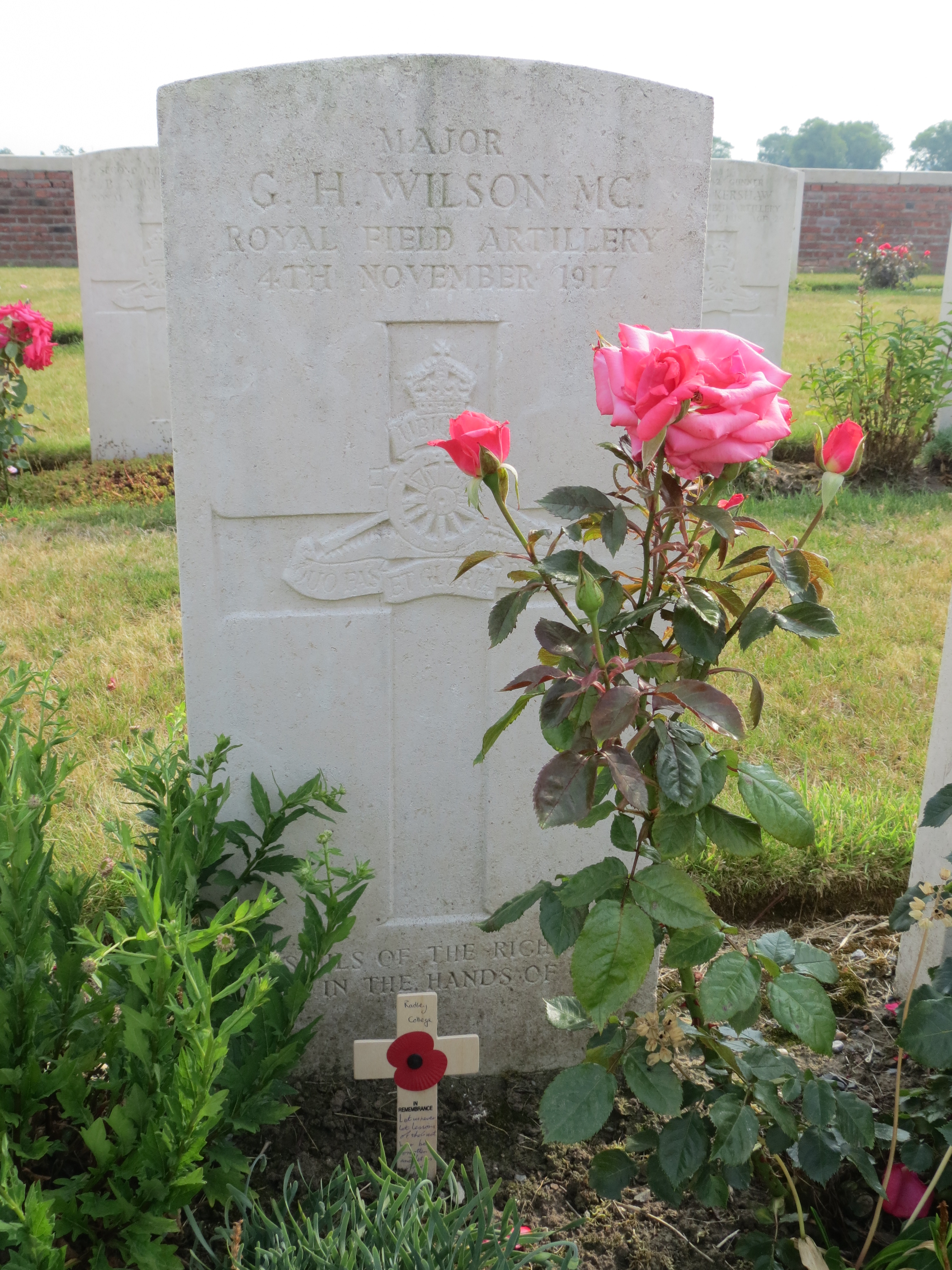
George Wilson’s grave at Gwalia. Photographed for Marching in Memory, July 2015
Today we remember …
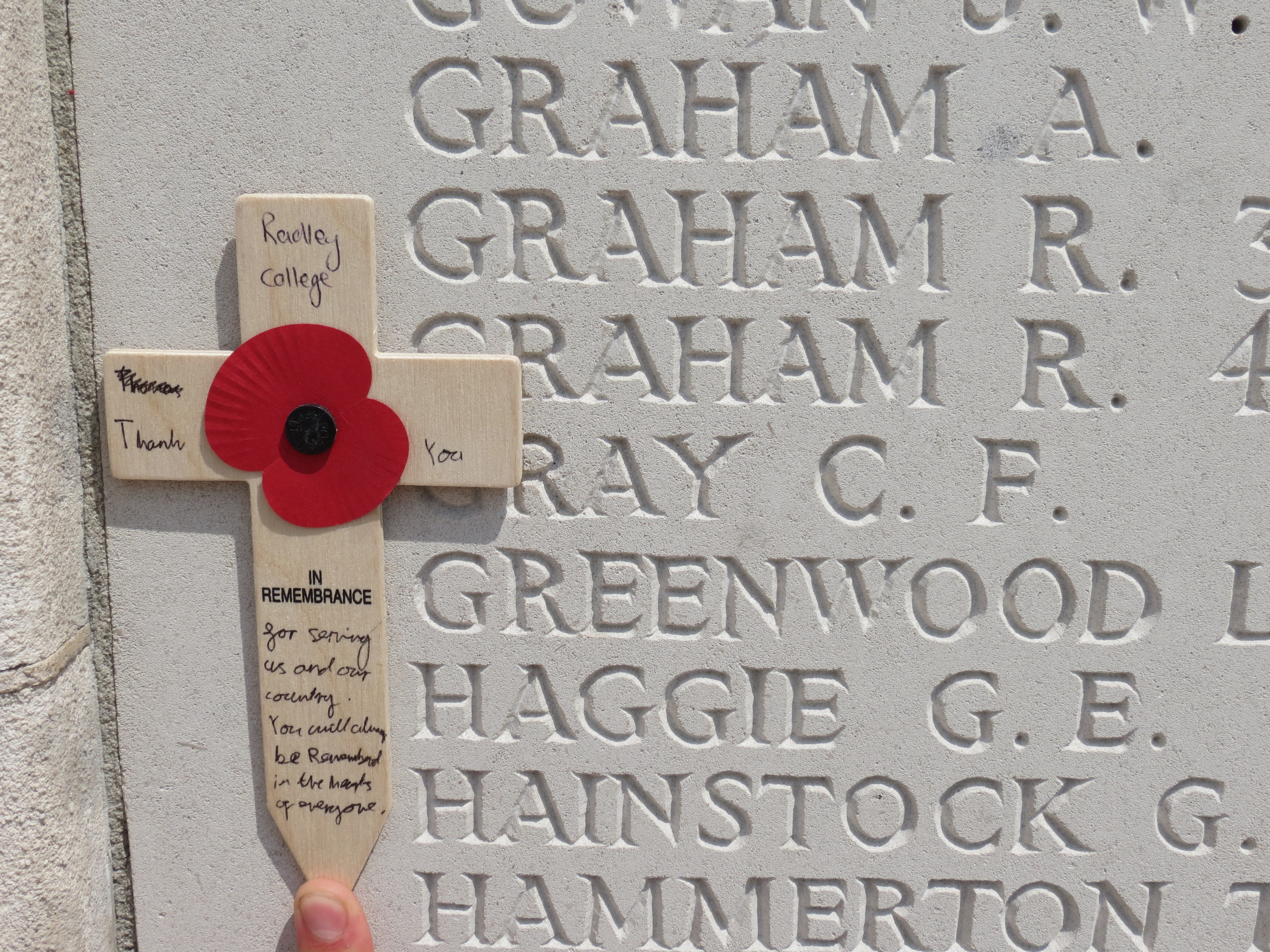
George Haggie’s name on the Tyne Cot Memorial. Photographed for Marching in Memory, July 2015
| Battle of Passchendaele / 3rd Battle of Ypres
2nd October 1917 George Haggie, A Social 1904. Private, 9th Bn, Yorkshire Regiment. Killed in action , 3rd Battle of Ypres After school, he went to Magdalen College, Oxford. He trained with the Durham Light Infantry before transferring to the Yorkshires. Aged 27 |
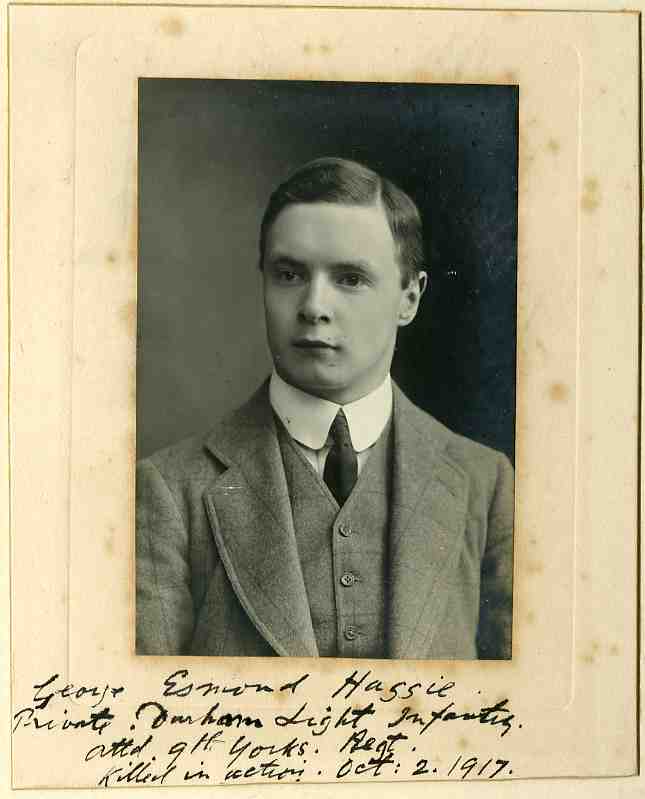 Private George Haggie, Yorkshire Regiment. kia Passchendaele |
Today we remember …
| Battle of Passchendaele / 3rd Battle of Ypres
Alick Blyth James Wilson Maurice Mowbray |
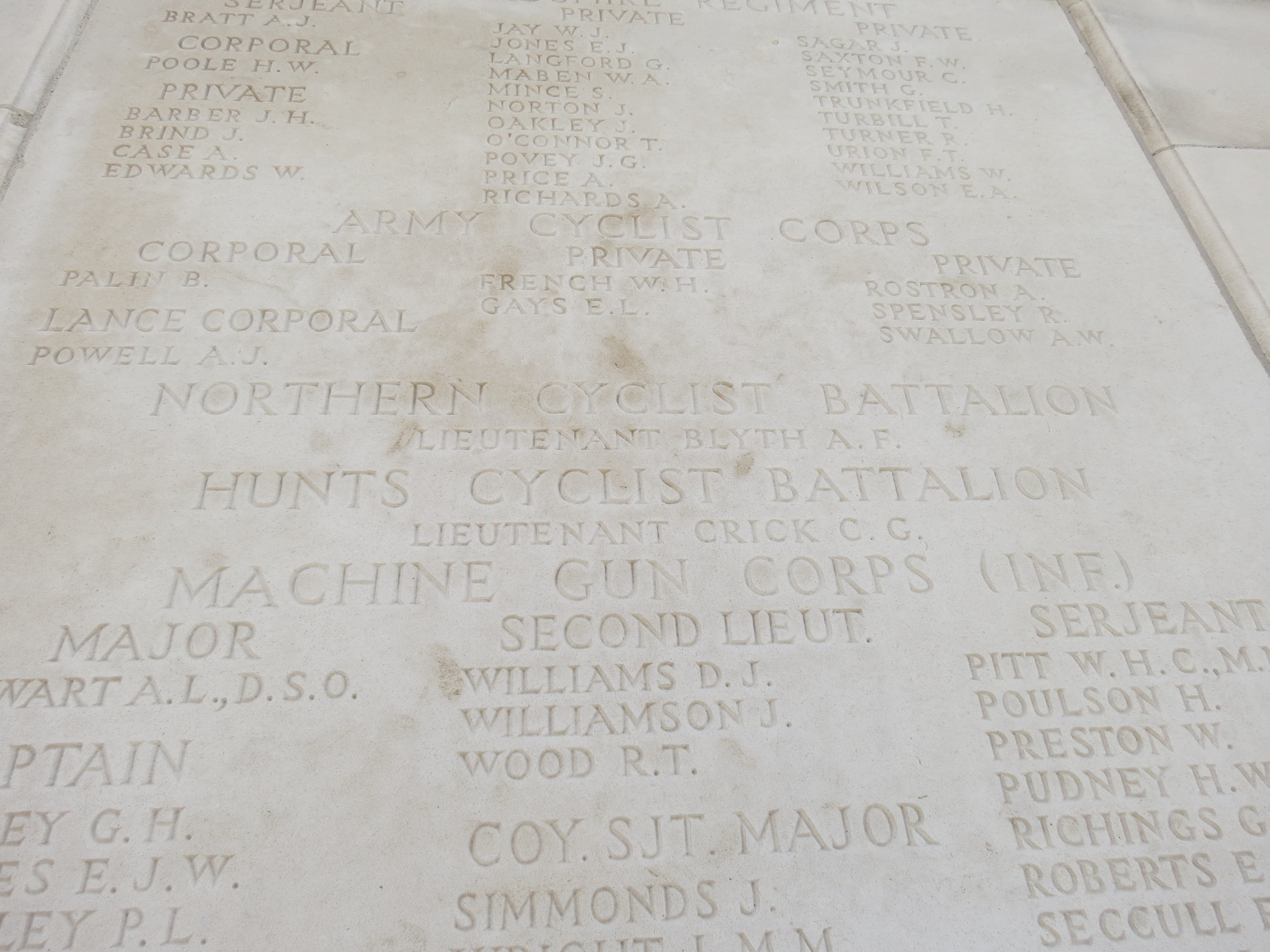 Alick Blyth’s name on the Tyne Cot Memorial. Photographed for Marching in Memory, July 2015 |
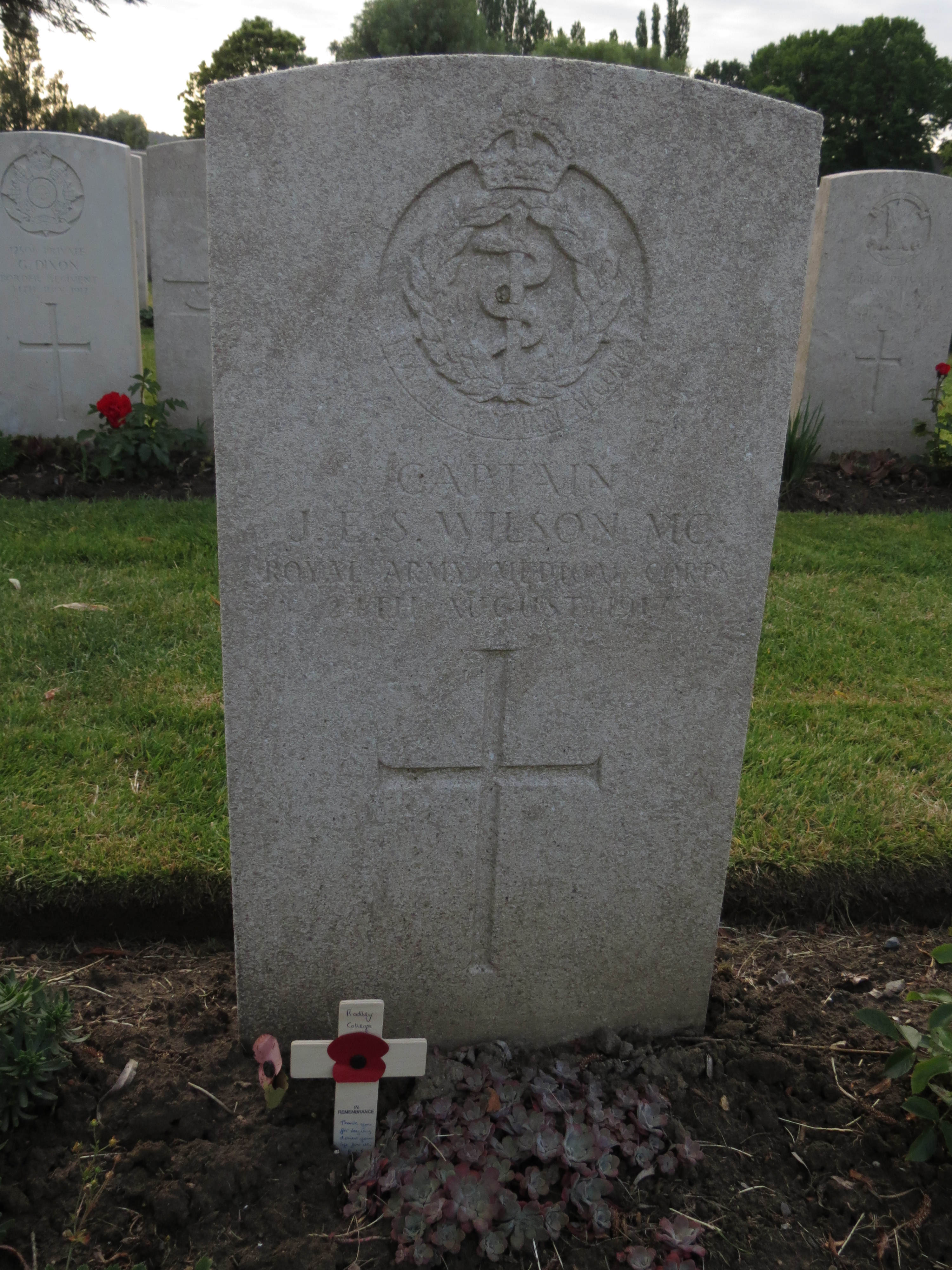 The grave of James Wilson at Lijssenthoek. Photographed for Marching in Memory, July 2015 |
 The grave of Maurice Mowbrary at The Huts. Photographed for Marching in Memory, July 2015 |
| Alick Blyth, H Social 1910. Senior Prefect, Captain of Cricket and Radley’s first Captain of Rugby
He was killed in action on the Ypres front on Aug. 23rd, 1917, aged 20. His Company Commander writes: – ” Our battalion was in support, but he was detailed for a special job in the line. There was a strong point called Pond Farm giving a lot of trouble. We had taken it once, but had lost it and were going for it again. Both the D Company officers had been killed, and the remnants of the Company were going over with the attacking party without an officer. Blyth at once went to the Colonel in charge of the attack and insisted on taking this Company over, which he did. The place was captured, but he was sniped through the head. This place was held by Prussians, and had before resisted seven attacks.” Those who knew him are not surprised to hear that he died so gallantly, and that “his Platoon was easily the best in the battalion.” The same officer adds that “he was nearly always ill, but would never go sick, but kept hanging on.” Blyth had a career full of promise at Radley. Like Geoffrey Adams, whom he succeeded as Senior Prefect for one term, he combined a variety of gifts. He won the Gibbs. Heathcote, and James Scholarships in successive years, 1913-1915. and the Worsley Prize in 1915. In this year he also won a Classical Scholarship at Corpus Christi College, Cambridge. He was in the Cricket Xl in 1915. and played a fine innings against Sherborne; and in the XV in 1914 and 1915. captaining it in the latter year. He was also a keen lover of literature and of nature, especially of birds, moths and butterflies. With these gifts and tastes he combined a character of unassuming gentleness, thoughtfulness, and charm, which gained him a multitude of friends. His mother gave all the flowers for Chapel for the first Armistice Day service. Aged 20
AND |
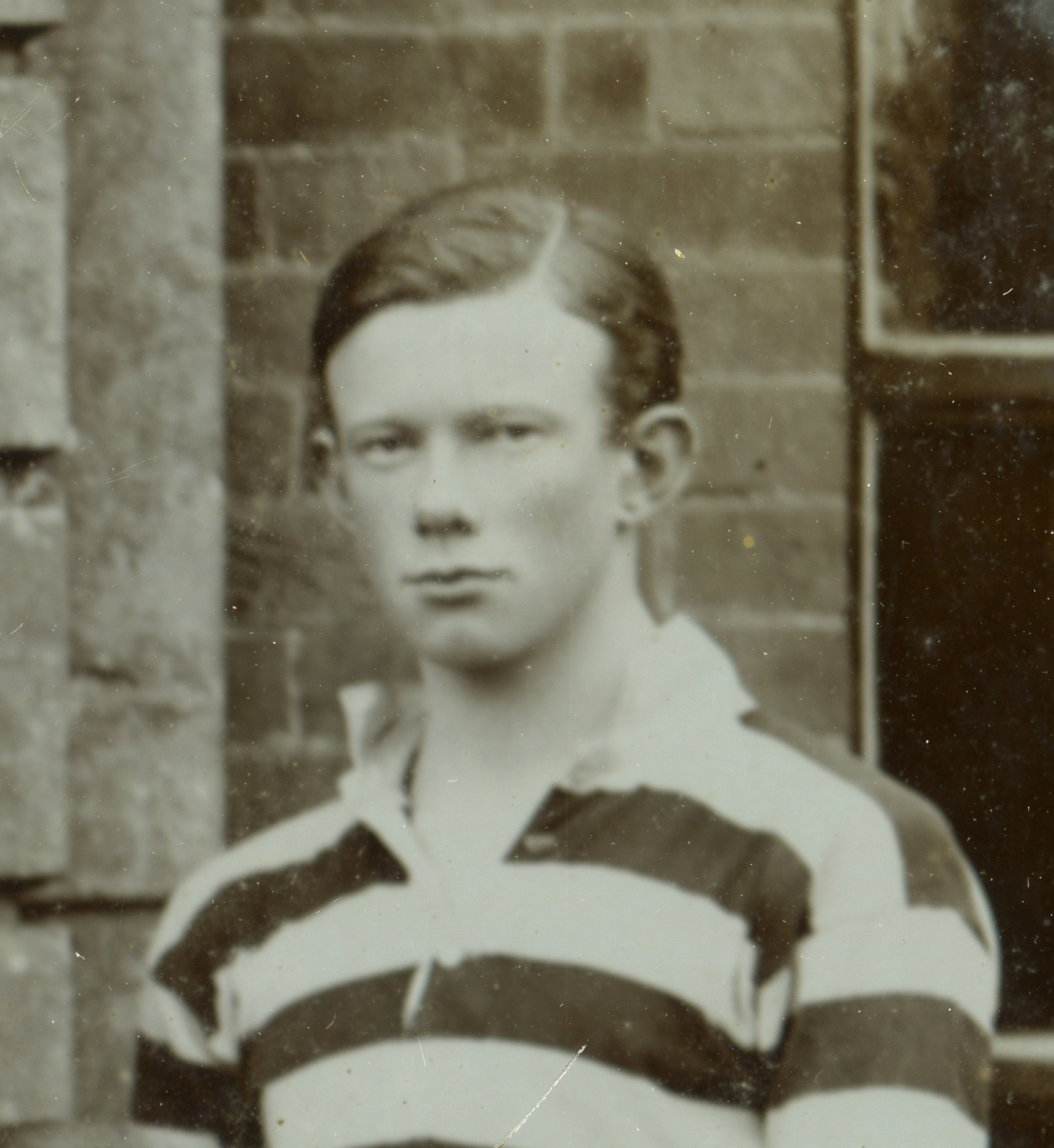 Alick Blyth. Radley College Rugby XV, 1914 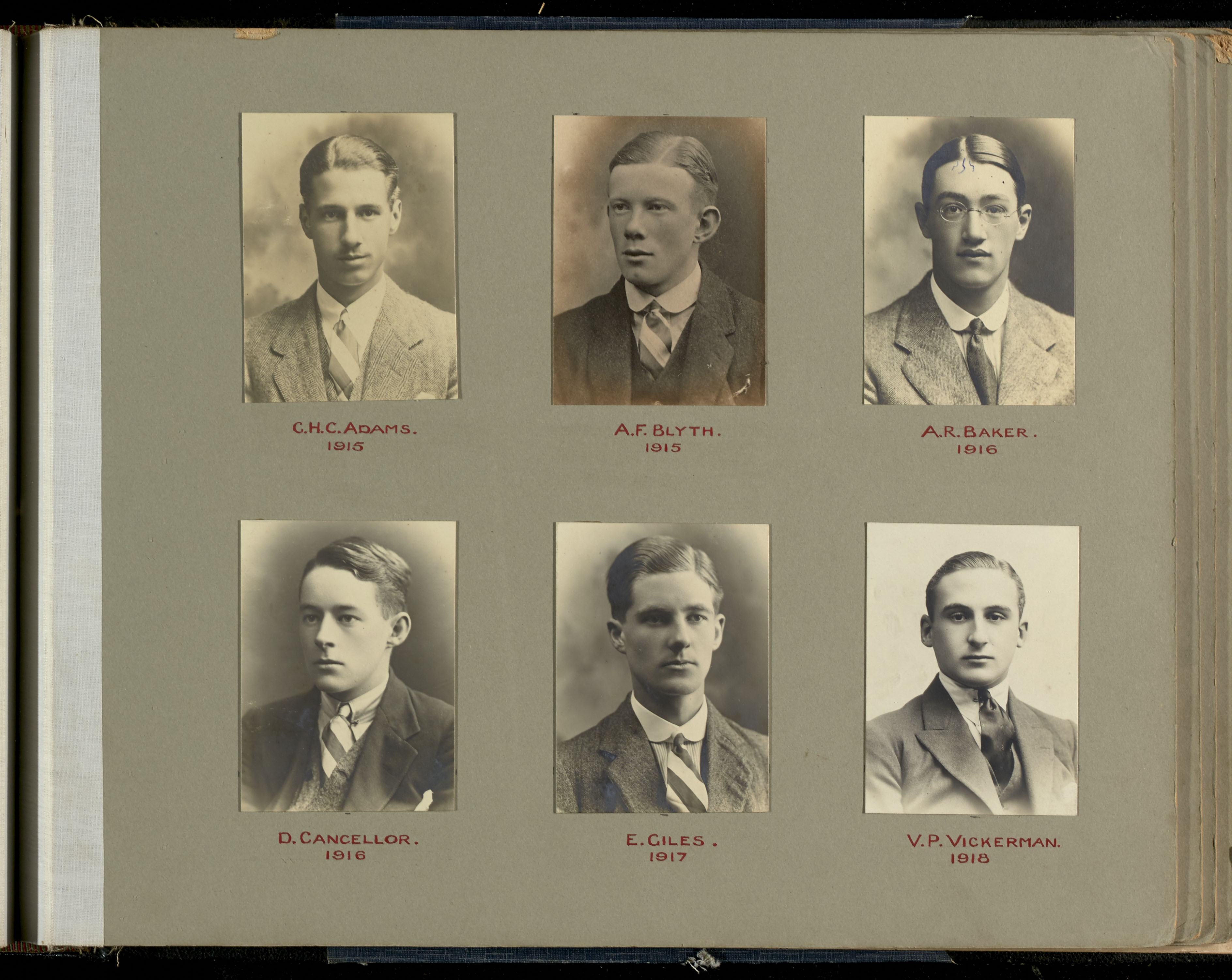 Radley College Senior Prefects, 1915-1918: Adams, Blyth and Cancellor all died in WW1 |
| James Studholme Wilson, MC, E Social 1900. Captain, Ox & Bucks LI, Royal Army Medical Corps
He qualified as a surgeon at the London Hospital. He married in 1912 and had one son who was awarded one of the War Memorial Scholarships to come to Radley. The family still maintain their connection with the school. How much we shall all miss him you can perhaps understand better than I can tell you. He was hit early in the evening, but insisted on going on with his work for six hours after he was wounded. Our admiration for his gallantry and devotion to duty knows no bounds. His name will be a lasting and inspiring memory to the officers and men of this battalion. Two of the stretcher-bearers from his aid post who were with him when he died revisited the site in 1930. They wrote a poem about the incident entitled ‘The Pilgrimage’. This was discovered by the descendants of one of them in the 2000s. An excerpt was published in the Old Radleian in 2008.
Aged 31 AND |
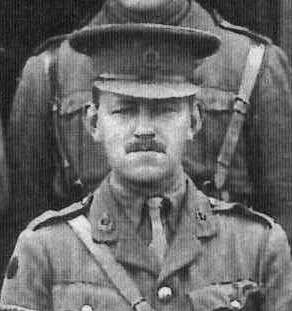 Caotain James Wilson, MC. Royal Army Medical Corps |
| Maurice Mowbray, MC, F Social 1910. Lt, 89th Field Company, Royal Engineers. Killed in action
2016 Citation for the Military Cross. 2nd Lieut. M. C. Mowbray, R.E. For conspicuous gallantry and determination, notably when consolidating a crater. His work was destroyed four times during the night by shell and trench mortar fire. He kept his party together, and displayed an utter disregard of personal safety. After school, he trained with the Royal Engineers at Woolwich, intending a military career: He was absolutely fearless and very capable, and his men would follow him anywhere; if only he had been spared he would have done well in the service. Aged 21 |
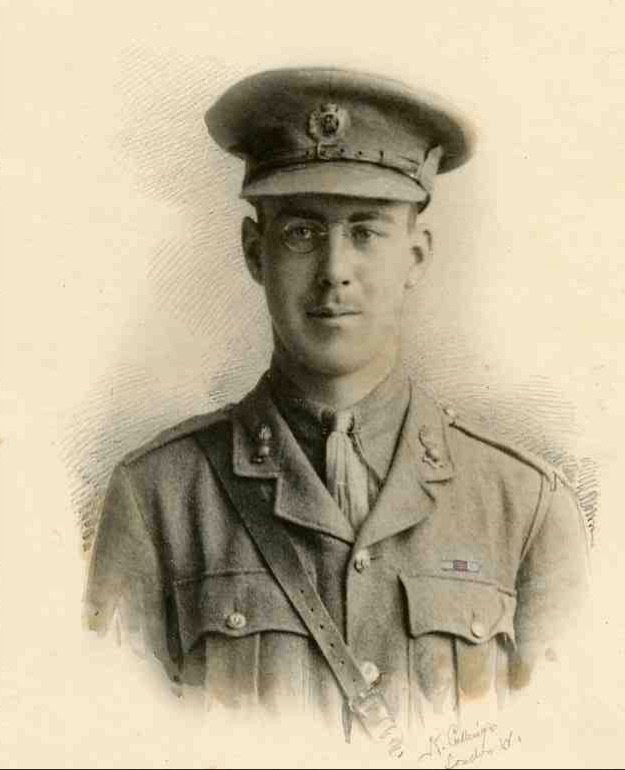 Lt Maurice Mowbray, MC. Killed at Passchendaele |
Today we remember …
9th August 1917 Moseley Woodhouse, C Social 1913. Flight Sub-Lt, 9th Squadron, Royal Naval Air Service. Killed in action off the coast of Flanders He left Radley to join the R.N.A.S. in October, 1916, when just eighteen, and went to France in June last. He made a wonderful effort to land when in flames at 7,000 feet, and got within 100 feet of earth, when the machine broke up, and he was killed. He and his brother Lionel, who also fell in the Great War, are both listed on the War Memorial at Downe House, where his sister was at school. Aged 19 |
 Flt Sub-Lt Moseley Woodhouse, RNAS. Killed over the coast of Flanders |
Today we remember …
| Third Battle of Ypres – Passchendaele
31st July 1917. Walter Jessopp, H Social 1909. Lt, Machine Gun Corps. Killed in action, Passchendaele His company commander writes :-“He was a great favourite with all my officers and his men loved him. . . His courage and splendid character were brought to the notice of the General commanding the brigade, and he has been mentioned for his good work from time to time.” Listed on the Menin Gate. Aged 20 |
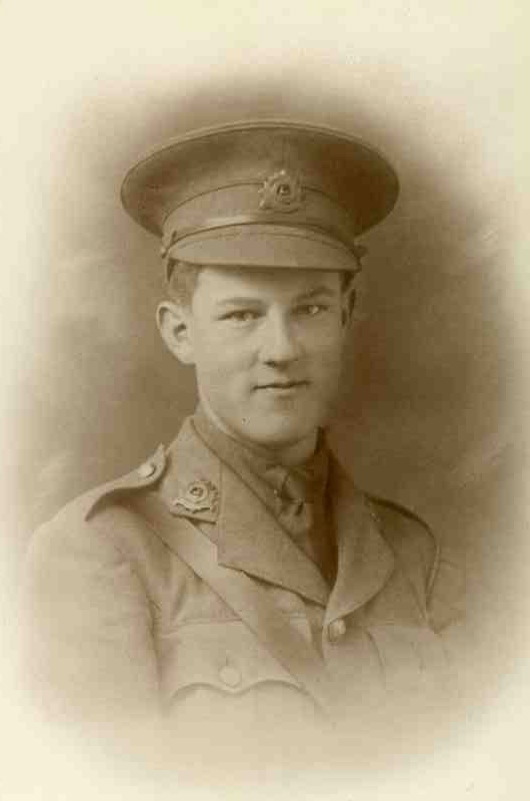 Lt Walter Jessopp, Machine Gun Corps. Killed at Passchendaele |
Today we remember …
| 28th July 1917
Arthur O’Beirne, G Social 1901. Lt, 57th Squadron, Royal Flying Corps. Killed in action in aerial fighting over Houthulst Forest, Flanders At school, he played for the Cricket XI. He then went to Exeter College, Oxford. He was in India from 1909-1914. He served with the East African Mounted Rifles, 1914-15, then with the Oxford Light Hussars in 1915, before joining the Royal Flying Corps. When war broke out he had just arrived in British East Africa, and immediately enlisted as a trooper in the East African Mounted Rifles. After nine months’ fighting he was invalided home, and was then offered a commission in the Oxfordshire Yeomany. In December, 1916, he joined the R.F.C., and after obtaining his pilot’s certificate was for some time in England. He went to the front last July, and died of wounds received in action on the 28th of that month. His only brother, Lieutenant John I. M. O’Beirne, Royal Warwickshire Regiment, attached R.F.C., was killed at the front last April. Aged 29 |
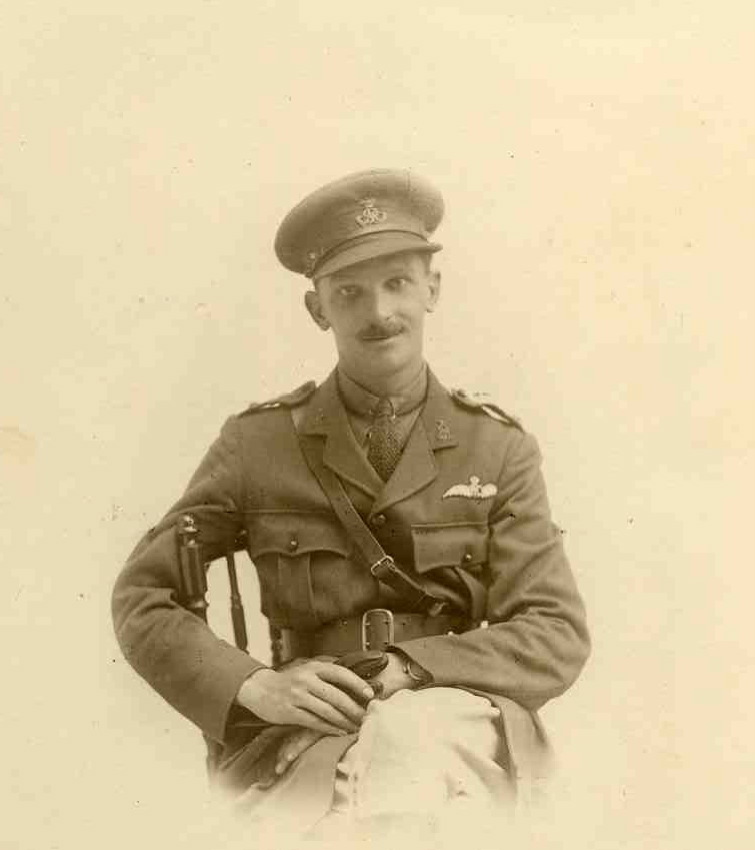 Lt Arthur O’Beirne, Royal Flying Corps. kia July 1917 |
Today we remember …
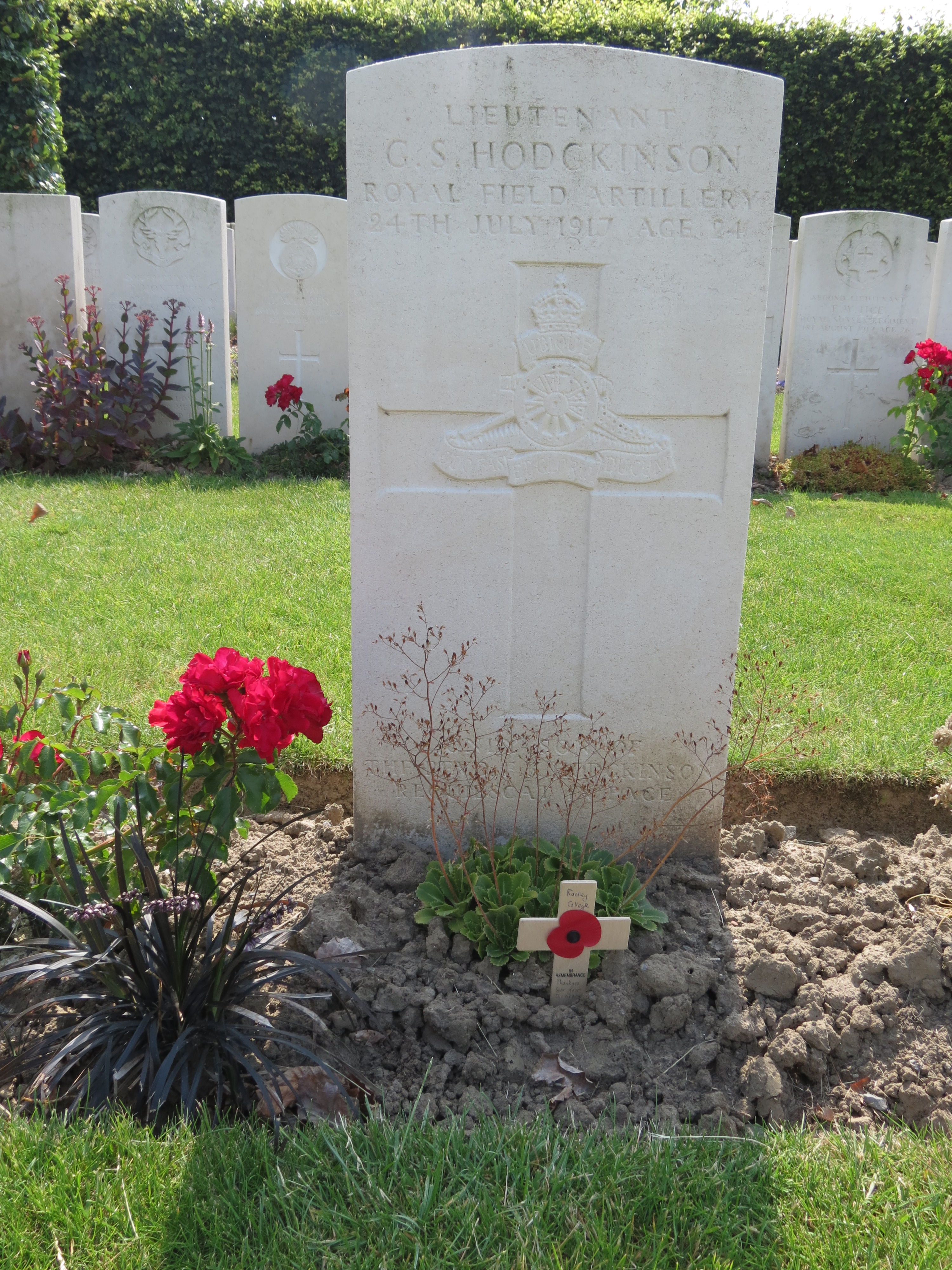
The grave of Geoffrey Hodgkinson at Brandhoek. Photographed for Marching in Memory, July 2015
| 24th July 1917
Geoffrey Hodgkinson, G Social 1907. Lt, Royal Field Artillery. Killed in action in an unknown engagement He was the only son of the Rev. F. K. Hodgkinson, Vicar of St. Peter’s, Forest-gate. He represented the school in the cricket and football elevens. On leaving school he entered the Imperial Tobacco Company, Messrs. Lambert and Butler’s branch. He was in an H.A.C. battery before the war began, and immediately on the outbreak he went on active service. serving abroad as a gunner from March to December, 1915. when he returned home, and received a commission in the R.F.A. in January, 1916. He went to France in the following March, and during part of the time he was there in command of his battery. Aged 24 |
 Lt Geoffrey Hodgkinson, Royal Field Artillery. kia 24th July 1917 |
Today we remember …
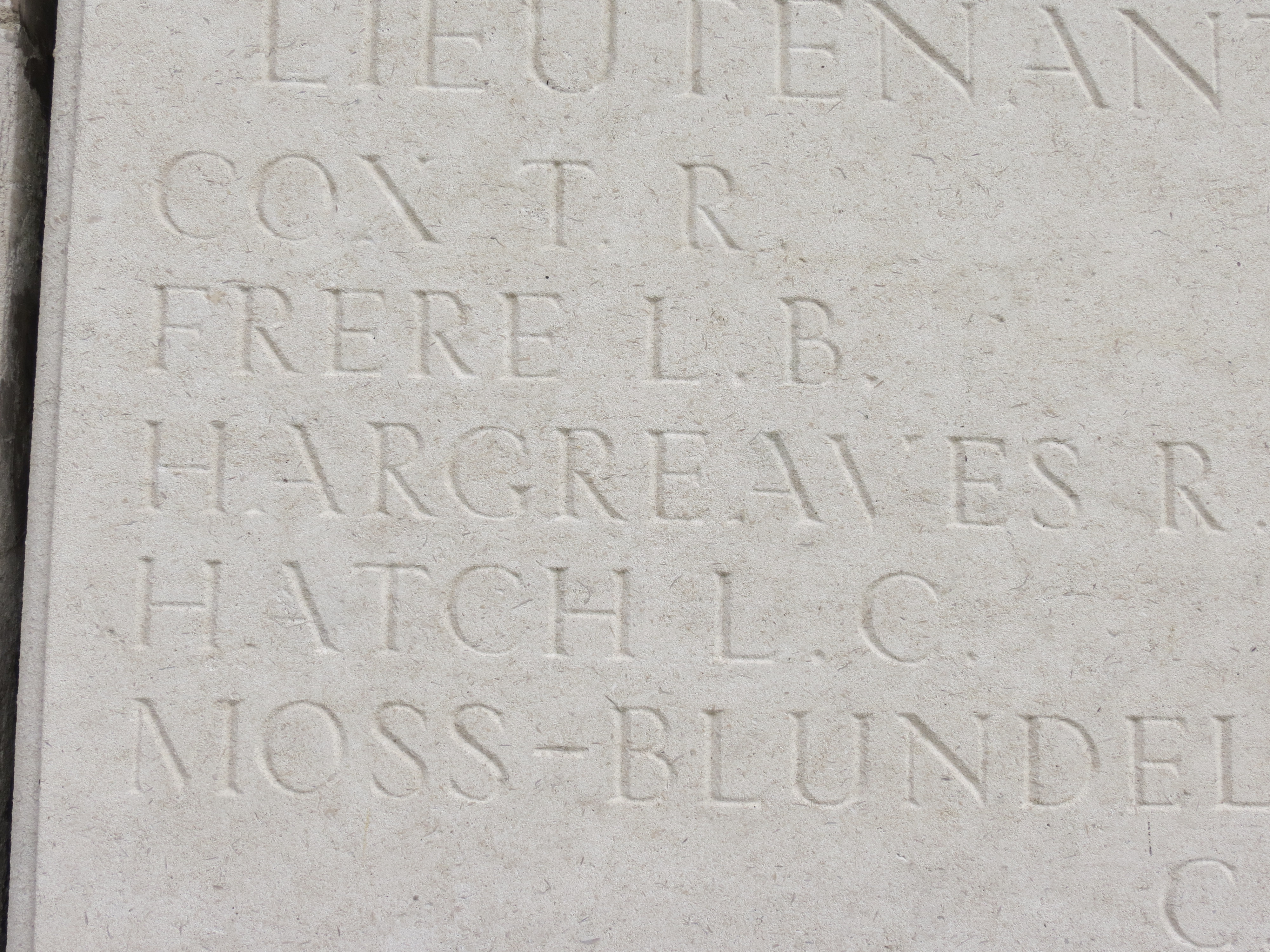
Reginald Hargreaves on the Loos Memorial. Photographed for Marching in Memory, July 2015
| 28th June 1917
Reginald Hargreaves, E Social 1910. Lt, 4th Bn, Durham Light Infantry. Killed in action in an unknown engagement on his 21st birthday He joined the Durham L.I. from the O.T.C. in August, 1914, and went to the front in May, 1915. He was severely wounded in October, 1915, and twice again in 1916.His colonel writes: ‘Your son was killed whilst leading his company in a raid on the enemy’s trenches. During the raid your son’s conduct was most gallant, and his personal bravery was splendid.’ Aged 21 |
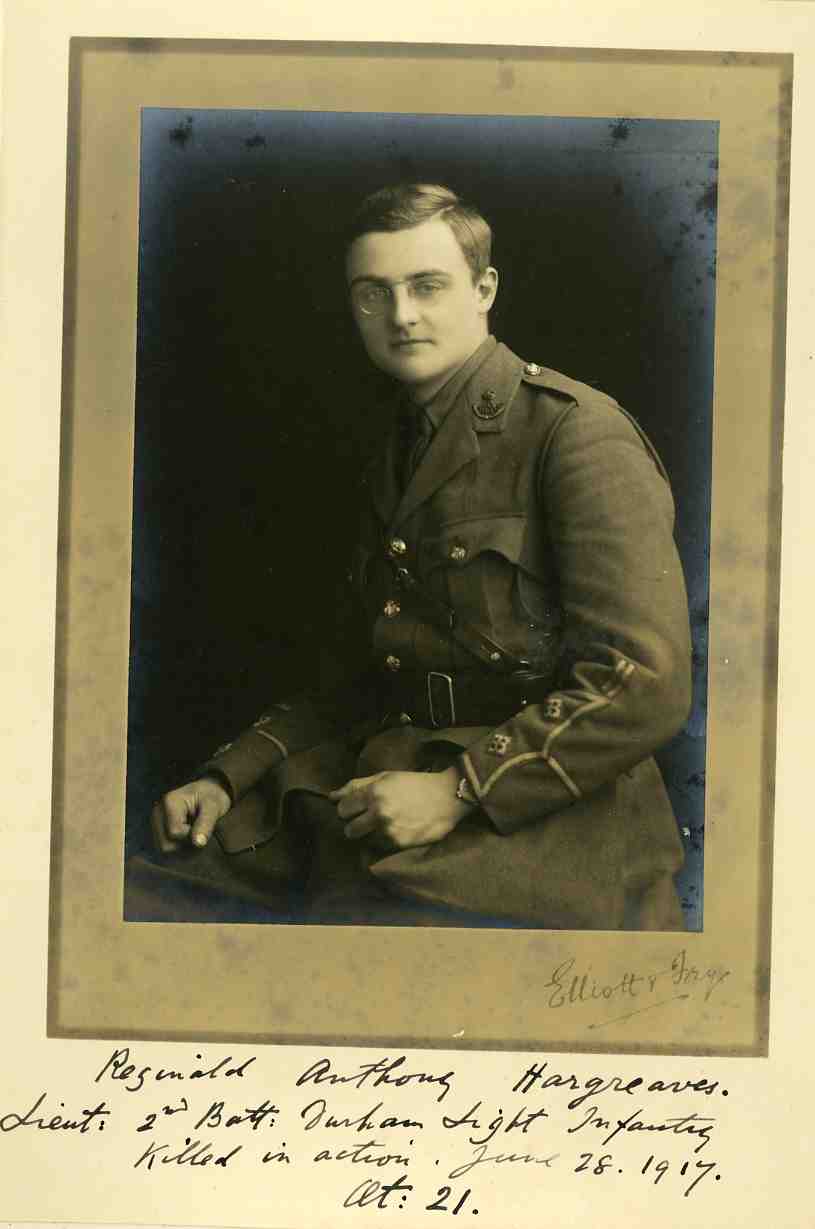 Lt Reginald Hargreaves, Durham LI. Killed on his 21st birthday |
 Radley College Archives