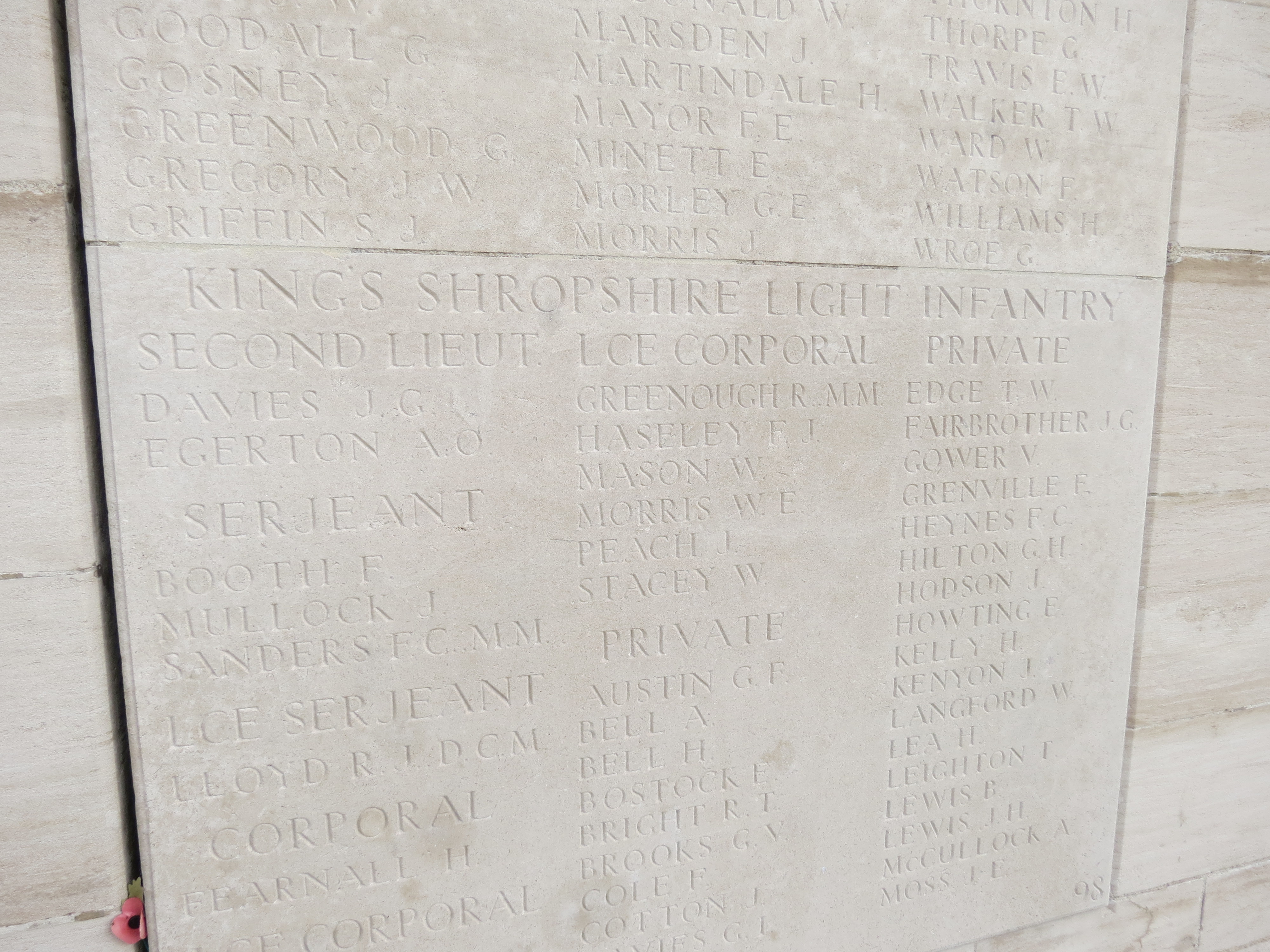
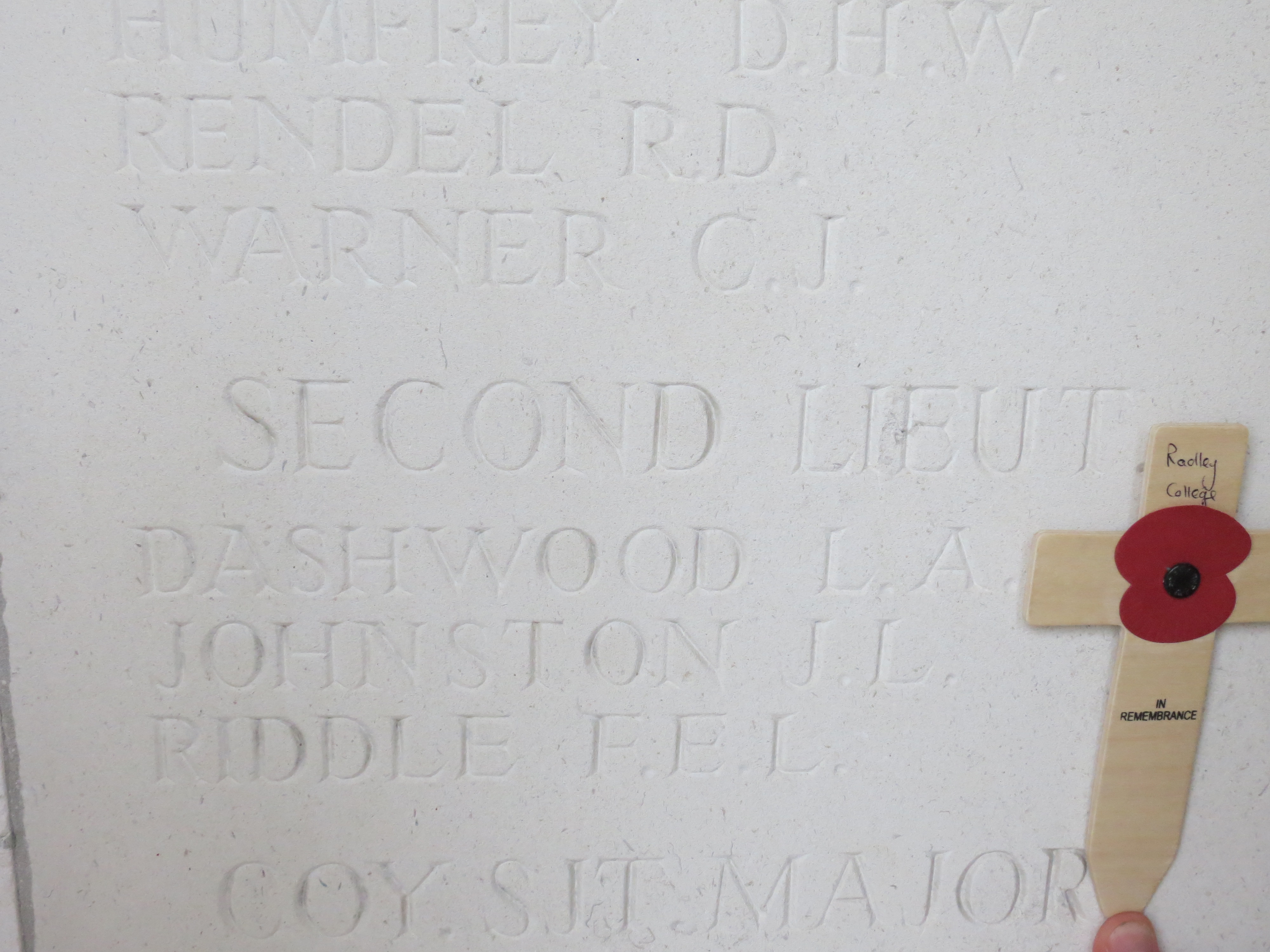
The name of Arthur Egerton on the Loos Memorial. Photographed for ‘Marching in Memory’ for Combat Stress
Battle of Loos

The name of Arthur Egerton on the Loos Memorial. Photographed for ‘Marching in Memory’ for Combat Stress
Battle of Loos

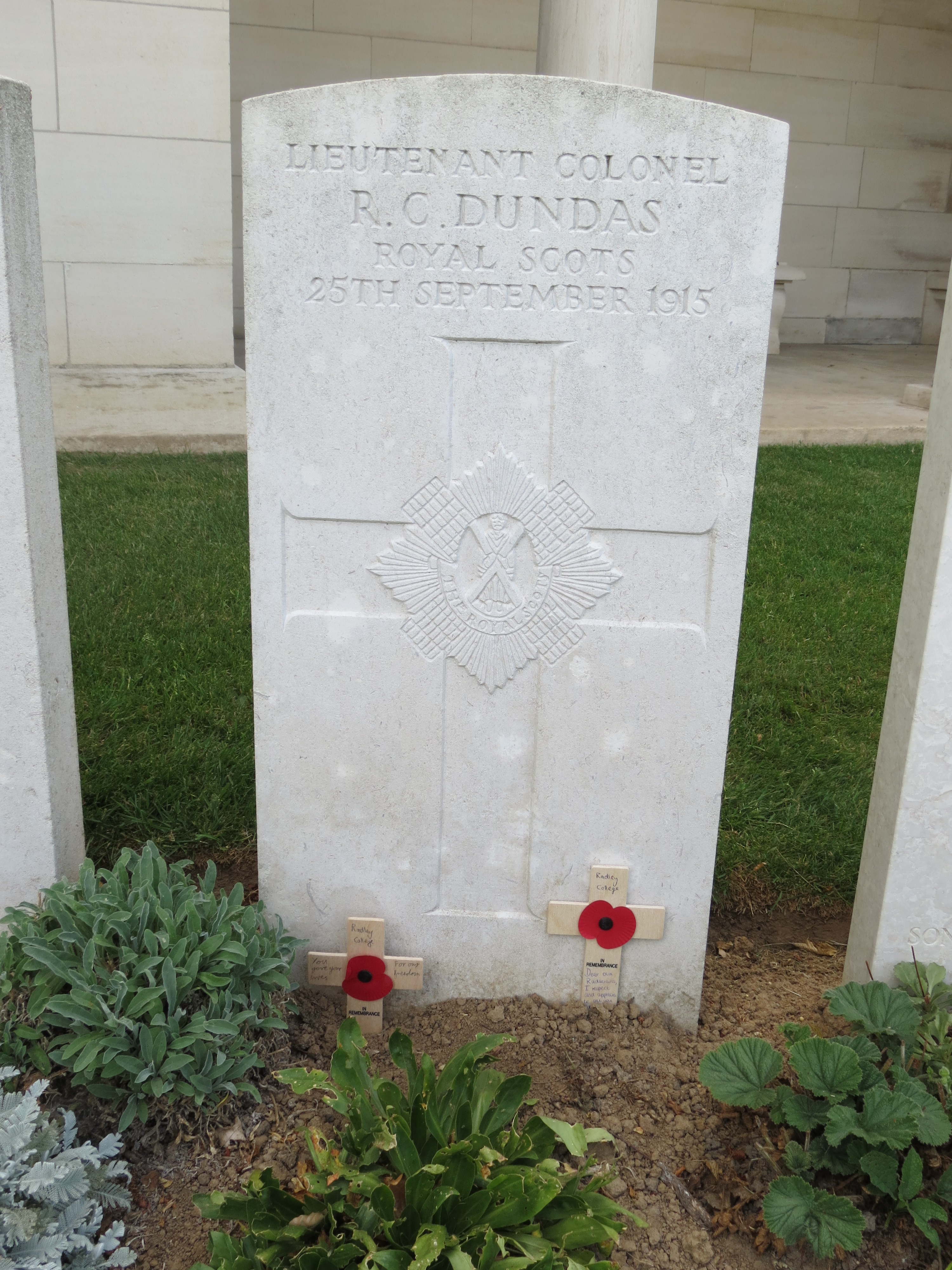
The grave of Richard Dundas at Cabaret Rouge. Photographed for ‘Marching in Memory’ for Combat Stress, July 2015
Battle of Loos
|
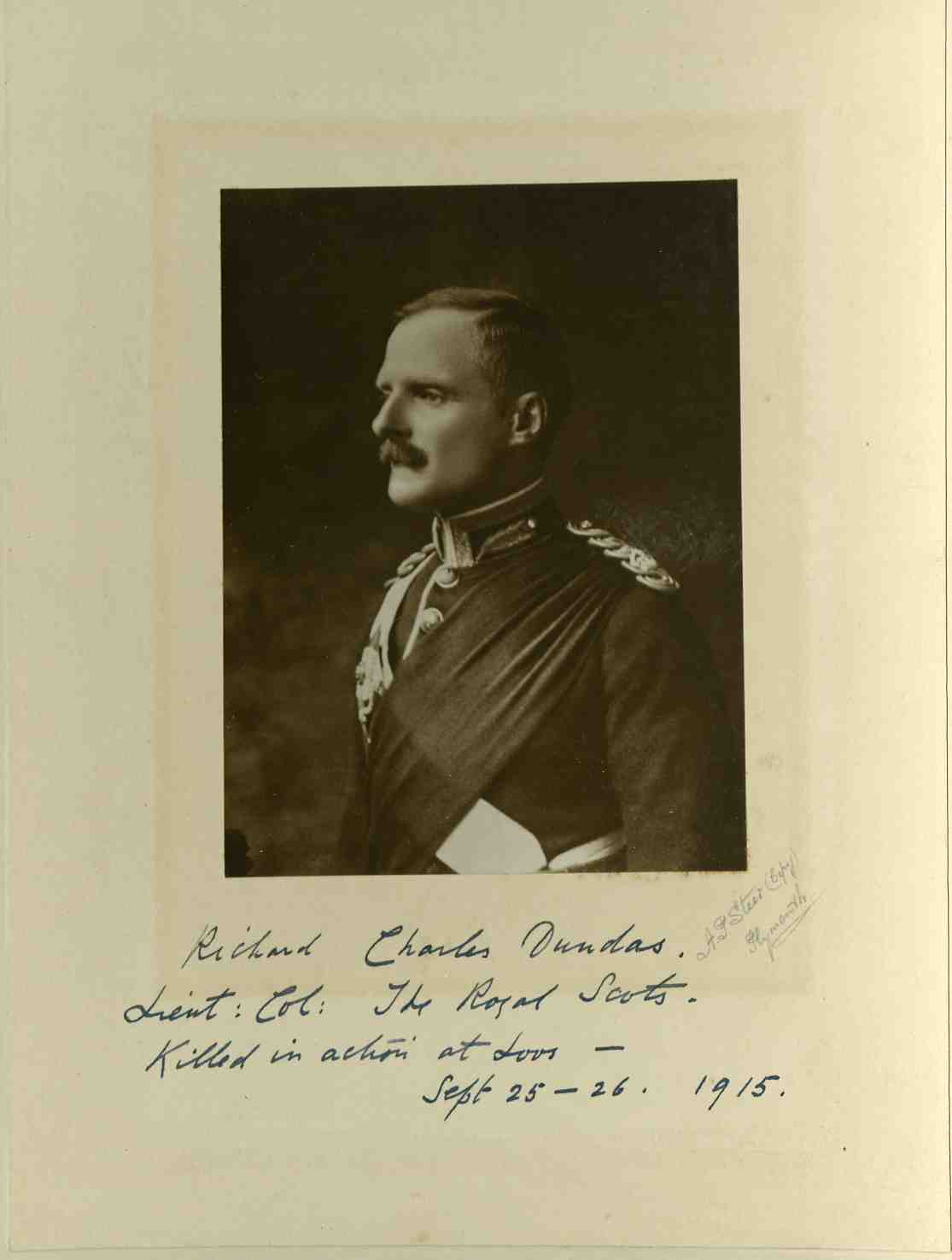
Richard Dundas, D Social 1882. Lt-Col commanding, 11th Bn, The Royal Scots. Reported missing, presumed killed in action on the first day of the Battle of Loos, along with most of his battalion. ‘His magnificent and heroic leadership at Loos will never be forgotten, and his loss there cannot be too much deplored. His was a great personality and attractive nature, absolutely just and true, unfailing in sympathy and courtesy to all, untiring in work, an ideal soldier, with the keenest of brains, who jealously guarded the honour and traditions of the regiment that he loved, lived, and died for, and to which his loss is irreparable.” The Times. He was a career soldier whose family had served in the regiment since 1670. Like Cecil Palmer (killed at Gallipoli) he had come out of retirement to command one of the newly formed battalions. |
Today we remember …
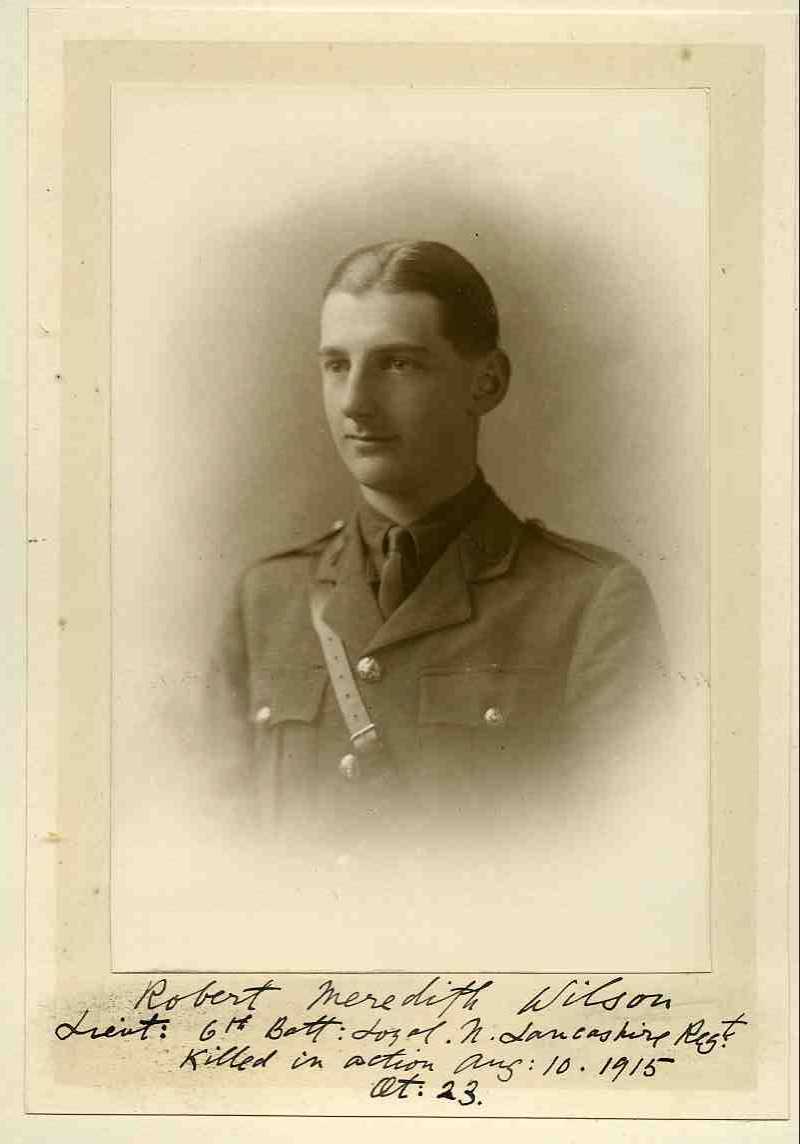
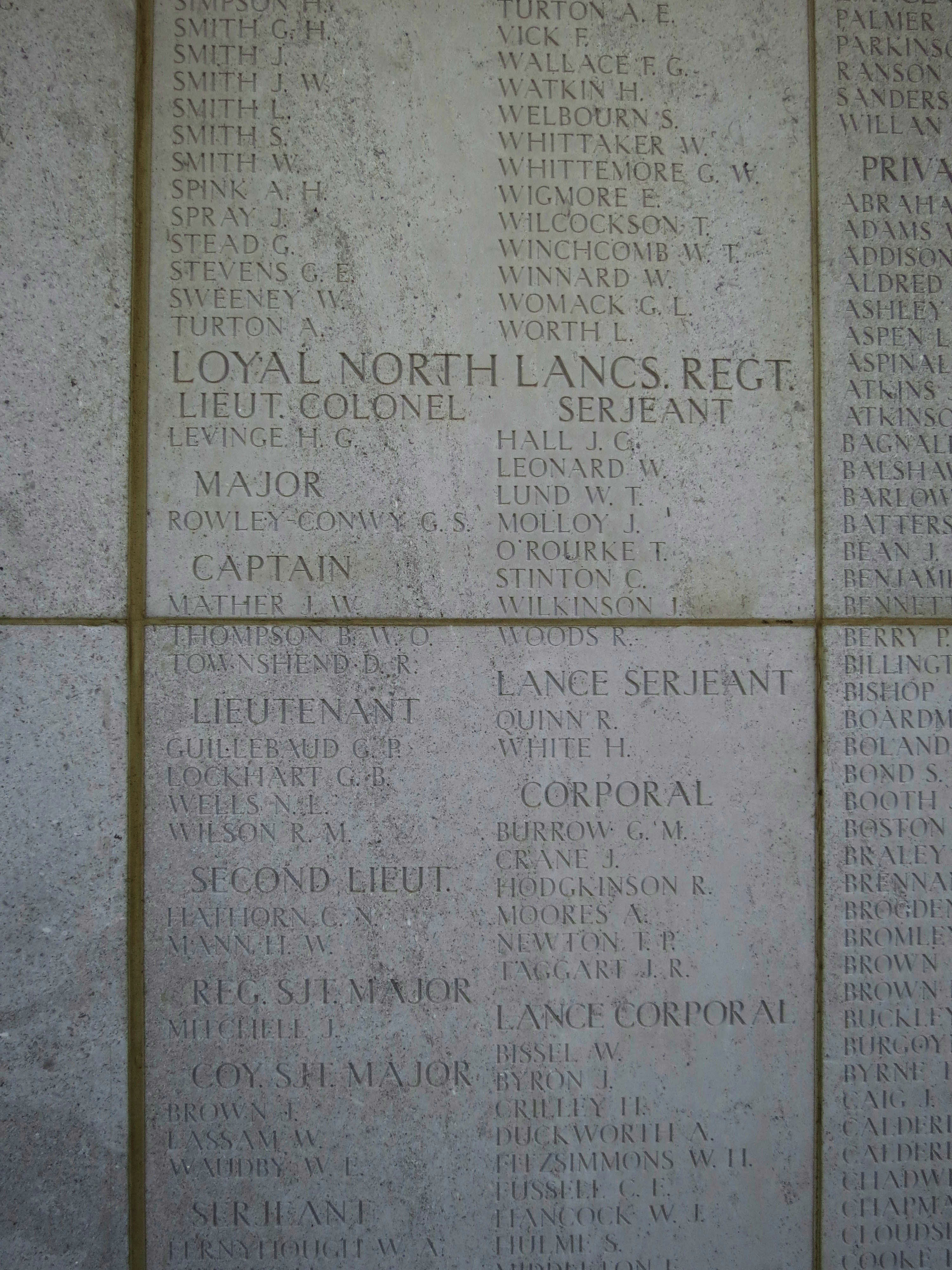
| 10th August 1915. Robert Wilson, A Social 1906. Lt, 6th Bn, Loyal North Lancashire Regt. Killed in action at Chunuk Bair, Gallipoli 23rd October 1915. ‘At Radley he was a prefect, and was a member of the football eleven of 1910, and the cricket eleven of 1911. On leaving Radley he went up to Exeter College, Oxford. Reported missing; 28th October 1916; Reported missing 27th October 1917; Previously reported missing, now presumed killed on 10th August 1915.’ Aged 23 |

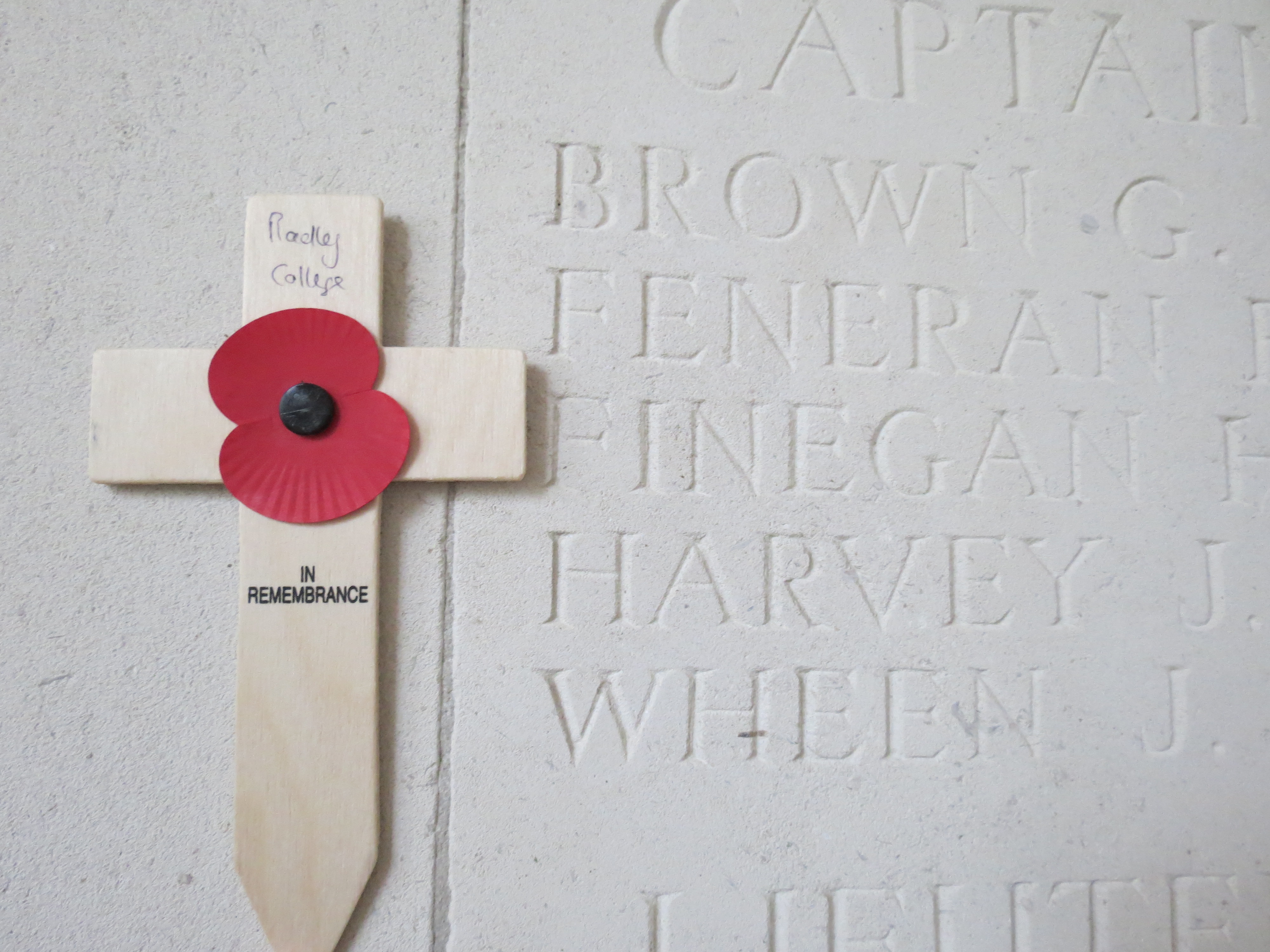
The name of John Wheen on the Le Touret Memorial. Photographed for ‘Marching in Memory’ for Combat Stress, July 2015
| 14th May 1915. Today we remember two Radleians who fell, one in France, the other the first Australian Radleian to fall at Gallipoli. John Wheen, E Social 1894. Captain, 1st Bn, Liverpool Regt. Missing, presumed killed in action, Battle of Festubert (part of the 2nd Battle of Ypres). He served in the Second South African War in 1900 and was invalided home wounded. He was wounded in France in 1914‘previously reported wounded and missing, is now officially presumed to have been killed on May 14-16, 1915.’ |
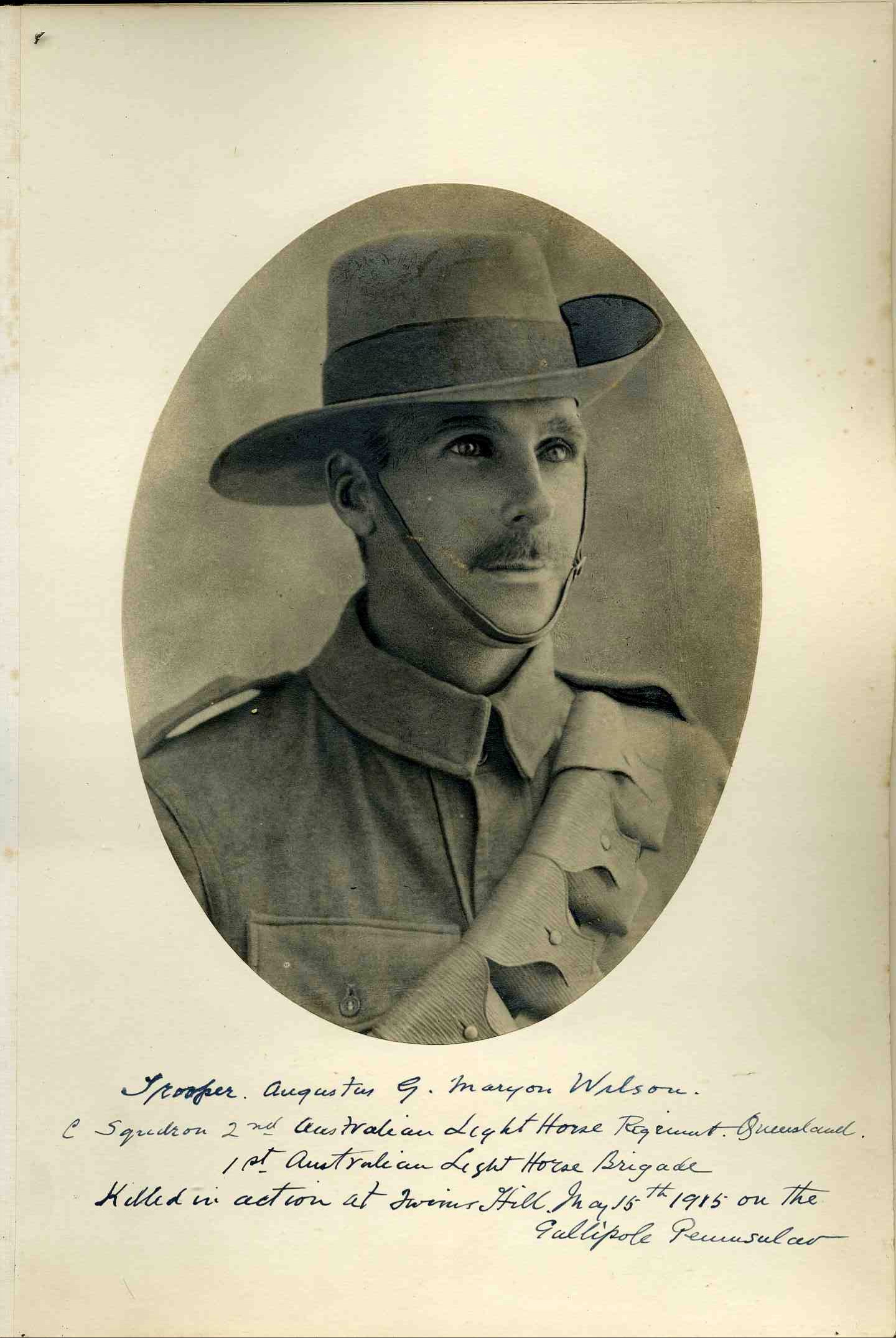
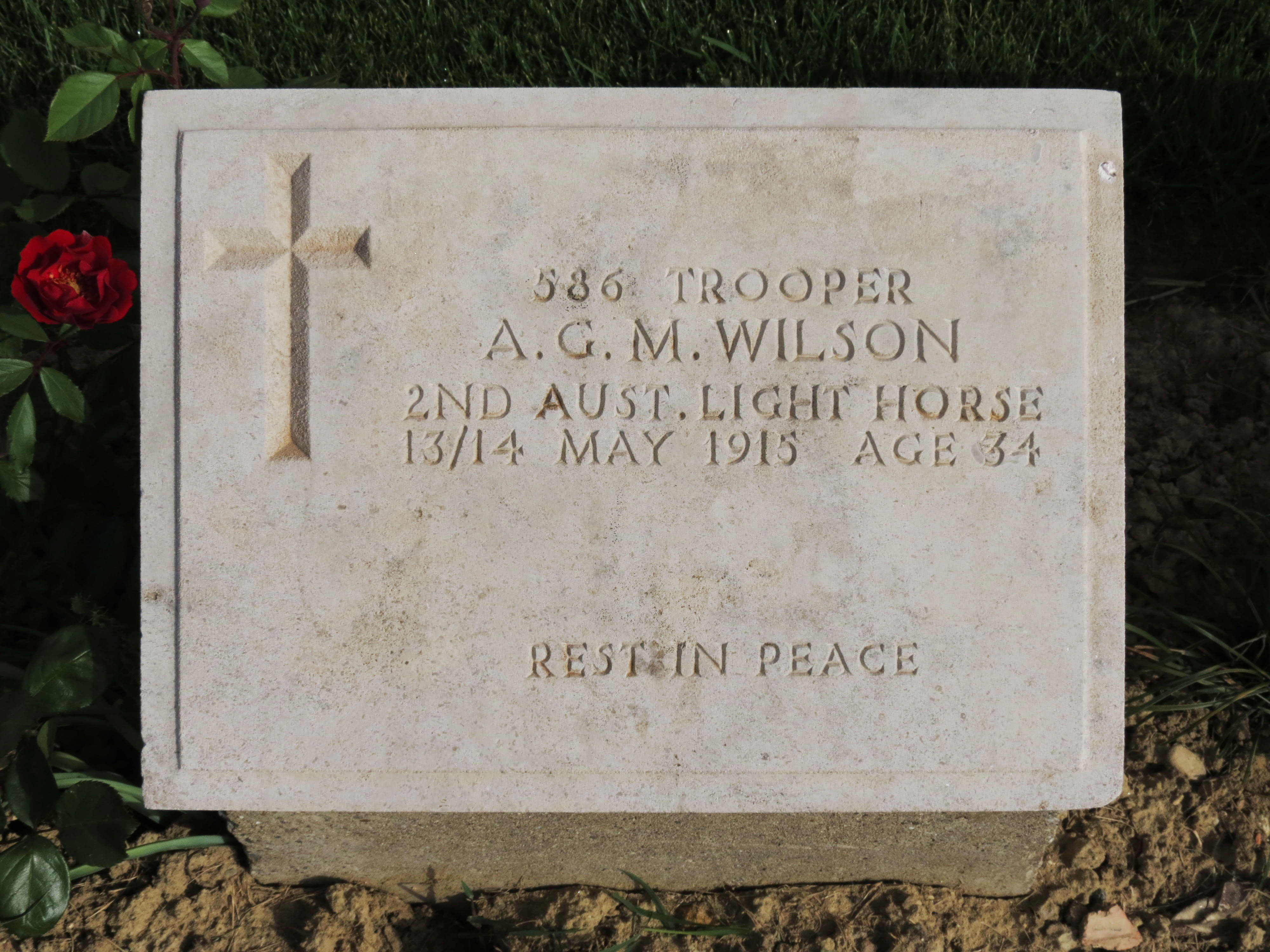
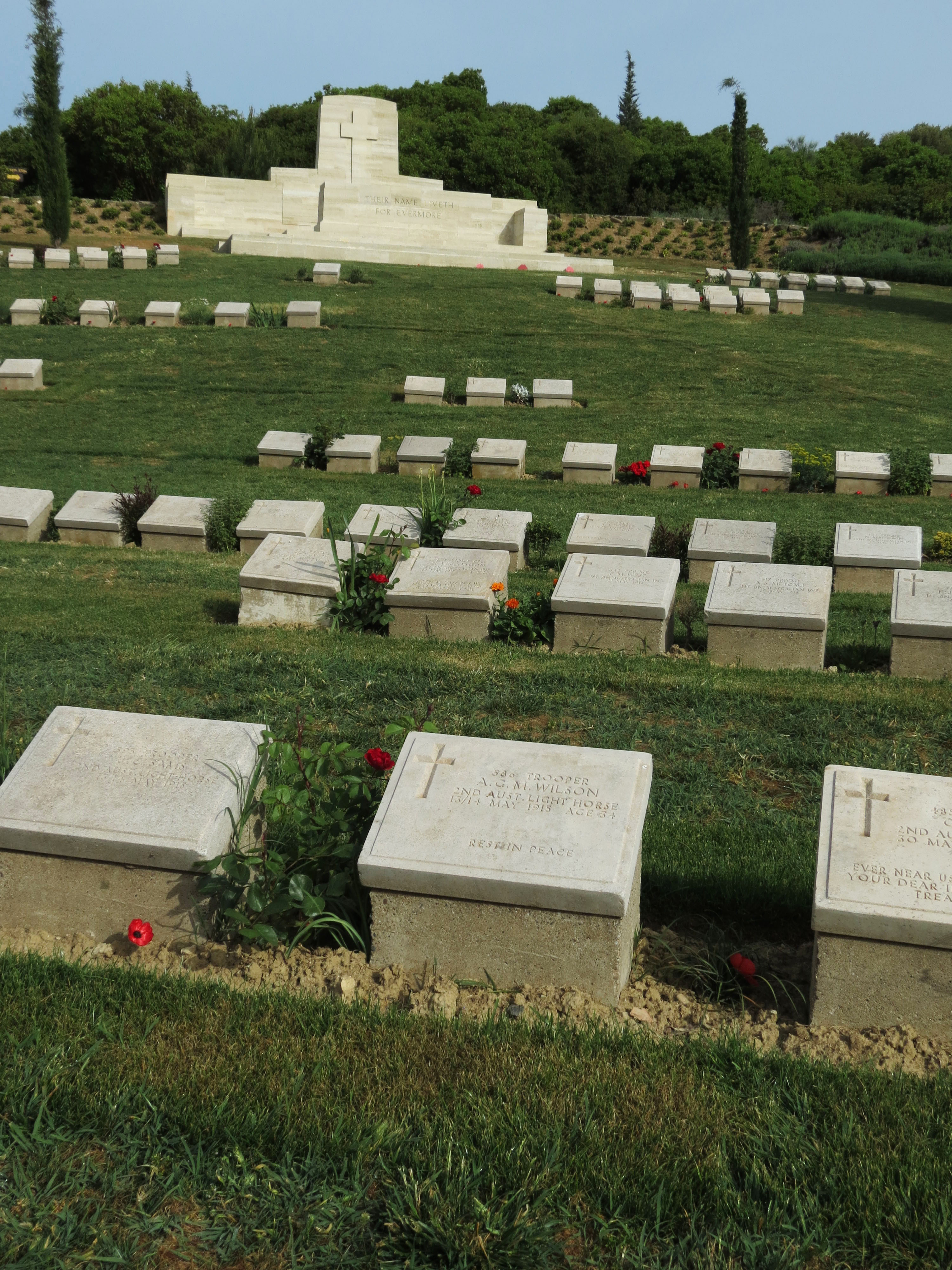
| Augustus Maryon-Wilson, A Social 1894. Trooper, 2nd Australian Light Horse, Australian Imperial Force. Killed in action, 14-15 May, at Gallipoli. Originally from Essex, he emigrated to Australia and became a farmer |

The name of Lionel Johnston on the Le Touret Memorial. Photographed for ‘Marching in Memory’ for Combat Stress, July 2015
Today we remember …
| On 12th May 1915 John Leslie Johnston, B Social 1899. Lt, Ox & Bucks Light Infantry, was recorded as missing, presumed killed in action in an unknown engagement in the 2nd Battle of Ypres. He was one of the most distinguished scholars of his time at Radley. He won the Richards Gold Medal, the James, Heathcote and Gibbs Scholarships. He went on to become Fellow and Dean of Magdalen College, Oxford. His friend, Edwyn Bevan, published a biography of him in 1920.‘He vanished in May 1915 and it is very likely that he was executed by the Germans soon after being shot in the abdomen.’ Letter from Dr Simon Harris, Regimental Historian, 2014 |
Today we remember …
| Charles North, B Social 1887. Major commanding 5th Field Cpy, Royal Engineers. Killed in action, First Battle of YpresObituary from The Times: “Major Charles North, R.E., who was killed in action last Sunday was the eldest son of the late Colonel Roger North, R.A., and Mrs. North, of Birley, Camberley. He was born in 1873 and educated at Radley and Woolwich, entering the Royal Engineers in 1893. He served through the South African War and received the Queen’s medal with three clasps and the King’s with two clasps. He married in December last Norah, daughter of the late Colonel Gribbon. At the time of his death he was in command of the 5th Field Company, Royal Engineers.” |
Today we remember …
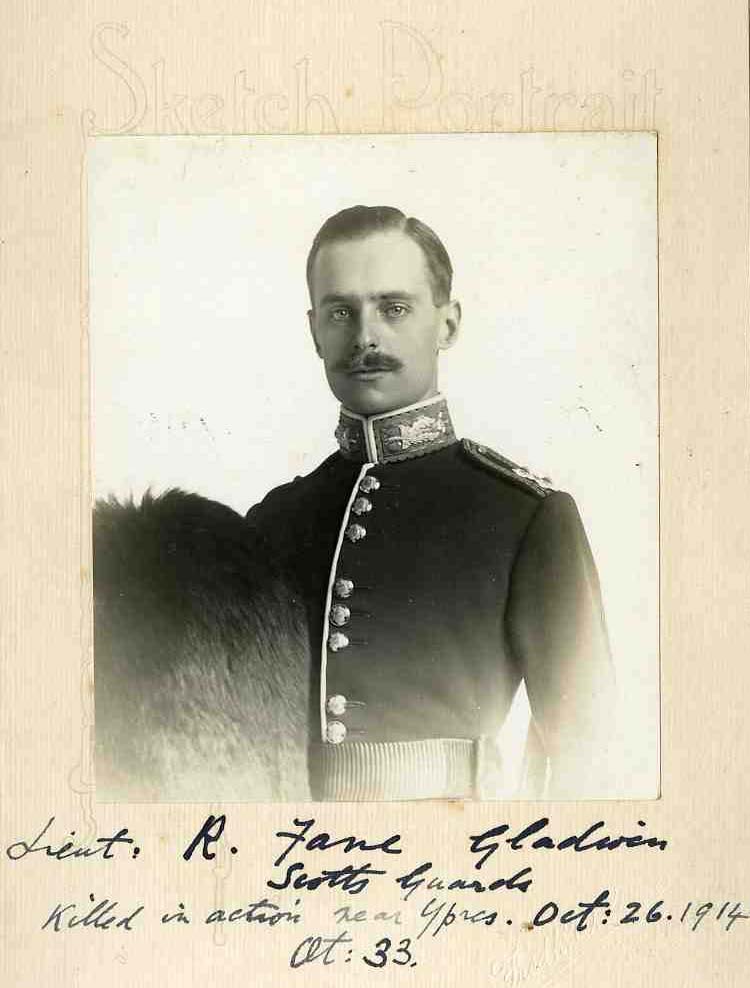
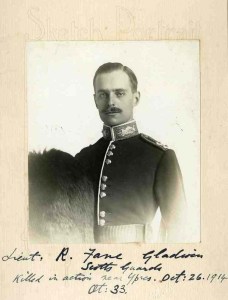
| 26th October 1914. Ralph Fane-Gladwin, C Social, 1899. Lt, 2nd Bn, Scots Guards
Reported missing during the First Battle of Ypres. His death was confirmed by a letter from a fellow officer, then a prisoner in Germany, in 1915: Haserden Kaserden, Crefeld, Germany, Nov. 24, 1914: “after daylight and throughout the morning we were subjected to the most severe shelling, and the Germans attacked several times, but were beaten off, merely owing to the magnificent way Ralph handled his machine gun. The enemy’s shells were falling all round him, they had located our position and were doing their utmost to knock out our machine gun. Throughout all this Ralph fought his gun so splendidly that they could not get past his right, his gun was shooting throughout the morning. It was not until he was killed and his gun put out of action that the enemy succeeded in turning the position and enfilading our trenches. His men told me that poor Ralph was shot through the head when too bravely looking out of the trench for a good target for his gun. He was one of the bravest, keenest and best officers on active service I have had, and his loss is the greatest calamity to the regiment...” |
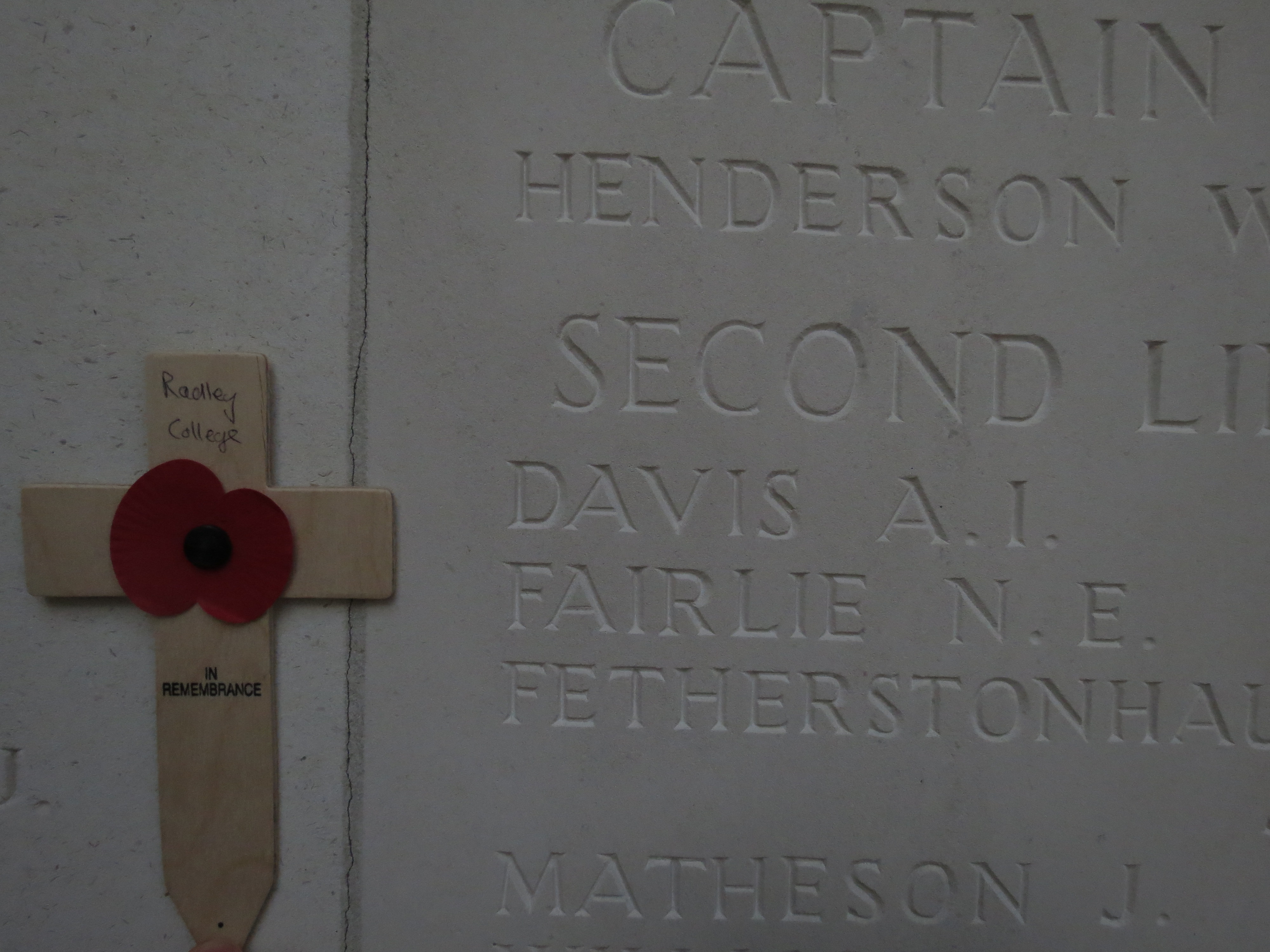
The name of Norman Fairlie on the Ploegsteert Memorial. Photographed for ‘Marching in Memory’ for Combat Stress, July 2015
| 21st October 1914. Norman Fairlie, A Social, 1906. 2nd Lt, 2nd Bn, Argyll & Sutherland Highlanders
Norman Fairlie was aged 22 when he disappeared in action near Ploegsteert Wood in Flanders. The Radleian magazine lists him among the prisoners or wounded in November 1914, amended to ‘missing’, now ‘wounded’ in December, and still among the missing in April 1916. The date of his death is the last known sighting of him alive. He has no known grave and his family did not send a photograph for the War Memorial albums. |
Today we remember …
| 26th August 1914. Arthur MacLean, G Social, 1900. Lt, 2nd Bn, Argyll & Sutherland HighlandersHe married Enid Mackintosh in 1912. They had one daughter.He was missing after the Battle of Le Cateau in August 1914. It was later confirmed: “is now officially reported from the German Government as “dead, burial place unknown.” Captain MacLean, of Aidgour, in a letter from Torgau, said he feared there was no doubt that Lieutenant MacLean was killed at Le Cateau, as he heard from his men later in the day that he was hit more than once leading his men to the trenches under heavy shell fire.” |