| 1856. June 4th. Wednesday. Commemoration Day
Fireworks in Oxford I set off at ½ past 7 and walked in to Oxford by the towpath, a most beautiful day, not a creature by the river side. The swallows dipping into the water and breeze rippling the surface almost the only signs of life. Oxford in all the stir of anxious preparation. Met Wilson and gave him my ticket. Had some breakfast in Bowyer’s bedroom, he expecting a visitation of ladies. Went with him to the [Sheldonian] theatre, got in easily, but soon a tremendous crush, never felt anything like it. Prince Albert, the Princes of Prussia and Baden were there, with Lord Derby. The two latter Princes had degrees given them, also Colin Campbell, Williams (absent) Sir E. Lyons, Lord Clarendon etc. Not much wit from the gallery and the men behaved very badly to poor Claughton, who spoke the oration. Gibbings and West dined with me in Hall at 1½, a capital cold collation. The President gave the toast of “the ladies” received rapturously, afterwards sat in the garden and watched the lions [guests]. Walked to the Museum. Archit.-Soc. (Gibbings taken in by my practical joke). Tea in Richards rooms. Akers joined us. At 9 sallied forth to see the illuminations. Walked all round the town. A magnificent sight, like some scene in the Arabian Nights. The end of Magdalen very pretty. Passed through a shower of squibs up High Street at 10½. Christ Church being regularly bombarded. Walked out to reach Radley at 12. |
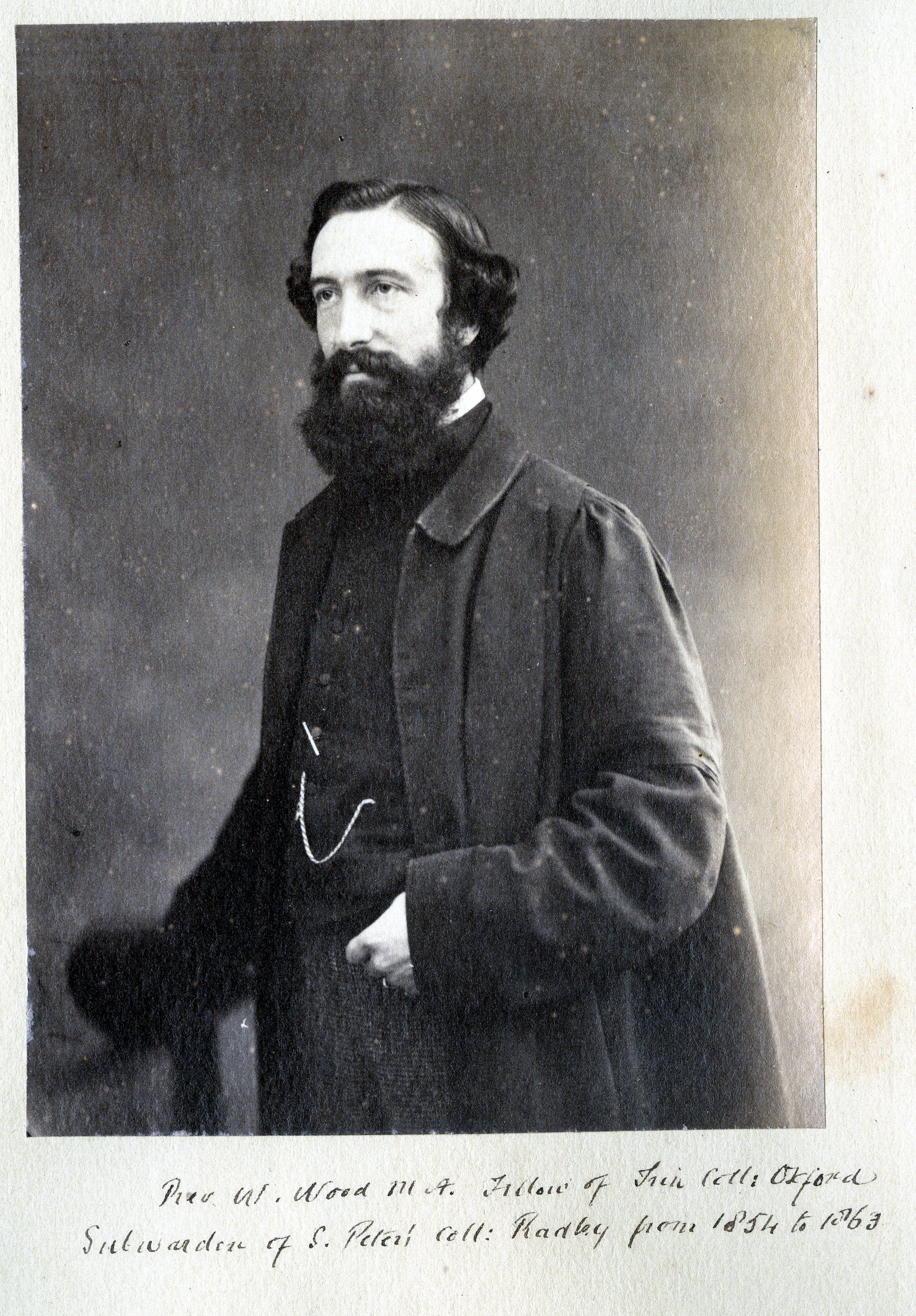 William Wood, DD, Sub-Warden 1855-66 & Warden 1866-70 of Radley College |
Commemorating the Fallen of WW1
Today we remember …
| 1st June 1917
Norcliffe Gilpin, G Social 1887. Lt, Royal Defence Corps. Died of pneumonia at the Military Hospital, Tidworth He worked as a timber merchant and then as Clerk to London County Council. The Royal Defence Corps was founded in 1916 It was initially formed by converting the (Home Service) Garrison battalions of infantry regiments. Garrison battalions were composed of soldiers either too old or medically unfit for active front-line service; the Home Service status indicated they were unable to be transferred overseas. The role of the corps was to provide troops for security and guard duties inside the United Kingdom; guarding important locations such as ports or bridges. It also provided independent companies for guarding prisoner-of-war camps. The corps was never intended to be employed on overseas service. Aged 44 |
Commemorating the Fallen of WW1
Today we remember …
| 27th May 1917
Arthur Knapp, E Social 1890. Lt, Nyasaland Field Force. Died of illness on active service in East Africa After school, he worked for a short time as an architect, then became a career soldier, serving with the Ox & Bucks Light Infantry, then the Grahamstown Militia. He spent 15 years as a planter in Nyasaland (now part of Malawi). He is buried in Dar-es-Salaam cemetery. He formerly held a commission as second lieutenant in the Militia battalion of the Oxford and Bucks L.I, and served in the South African War with the Grahamstown Town Guard 1901-2, and obtained the Queen’s Medal. For the last 15 years he had been planting cotton in Nyasaland, but on the outbreak of war he joined the force for East Africa. He received a commission as assistant transport officer, and had lately been recruiting carriers from among the natives. Aged 43 |
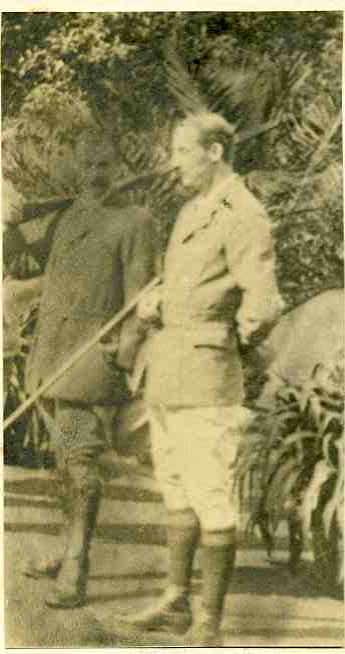 Lt Arthur Knapp, Nyasaland Field Force. Died on active service 27 May 1917 |
Commemorating the Fallen of WW1
Today we remember …
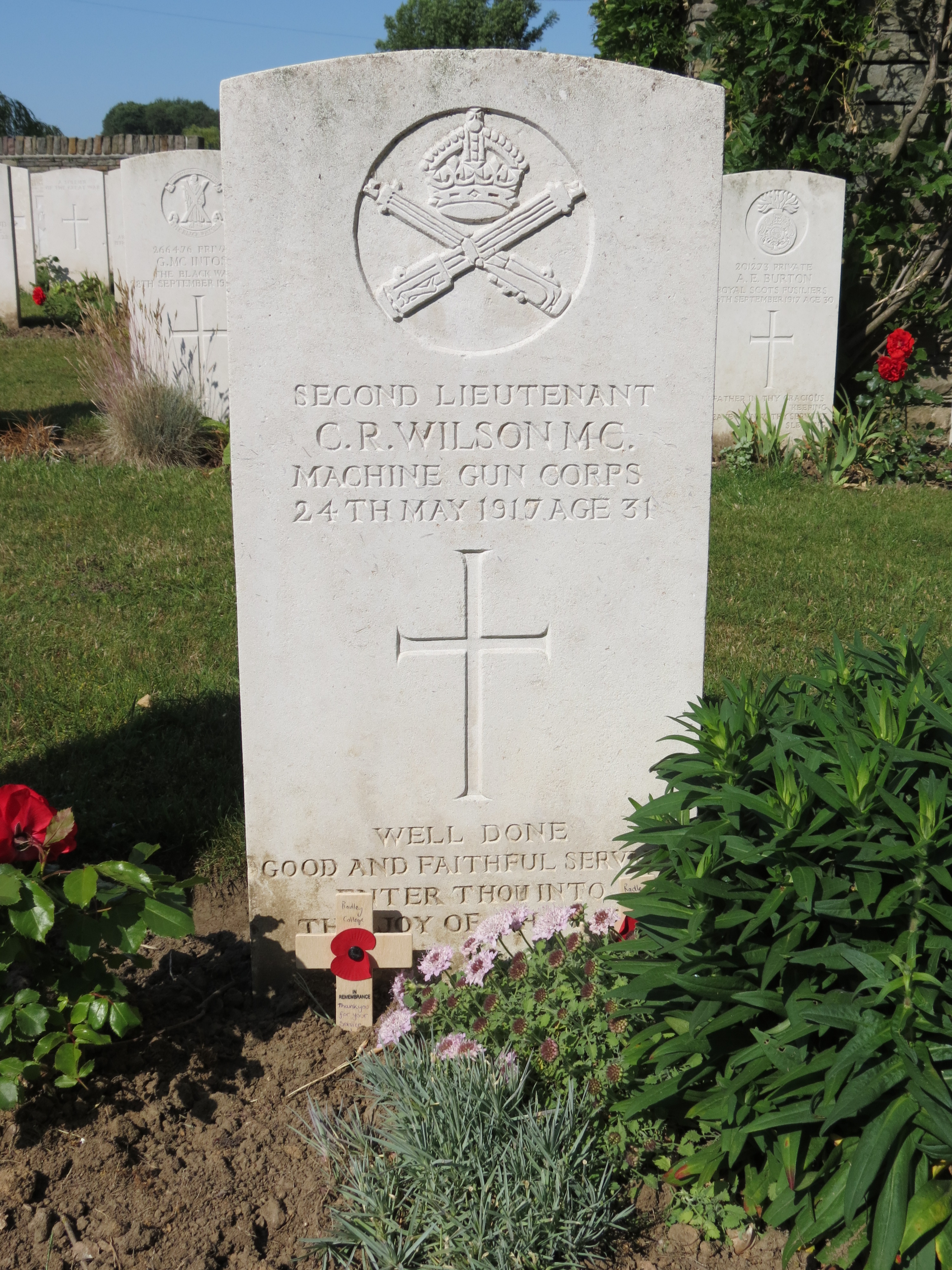
The grave of Charles Wilson at Level Crossing Cemetery. Photographed for Marching in Memory, July 2015
| 24th May 1917
Charles Wilson, MC, F Social 1900. 2nd Lt, 88th Cpy, Machine Gun Corps. Killed in an unknown engagement At school he was Head of F Social and Captain of Boats. After school, he went to Pembroke College, Oxford, where he rowed for the University, and then worked for the Dublin Stock Exchange. Captain of the Boats at Radley, he rowed in the famous Pembroke College Eight of 1906; he also rowed in the Oxford Trial Eights in 1907. In 1912-13 he was Captain of the Lansdowne Football Club. In January, 1916, he was gazetted to the 6th Royal Munster Fusiliers from the Dublin University O.T.C., and went to the front in September, 1916. Later on he joined the Machine Gun Corps, and won the Military Cross, April 23rd, 1917. His Major writes of him : – ” His loss is very keenly felt by us, as he had become such a favourite amongst us all. He had just been awarded the Military Cross for gallantry in action on April 23rd. He was a splendid officer and a loyal and brave comrade.” Another officer writes of him :- He was one of the very best, cool and cheery in danger, and although I personally only knew him for the short period of two months, still I and all the officers, N.C.O.’s and men of the Company, learned to esteem and respect him as an example of the finest type of a soldier and gentleman. Such men as he are hard to replace, and his section would have followed him anywhere and done anything for him.’ Citation for the Military Cross He maintained control of his guns throughout the whole operations in a very effective manner. He inflicted severe losses on the enemy, and his coolness and determination was a splendid example to all. Aged 31 |
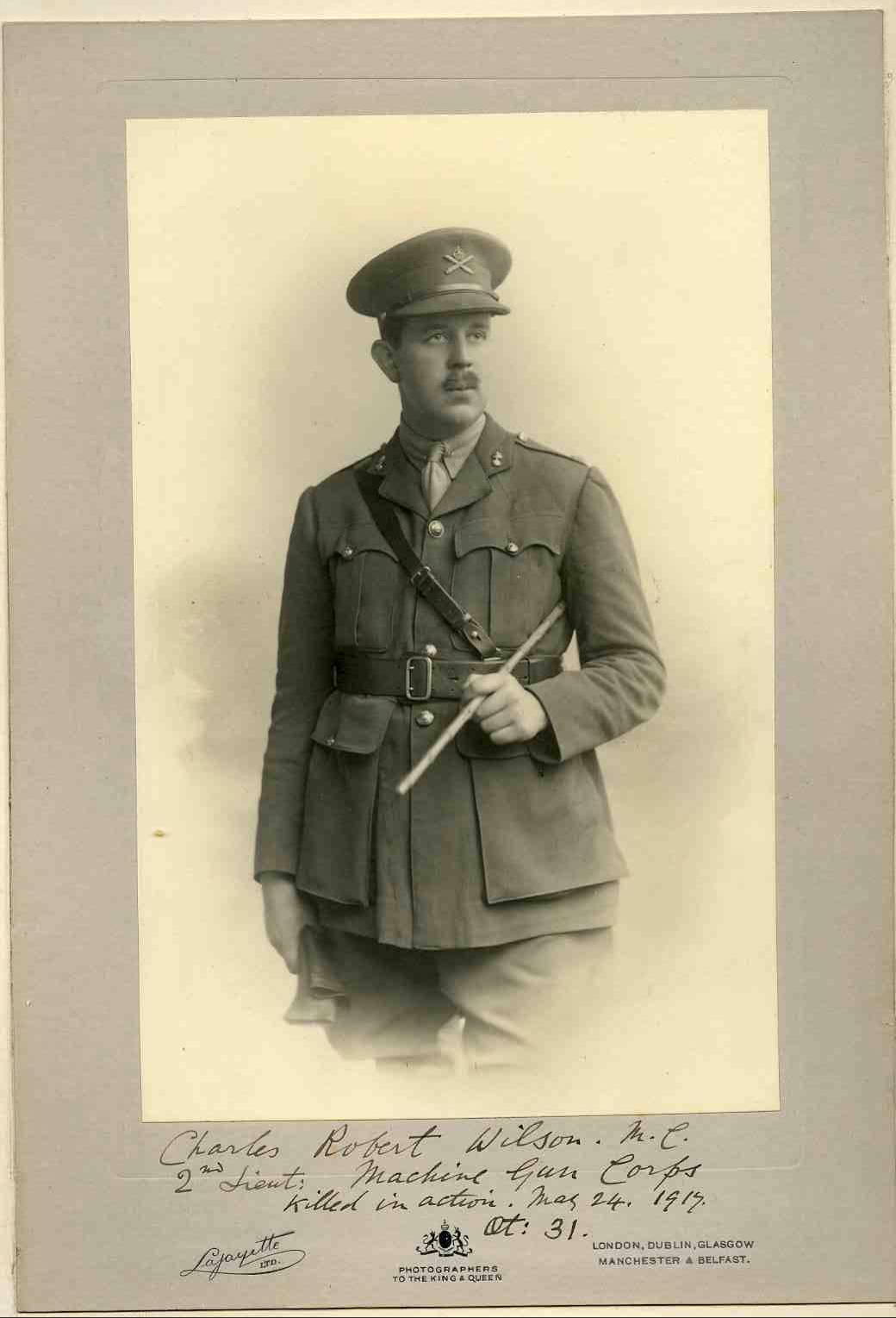 2nd Lt Charles Wilson, Machine Gun Corps. kia 24th May 1917 |
Wood’s diary – excerpts
| 1858. 22nd May. Friday
A collegiate school Letter to the Warden. I write the following lines on behalf of the Fellows to avoid any further misunderstanding from verbal inaccuracies, not from any desire to interpose unnecessary formality or stiffness in our relations with each other. A question has arisen as to the position we occupy with regard to yourself. What is meant by our being Fellows of a College? We thought that the least which could be meant by it was, that you did not intend to make any essential changes in the principles on which it has hitherto worked, without, at all events, consulting the Fellows on the subject. Our convictions as to this were strengthened by your having repeatedly expressed your wish to preserve the status quo. We therefore asked you to be so good as to express to us, as a body, the next time that you called us together for any Collegiate act, your intention to lay before the Fellows any proposal which to the greater part of them seemed to involve a change of principle, not for their decision, but for their discussion. William Wood’s Diary 1855-1861, ed. by Mark Spurrell, is available from Oxfordshire Record Society. These excerpts are presented to give a flavour of life at Radley in the 1850s |
William Wood, DD, Sub-Warden 1855-66 & Warden 1866-70 of Radley College |
Commemorating the Fallen of WW1
Today we remember …
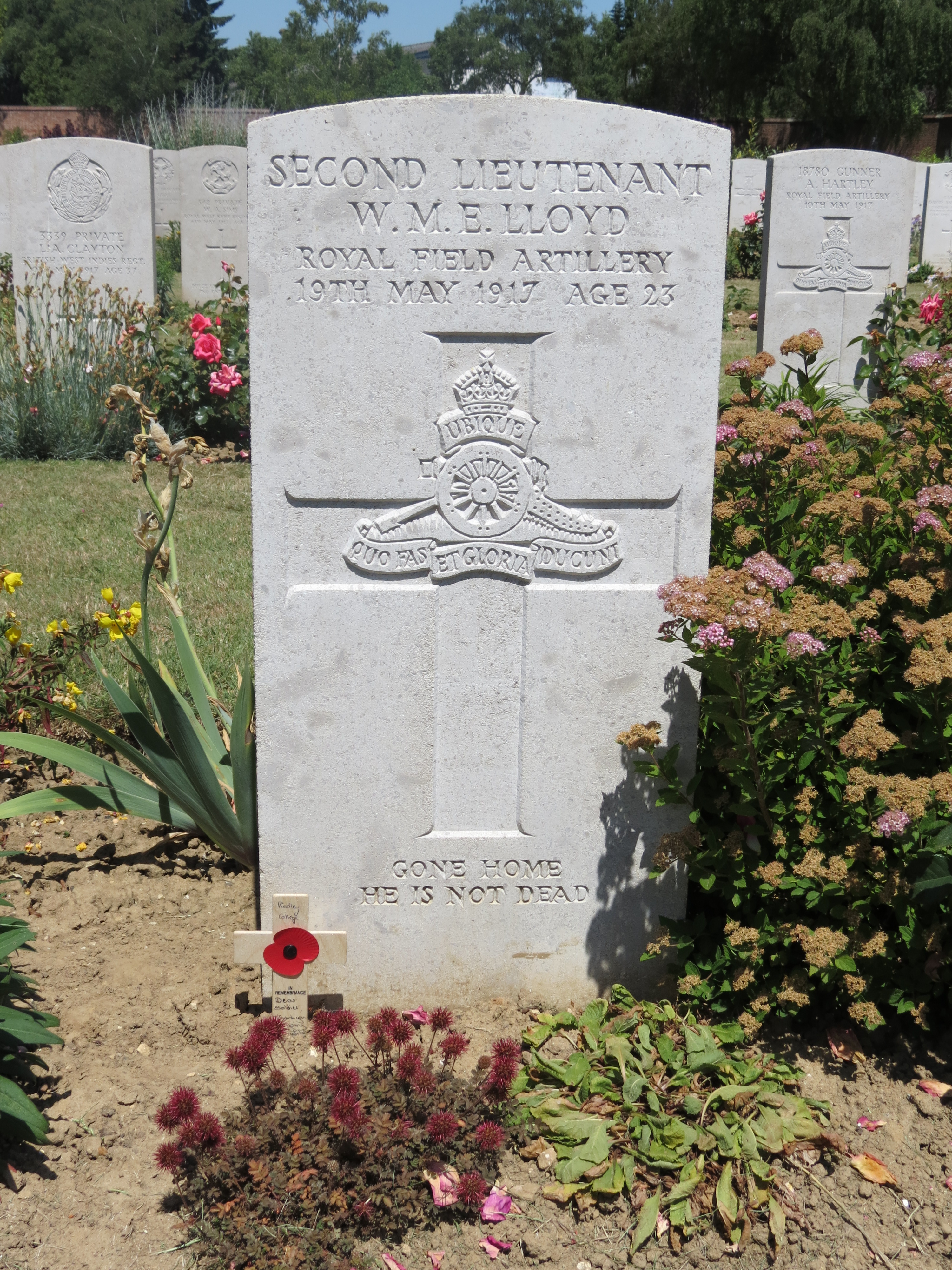
The grave of William Lloyd at Faubourg Arras. Photographed for Marching in Memory, July 2015
| 19th May 1917
William Lloyd, A Social 1907. 2nd Lt, 40th Bde, Royal Field Artillery. Killed in action, Battle of Arras. He worked for the newly emerging car industry at the Daimler Factory in Coventry from 1911. Early in 1915 he joined the Royal Horse Artillery, and went through the Somme fighting in the ranks. He was recommended for a commission, and was gazetted to the Royal Field Artillery in February 1917. He was killed by a German shell. Aged 23 |
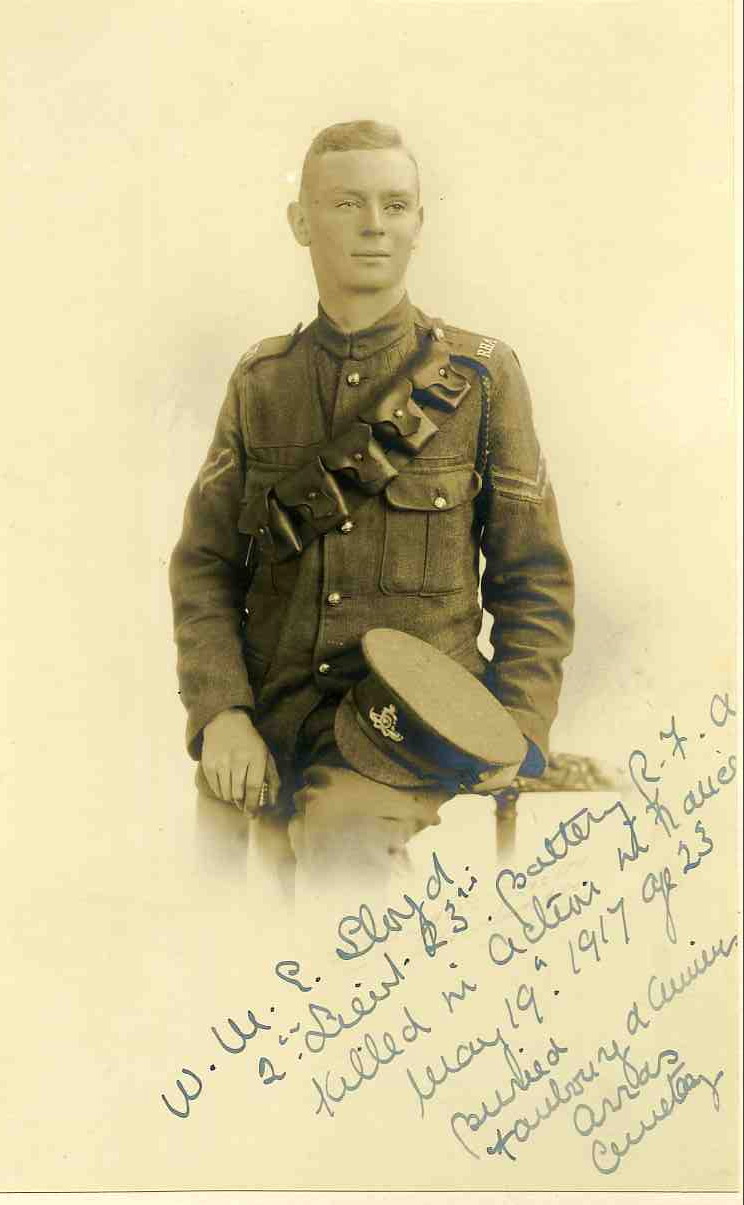 2nd Lt William Lloyd, Royal Field Artillery. kia Battle of Arras |
Commemorating the Fallen of WW1
Today we remember …
| 14th May 1917
Alfred Mark Wardlaw, G Social 1881. Major, 9th Bn, Royal Sussex Regt. Died at home in Sussex as a result of wounds sustained in March 1917 At school he was a Prefect, played for the Soccer XI and rowed for the VIII. After school, he became a career soldier with the Royal Sussex Regiment, achieving the rank of Captain. He retired in 1900. He returned to active service in 1914, with the rank of Acting Major. He married Alfreda, daughter of Major-General Chapman in 1894. She died in 1914. He added the surname ‘Wardlaw’ to his family name of ‘Mark’ in 1895. His ashes are in Golders Green Crematorium. His shield still hangs in Hall. Aged 49 |
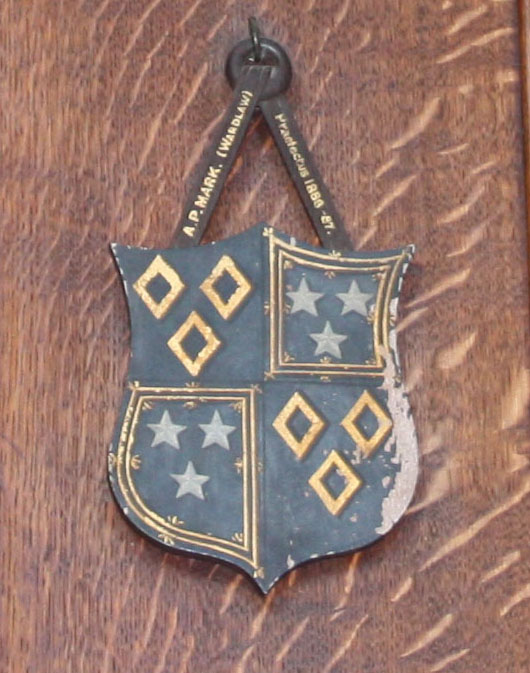 The shield of AP Mark (aft. Wardlaw) in Radley College Hall |
Wood’s diary – excerpts
| 1856. May 14th. Wednesday
Exams, lost luggage and new jobs Wet morning. Left at 10.50. Reached Oxford at 3½. Went in to Trinity and saw Pinder and Haddon in Hall, the Scholarship examinations going on. Walked out alone, having left my bag for the bus, which however in a fit of sulks, did not bring it. A wet walk, reached Radley in time for Chapel. Owen arrived after tea, as we were walking on the Terrace. He had a letter from Jowett offering him an appointment as Professor at Bombay. Strange that it should have synchronized with affairs here. The Warden has just been in to my room to say how sorry he should be personally if Owen were to accept it, and he would like Owen to know.
William Wood’s Diary 1855-1861, ed. by Mark Spurrell, is available from Oxfordshire Record Society. These excerpts are presented to give a flavour of life at Radley in the 1850s |
William Wood, DD, Sub-Warden 1855-66 & Warden 1866-70 of Radley College |
Wood’s diary – excerpts
| 1857. 7th May. Thursday
Parents William Wood’s Diary 1855-1861, ed. by Mark Spurrell, is available from Oxfordshire Record Society. These excerpts are presented to give a flavour of life at Radley in the 1850s |
William Wood, DD, Sub-Warden 1855-66 & Warden 1866-70 of Radley College |
Commemorating the Fallen of WW1
Today we remember …
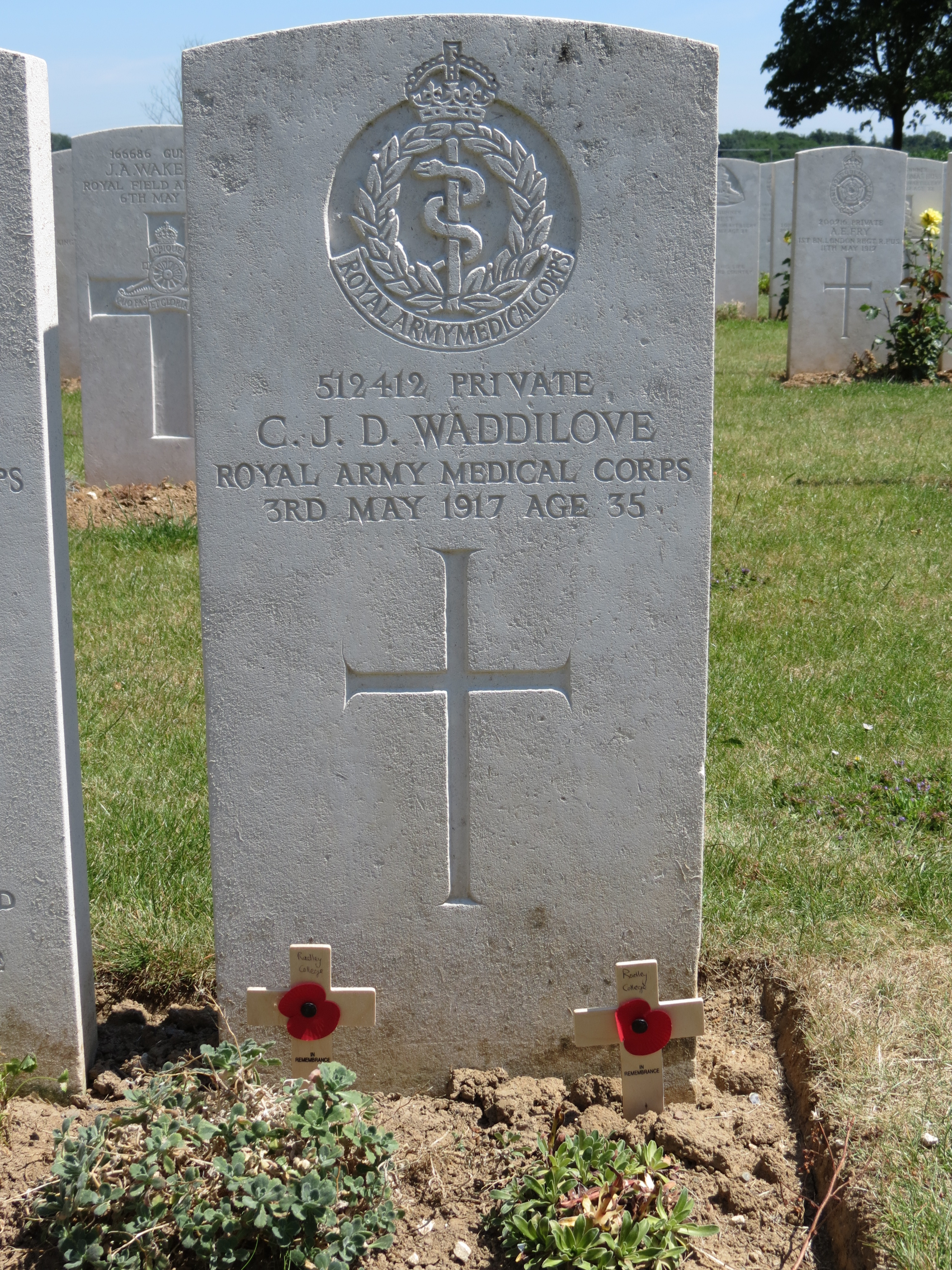
The grave of Charles Waddilove at Tilloy les Moufflaines. Photographed for Marching in Memory, July 2015
| 4th May 1917
Charles Waddilove, G Social 1896. Private, 2/3rd Field Ambulance, Royal Army Medical Corps He was a stretcher-bearer who was reported killed sometime between 1st and 5th May 1917. After school, he went to Exeter College, Oxford. He then worked for Oxford House, Bethnal Green and Toynbee Hall, both committed to working with the urban poor. He is one of 28 men commemorated on the War Memorial at Oxford House. Oxford House was established in 1884 as the first “settlement house” to open where students and graduates from Keble College, Oxford undertook a period of residential volunteering to learn first-hand about the realities of urban poverty. These volunteers were either graduates or worked locally and lived upstairs in Oxford House which was like a mini Oxford college in the heart of Bethnal Green. Volunteers provided practical support to alleviate or remove the impact of poverty to the local community by creating projects such as youth clubs, poor man’s lawyer, labour exchanges and adult education classes. Aged 35 |
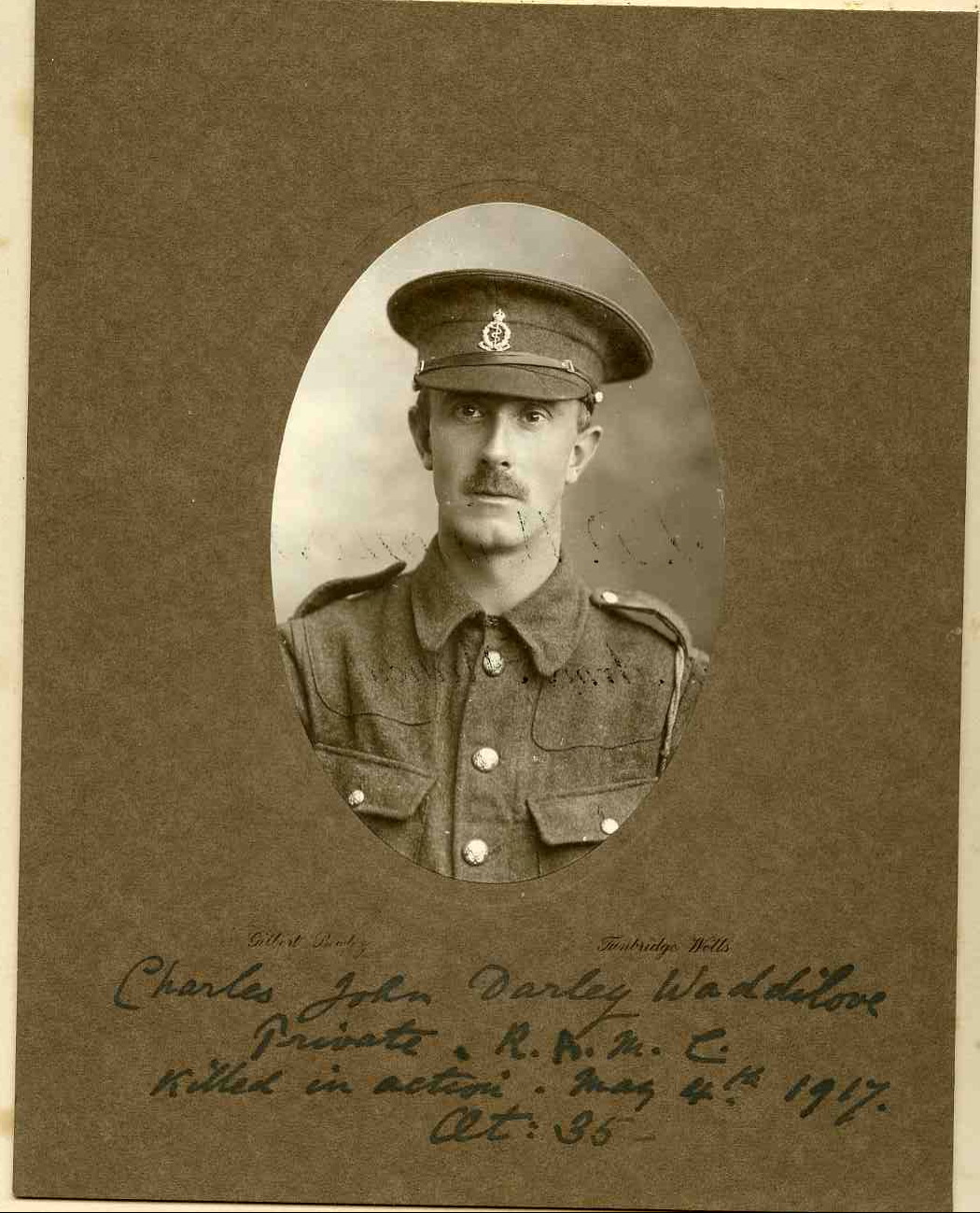 Private Charles Waddilove, Stretcher bearer, RAMC. kia Battle of Arras |
 Radley College Archives