Commemorating the Fallen of WW1

Today we remember …

16th October 1918Thomas Babington, G Social 1903, Lt, Indian Army. Died of pneumonia on active service in Mesopotamia (modern Iraq)

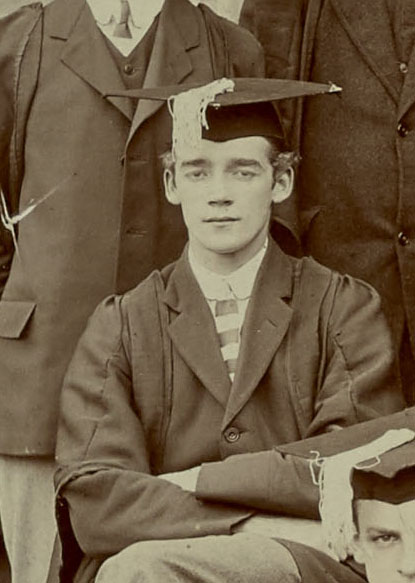
Thomas Babington was a Junior Scholar. He played for the Cricket XI and was Captain of the Soccer team. After school, he attended Magdalen College, Oxford.  He went out to India in 1913 as Professor of English Literature at the Government College, Rangoon, Burma. He joined up in 1916 as a Lieutenant in the Indian Army Reserve of Officers; promoted to Acting Captain 108th Infantry in 1917.

Aged 29

His story from Magdalen College

Radley College prefects, 1908

Commemorating the Fallen of WW1

Today we remember …

14th October 1918

Arthur Buchanan, E Social 1899. Lt, 45th Wing, Royal Air Force. Died of illness whilst on leave from France

Arthur Buchanan was from Cape Town, South Africa. He only attended Radley for one year. On leaving school in 1900 he went back to South Africa. He returned in 1904 to attend Trinity College, Cambridge.

He served with the Royal Flying Corps/RAF throughout the war, including some time as a prisoner-of-war in Mesopotamia (modern Iraq).

He died whilst on leave from France and is buried in Brompton Cemetery.

Aged 34

Commemorating the Fallen of WW1

Today we remember …

27th September 1918

Arthur Bruce-Freeman, D Social 1910. Lt, 2nd Bn, Royal Scots Fusiliers. Killed during the Advance across Flanders

He was a member of a military family whose father also served in the 3rd Hussars.  He went straight to Sandhurst on leaving school in 1914.  He served on the Western Front throughout WW1

was known at Radley always with the initials of T. B. On leaving, he entered Sandhurst, and passed into the 3rd Hussars.In April last he was transferred to the Royal Scots Fusiliers, and was wounded a month later. He went out again on Sept. 12, and was killed on the 27th.

Aged 22

AND

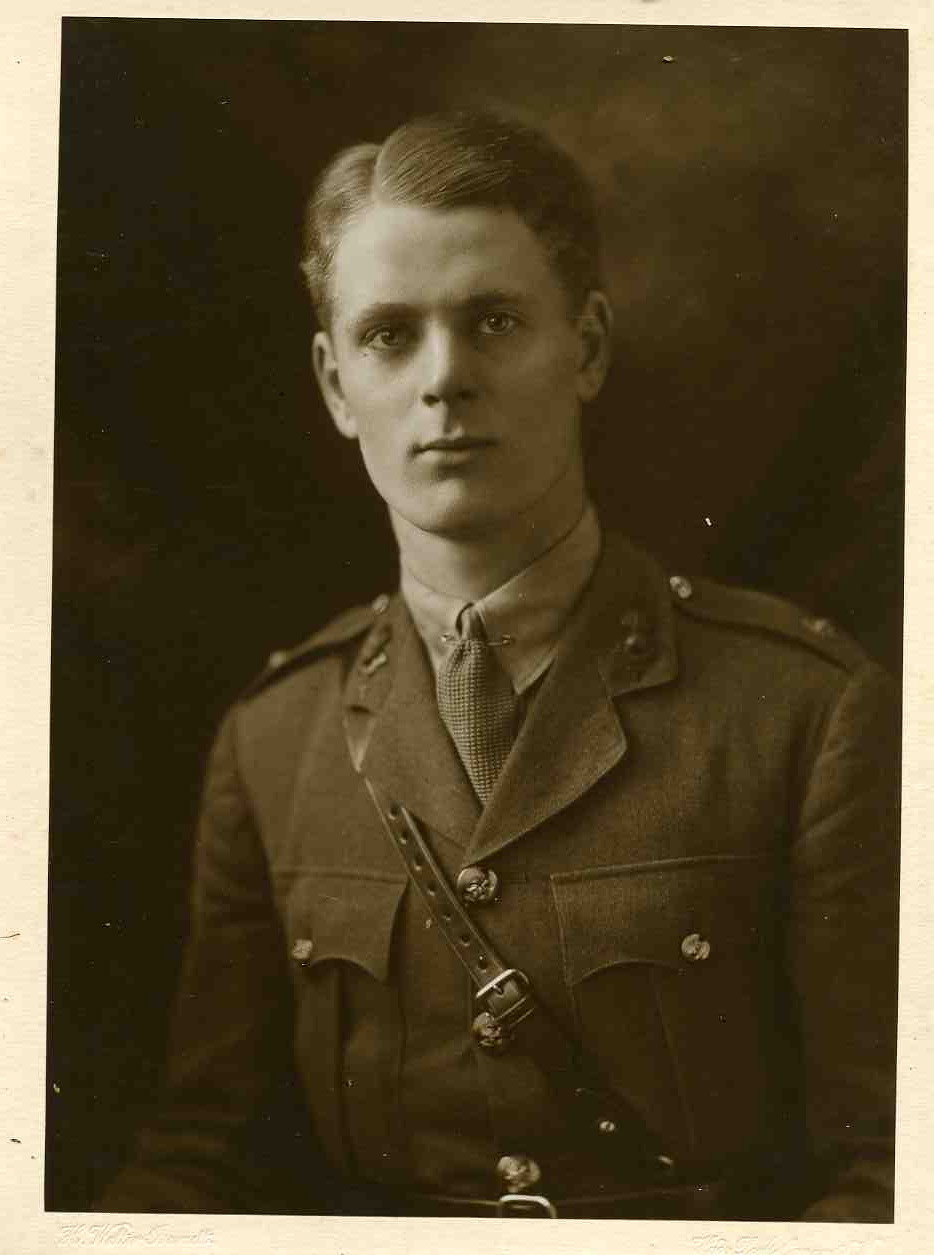
Lt Arthur Bruce-Freeman, Royal Scots Fusiliers

James Carter, Don. Captain, 1st Bn, Grenadier Guards. Killed in action, Battle of Canal du Nord

After a distinguished career at Eton and Cambridge, where he rowed in the fine eight of 1903, J. S. Carter came to Radley as a master. and was here for five years, leaving at the end of the Summer term, 1909. He took up work at Warren Hill, and, just before the war, had taken a private school at Cromer in partnership with Mr. Hales. After the latter’s death, Mr. Carter carried on till Easter 1917, when he decided that he too would go out to the front, for he had always been a keen Territorial. He took a commission in the Grenadier Guards, and went to France early this year. In August he was made Acting Captain, and was killed on Sept. 27th.

I should think it is quite true to say that Jim never had an enemy: for he was one of those genial large-hearted giants, with whom it was impossible to feel anger, and who was popular with everyone.

Naturally when he was here he associated himself with the river, and he coached the crew of 1909: but his interests were wide and varied. He had stayed some months in Athens, and he took a keen interest in archaeology, while he was more than an enthusiastic entomologist. Many a night have I been out” sugaring” with him, and he was always ready to lend a helping hand to anyone who was keen on that subject. He was a first class skater, and competed two or three times for the “Open Bowl” at Davos, while at Leuzerheide he was deservedly the most popular man in the place. It was only this time last year that he came down to Radley to sing in a concert, and perform in the “Radley Quartette,” which for five years enjoyed some popularity while he was here.

It is hard to realize that poor old Jim is gone too, like, Sammy Hales and Lance Vidal. Truly Radley has had some cruel losses, but the loss of these three leaves a sorrow that will never fade away. In his last letter, only three weeks’ ago, he wrote, ” I would not miss this for anything. The men are simply splendid, and it is a real privilege to be with them. Keep the home fires burning and some day I shall be sitting by your fireside, with a pipe, boring you stiff with what we did in the great war.” And now he has joined all those other heroes, but he still lives enshrined. in the hearts of many devoted and sorrowing friends.

Aged 37

AND

JS Carter, from Radley College Common Room photo, 1906

Alfred Morris, F Social 1909. Lt, 1st Bn, Grenadier Guards. Killed in action, Battle of Canal du Nord

He left school in 1912 and went straight to Sandhurst. He served initially with the Royal Fusiliers from 1914, then joined the Grenadier Guards.

Aged 23

Commemorating the Fallen of WW1

Today we remember …

20th September 1918

Charles Newton, G Social 1912. 2nd Lt, 104th Brigade, Royal Field Artillery. Killed in action in an unknown engagement

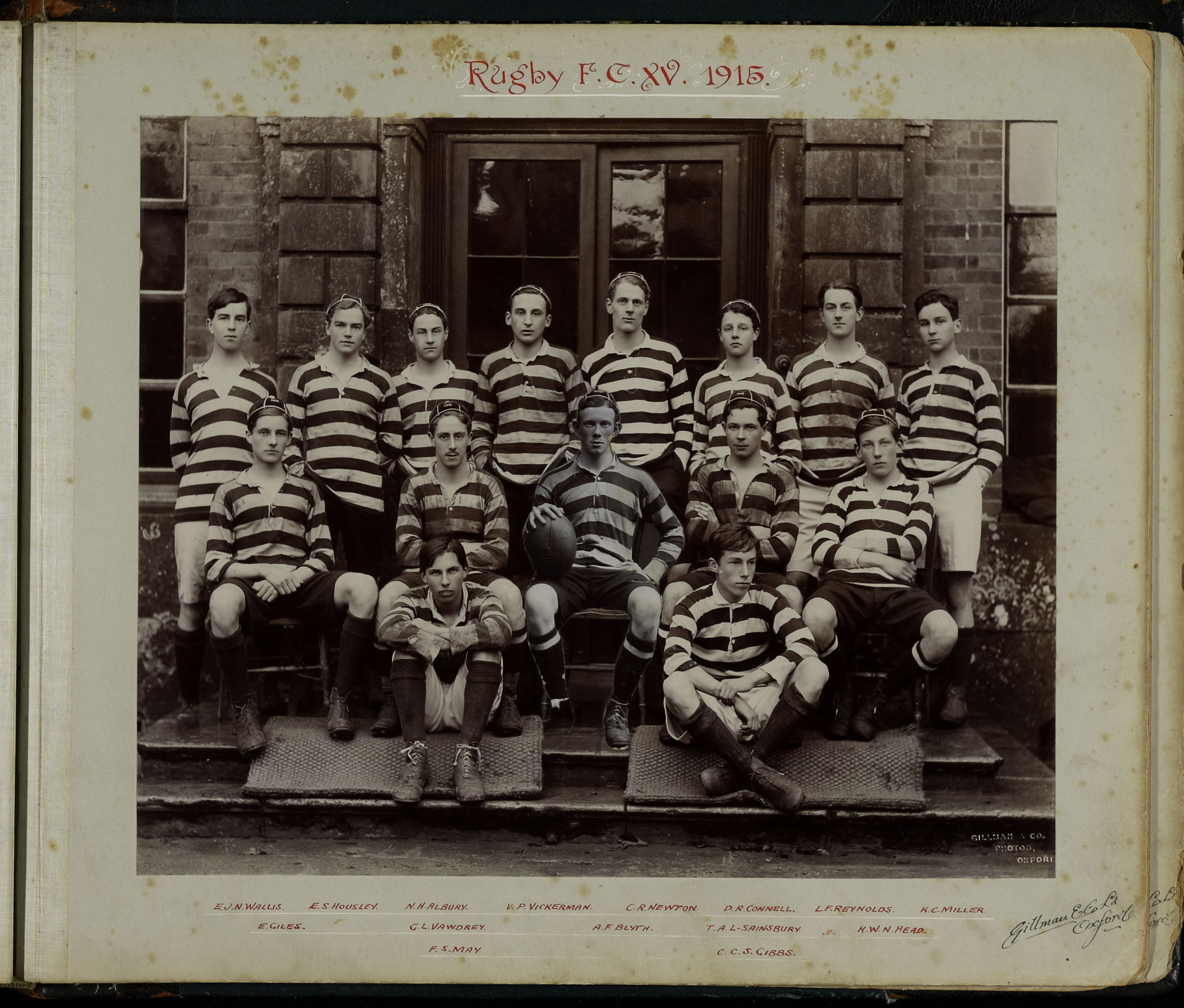
At school he was a Junior Scholar who won the French Prize, a prefect, and played for the Rugby XV. He enlisted as a private in the Royal Field Artillery when he left school in 1916. He achieved his commission after additional training.

He is buried at Templeux-le-Gerrard, on the Somme.

Aged 19

2nd Lt Charles Newton, kia 20 September 1918

Radley College 1st XV, 1915

Commemorating the Fallen of WW1

Today we remember …

18th September 1918

Arthur Clegg-Hill, DSO, C Social 1891. Lt-Col (commanding), 12th Bn Cheshire Regt. Killed in action, Battle of P Ridge, Macedonia, Greece

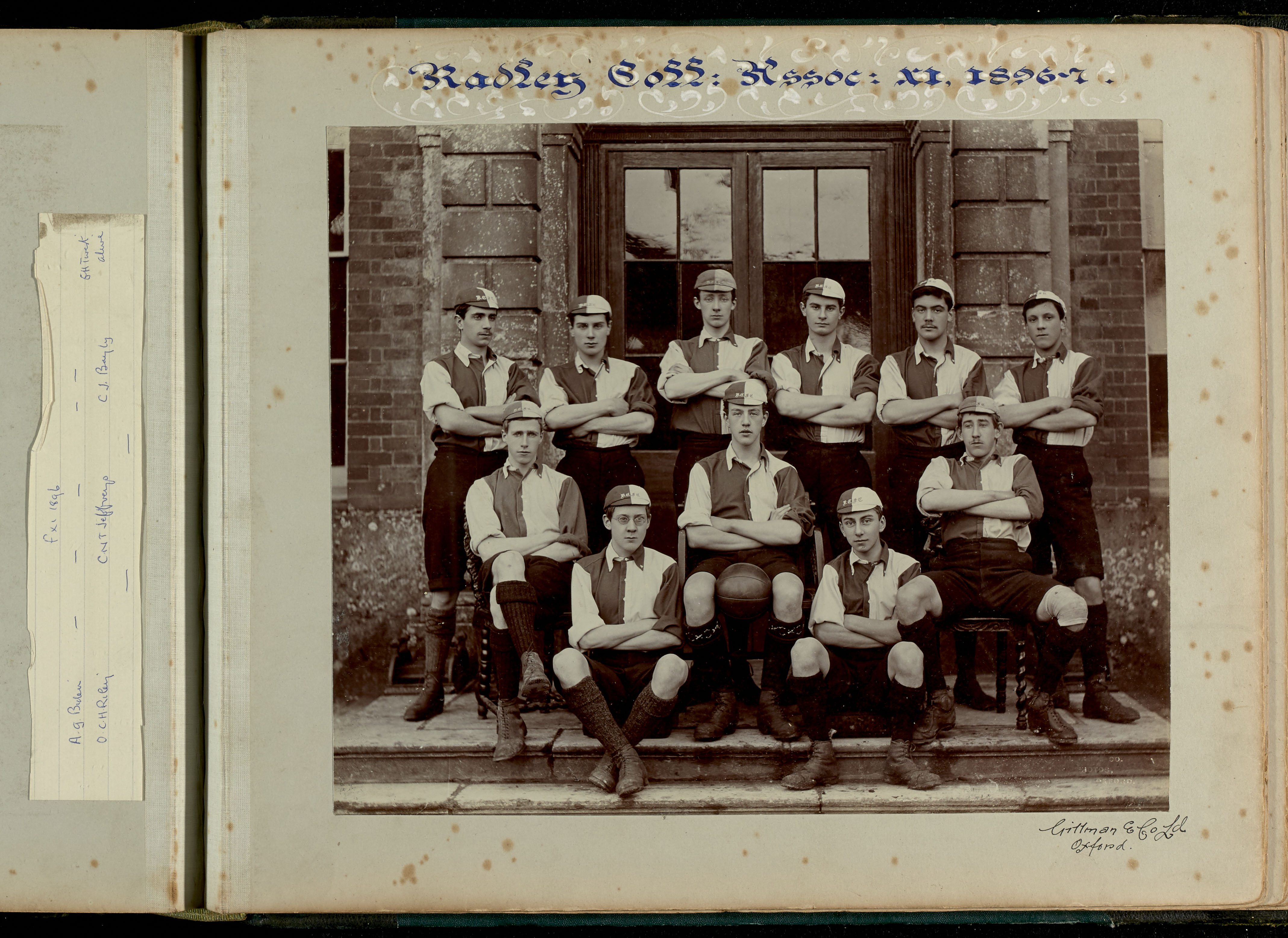
At school, he played for the Soccer XI.  On leaving school, he became a career soldier and served in the 2nd South African War.  In 1902, he became a farmer in South Africa.  He returned to service on the outbreak of WW1.  He was twice mentioned in despatches and awarded the DSO.

His battalion was awarded the Croix de Guerre with Palm for the action at P Ridge:

Citation for the Croix de Guerre with Palm awarded to 12th Bn. Cheshire Regt.

A GALLANT CHESHIRE BATTALION. AWARDED THE CROIX DE GUERRE WITH PALM. On Sunday, March 2, the General Officer Commanding-in-Chief, British Salonika Force, on behalf of General Franchet d’Esperey, the G.O.C. in Command Allied Armies in the Orient, presented the 12th (Ser.) Battalion Cheshire Regiment with the Croix de Guerre with Palm, in recognition of their gallant conduct and magnificent attack on September 18, 1918. The battalion was mentioned in a French Army Order as “a marvellous battalion, which has shown the finest qualities of courage, enthusiasm, and endurance.” The order continues :- ” On September 18, 1918, gallantly led by Lt.-Col. the Hon. A. R. Clegg·Hill, D.S,O., in person, it rushed to the assault of a strongly fortified position, showing a magnificent spirit of self-sacrifice. In spite of a cross fire from artillery, trench mortar, and machine guns, and of the loss of its commanding officer, who fell mortally wounded, the battalion continued to advance, making light of its heavy casualties, and thereby giving a glorious example of heroism, and the loftiest traditions of the British Army.”

In the December dispatch of General Sir G. Milne, G.O.C. in Command, British Salonika Force, the battalion is again mentioned for its attack on the ” P” Ridge in September. “After severe fighting the 12th Battalion Cheshire Regiment succeeded in reaching the third line of trenches. At this point they came under a devastating machine gun fire, and, unable to make further progress, were eventually compelled to fall back to their original position. In their heroic attempt they had lost about 65 per cent. of their strength, including Lieutenant- Colonel the Hon. A. R, Clegg-Hill, D.S.O., who fell at the head of the battalion.”

Aged 41

Radley College Soccer XI 1896 (unnamed – includes Arthur Clegg-Hill)

Commemorating the Fallen of WW1

Today we remember …

14th September 1918

George Plater, E Social 1899. Private, 2/20th Bn, London Regt. Killed during the ‘Advance to Victory’ in an unknown engagement

He was at Radley for just one year, leaving in 1900.  George Plater’s death was not recorded in The Radleian magazine in 1918.  He is not included on the War Memorial. He is listed as still alive in the 1923 and 1962 Registers, both of which record that he went to work on the London Stock Exchange after leaving school. Work on updating the Registers in the 1990s received confirmation of his death in 1918, via the family of his sister, who was his only surviving relative in 1918.

He was killed during the ‘Advance to Victory’ and is among 9000 servicemen who have no known grave who are listed on the Vis-en-Artois memorial.

Aged 34

Commemorating the Fallen of WW1

Today we remember …

30th August 1918

George Simpson, G Social 1910. Lt, Cheshire Regt. Died of wounds received in an unknown engagement

He volunteered for service on the outbreak of war and received his commission in March, 1915; he served in France until July, 1916, when he was wounded; he returned to France on Aug. 30, 1917, and met his death exactly a year later.

He was an only son. He is buried at Terlincthun Cemetery, Pas de Calais.

The War Memorial Committee Minutes record the George Simpson Exhibition which was created in his memory to help Radleians at university.  The first recipient was George Mallaby, Senior Prefect in 1921, to help him go to Oxford; others aided by the gift were RE Raikes at London University and Vincent O’Connor at Oxford.  Vincent O’Connor became one of the most significant donors of rare and valuable books to Radley College Library – a skill in collecting which he gained at Oxford.

Aged 22

Commemorating the Fallen of WW1

Today we remember …

23rd August 1918

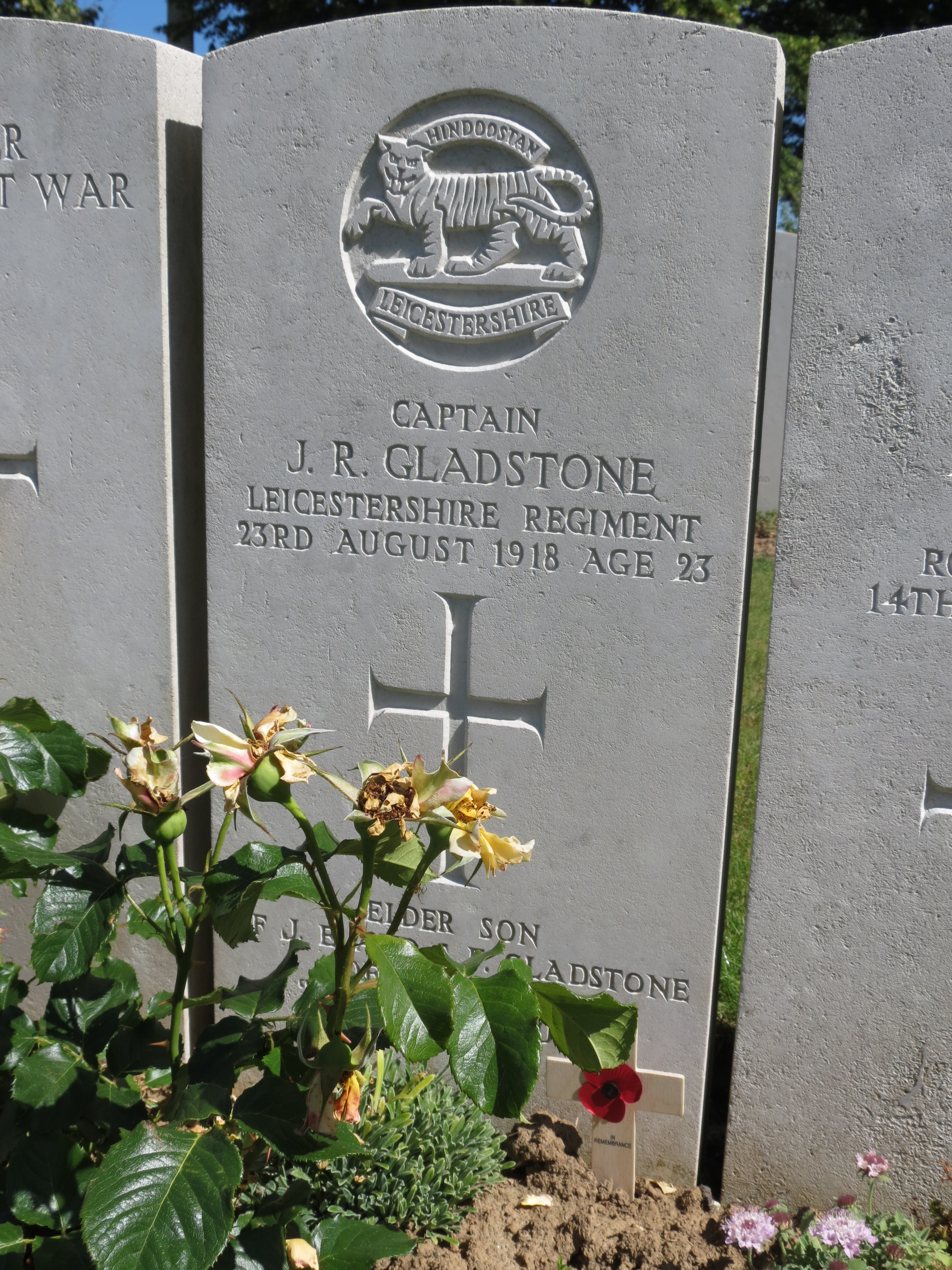
John Gladstone, G Social 1909. Captain, 6th Bn, Leicestershire Regt. Killed in action, Battle of Albert

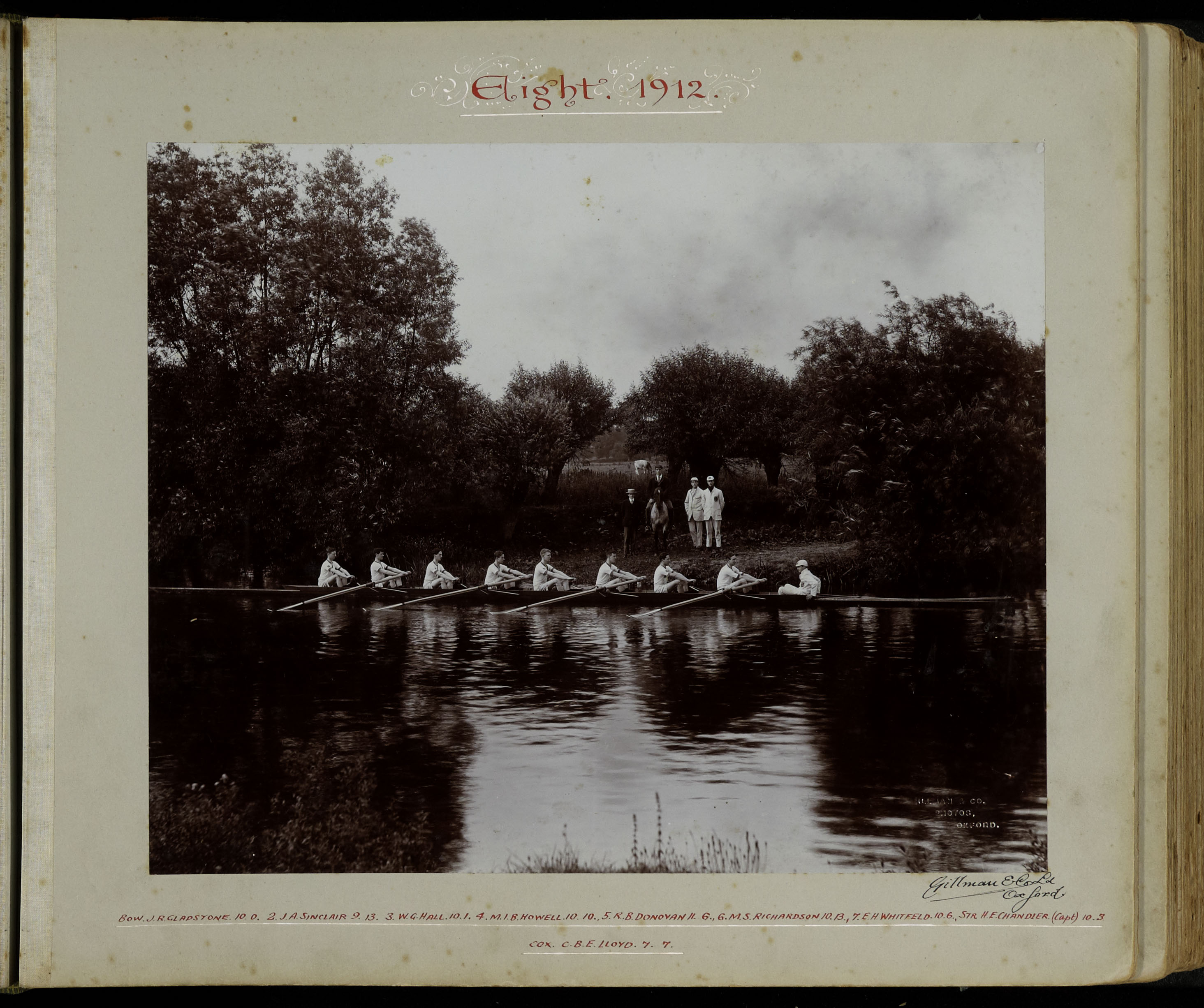
At school he rowed for the First VIII in 1912. After school he worked ‘with Messrs Lysaght Ltd.’ – a steel-working company in Bristol.

He joined up immediately on the outbreak of the war: received his commission on Aug. 28, 1914, in the Leicestershire Regiment. He went to France in July, 1915, and was wounded in July, 1916.He returned to France in January, 1917; he was severely wounded in the following April and was shortly afterwards promoted Captain and mentioned in dispatches. He again went to France in May and was killed on 18th September, 1918.

The Radley Register and Commonwealth War Graves Commission disagree with the obituary in The Radleian and give his date of death as 23rd August 1918.

Aged 23

Captain John Gladstone’s grave at Serre Road No 1. Photographed for ‘Marching in Memory’ July 2015

Radley College First VIII, 1912. John Gladstone at bow

Commemorating the Fallen of WW1

Today we remember …

21st August 1918

Nicholas van Gruisen. E Social 1904. Captain, Liverpool Regt. Killed in action, Battle of Albert

He went straight into the army on leaving school in 1909.

Aged 29

Nicholas van Gruisen’s grave at Bienvillers Military Cemetery, Pas de Calais. Photographed for ‘Marching in Memory’ July 2015