The Radley Reach of the River Thames runs downstream from Sandford Lock to the railway bridge beyond the island at Nuneham, on the way to Abingdon Lock. The Berks shore is the north bank of the River Thames on which Radley College stands. The opposite bank is the Oxfordshire side. Radley College did not have permanent access to any of the land on either side of the river until 1886 when a field was bought for the boathouse on the Berks bank at Sandford; later a lease was signed for the site that eventually became the Evans Boathouse by Nuneham island. The field where the current boathouse stands next to the Lower Radley causeway was bought by Old Radleian Richard Bradshaw and given to the school in the 1920s.
1847 – 4th June, Warden Robert Singleton and Sub-Warden Captain Haskoll took a walk along the river bank ‘We were not struck by any suitable place in the neighbourhood of Radley for a boathouse.’
1849 – ‘a boathouse used by the school stood on a creek on the Berks shore’
However, by 1849 a suitable site had been found, just a few hundred yards downstream from where Radley’s current boathouse stands. A small boathouse spanned a creek which led to a small bay. The bay was crossed by a wooden causeway similar the the contemporary ‘Long Bridges’ at Grandpont in Oxford. The boats were kept in the water under it, on the landward side of the bridges. A shed further upstream was long enough to house eights. In 1851, Singleton banned boating and the boathouse went out of use temporarily.
1852 – Bathing at Sandford
Warden William Heathcote negotiated a bathing place at Sandford, instituted swimming classes and allowed all who ‘passed’ to boat. The boathouse on the creek came back into use.
1853 – ‘Earthworks’
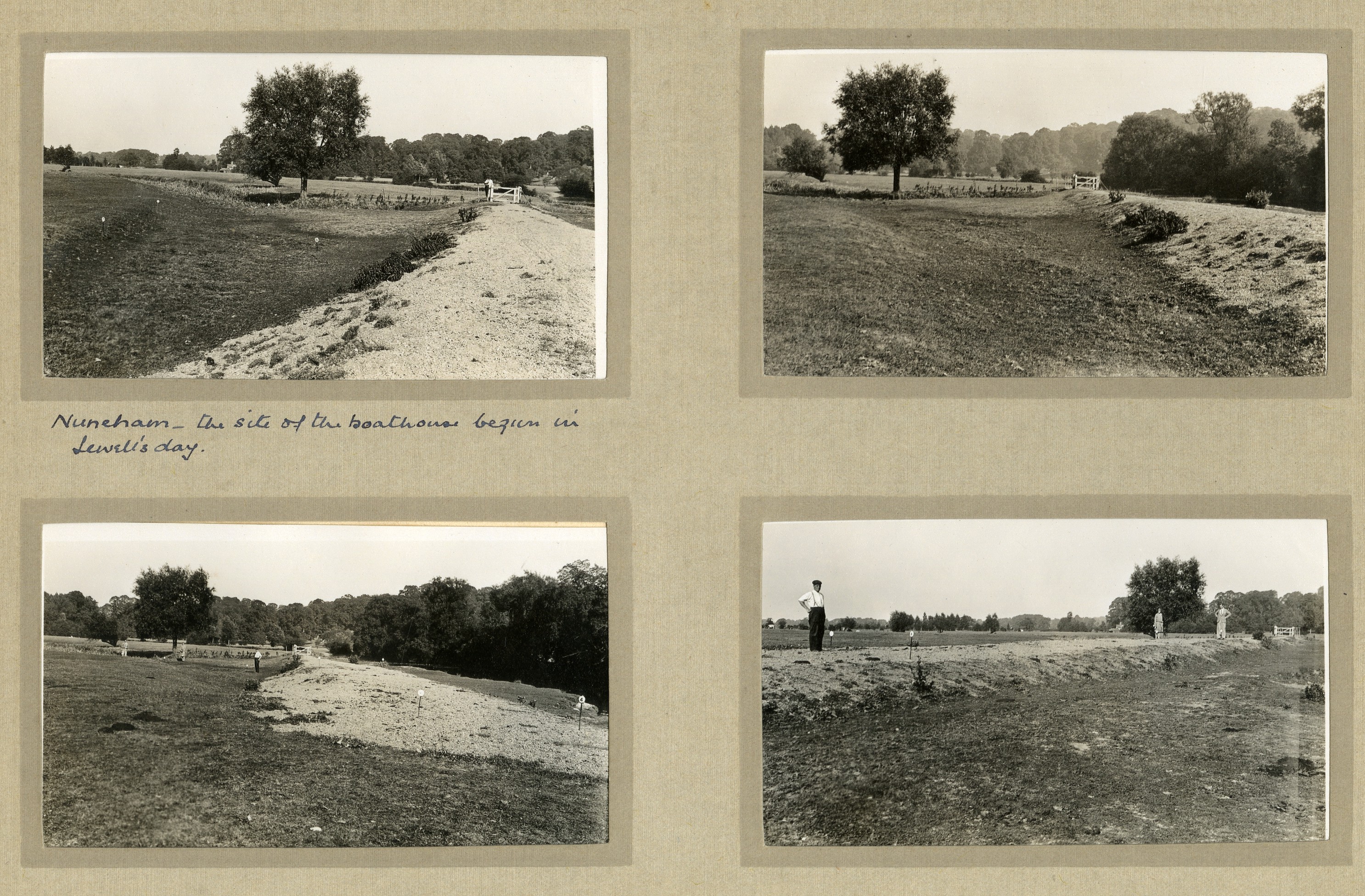
When William Sewell became Warden in 1853, he drew up plans for a ‘proper’ boathouse (rather than a shed), with a cottage for a boatman. Work began on a site a little further downstream than the existing structure. But the land it stood on was then sold to Mr Harcourt, owner of Nuneham Courtney House on the opposite bank. He stopped the work. Local tradition records that the site was still visible and marked as ‘Earthworks’ on the 1933 Ordnance Survey map.
1855 – Sandford Lock
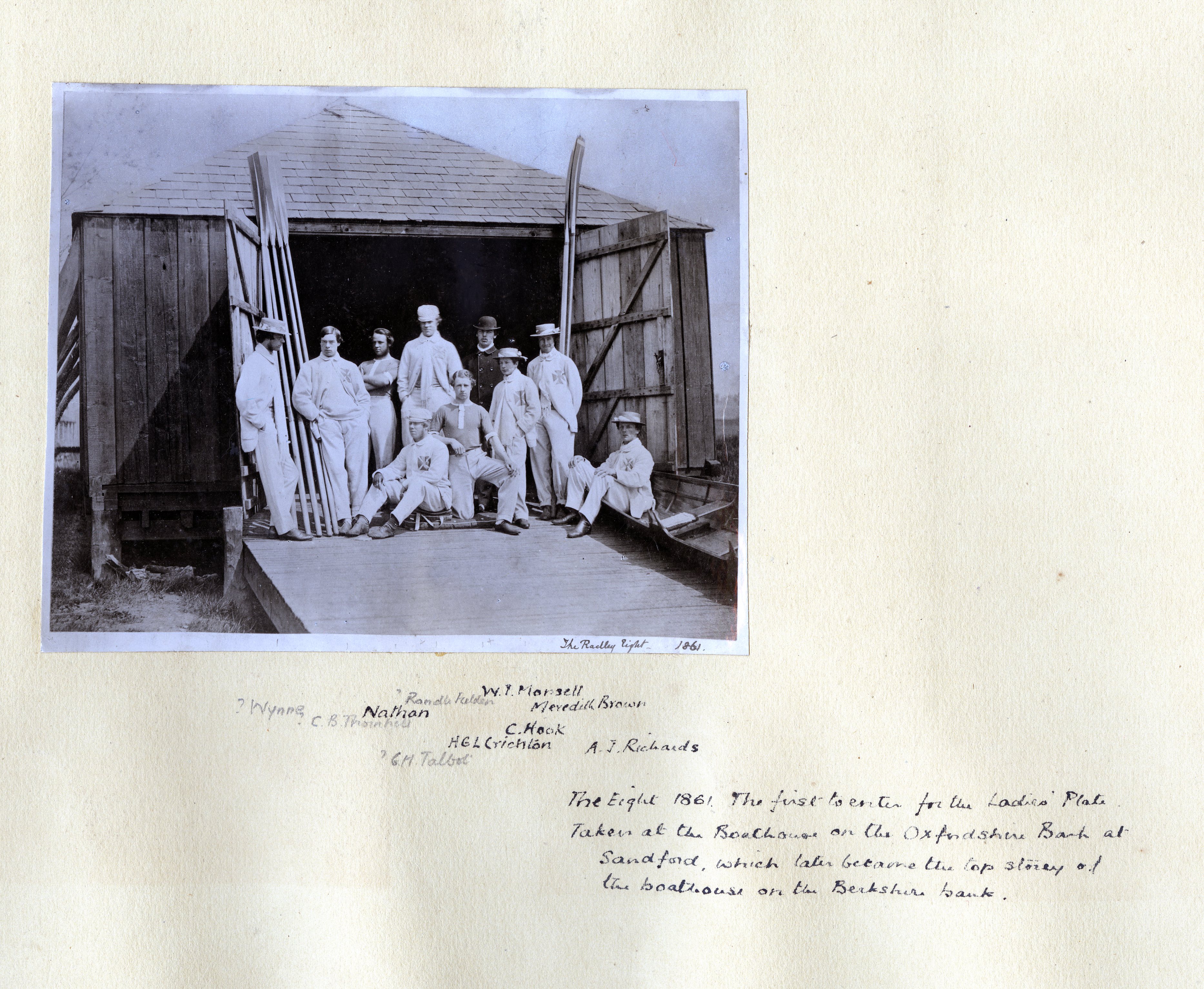
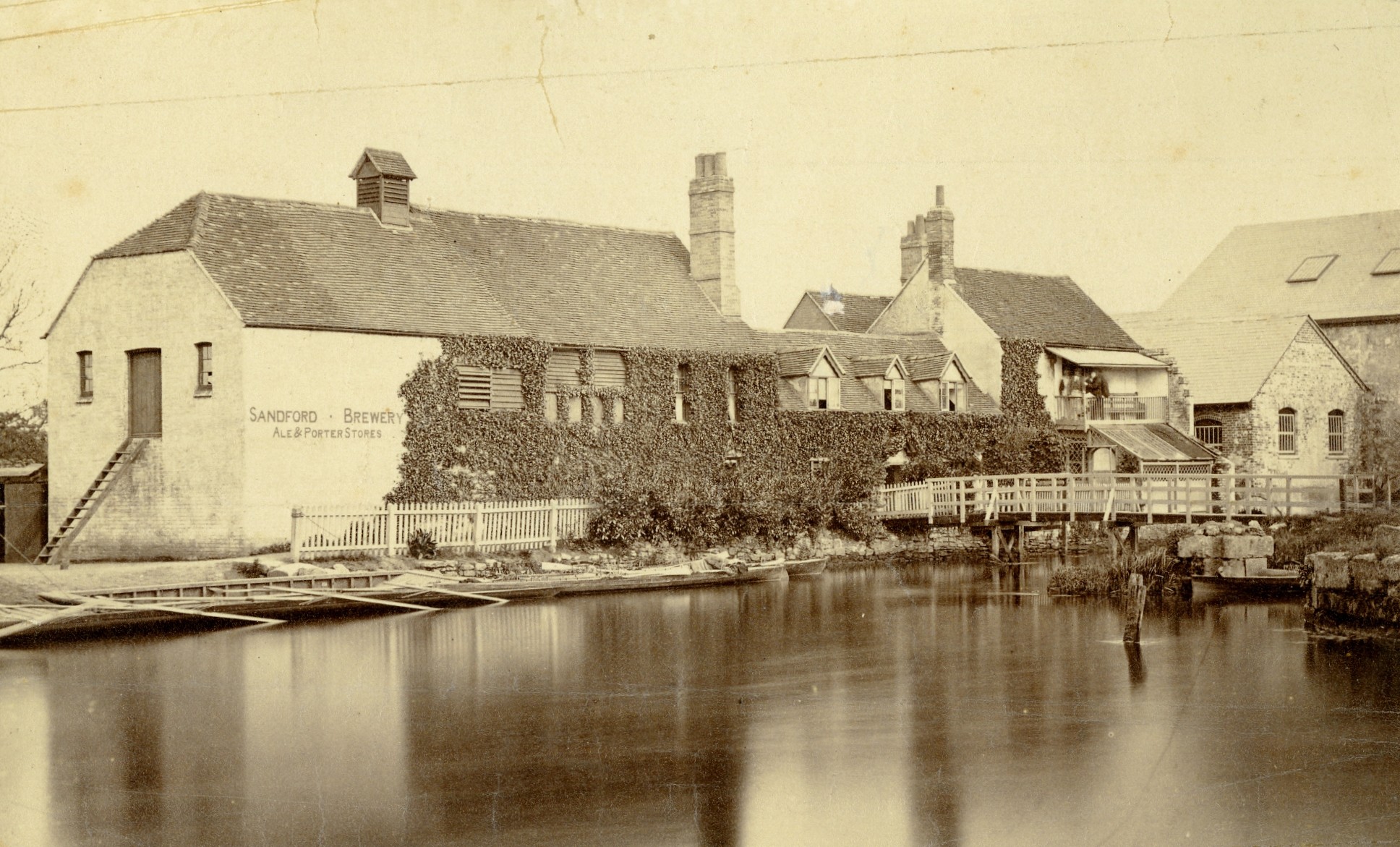
For the next few years boats were kept in the open under the care of the lock-keeper at Sandford. He housed the oars, cushions etc. A little later a small floating boathouse was made fast to the bank just below the little lasher. In 1862, a more permanent wooden structure was built on the Oxfordshire bank at that spot. A small supplementary building was added on the Radley side of the river, just opposite the existing building, in 1882.
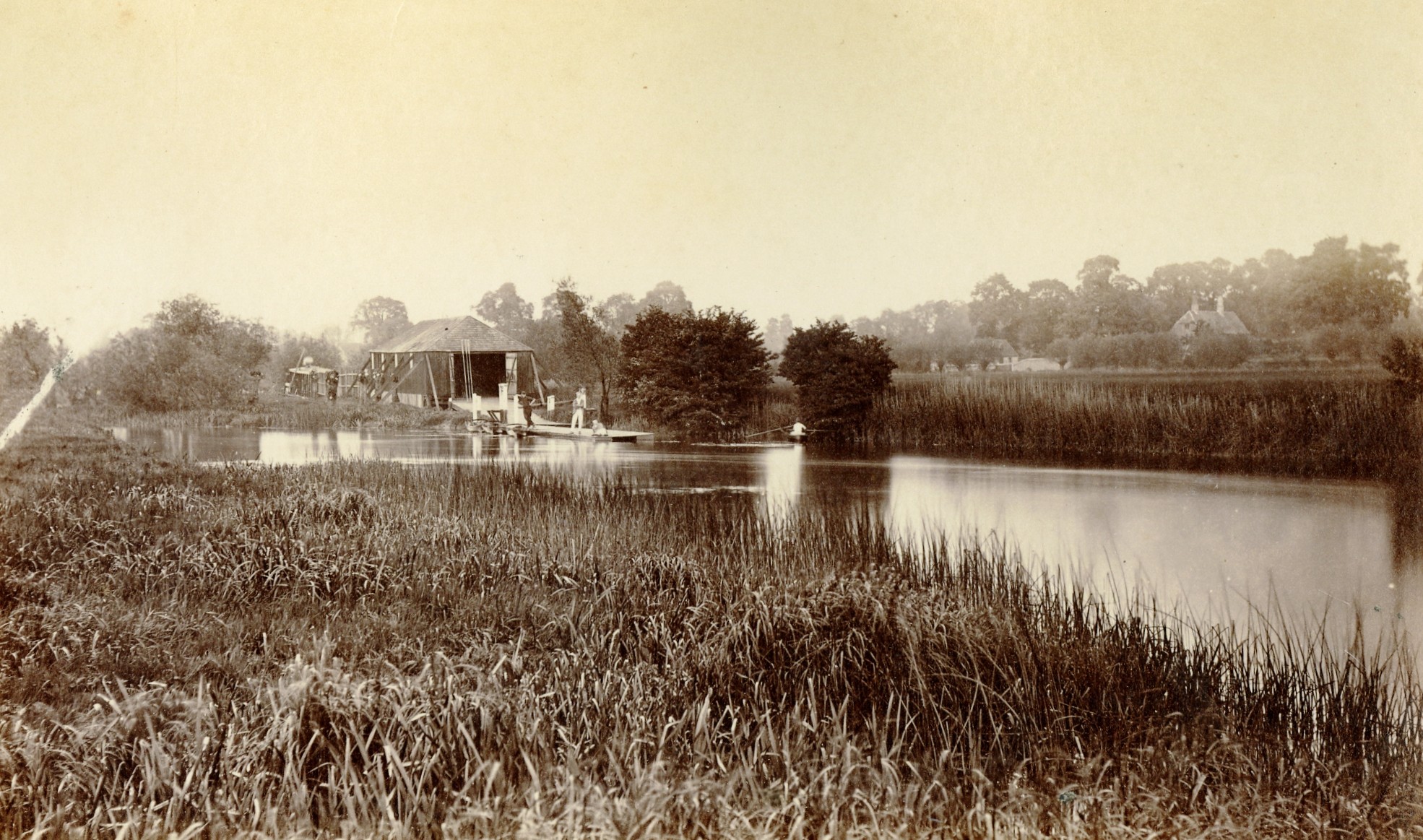
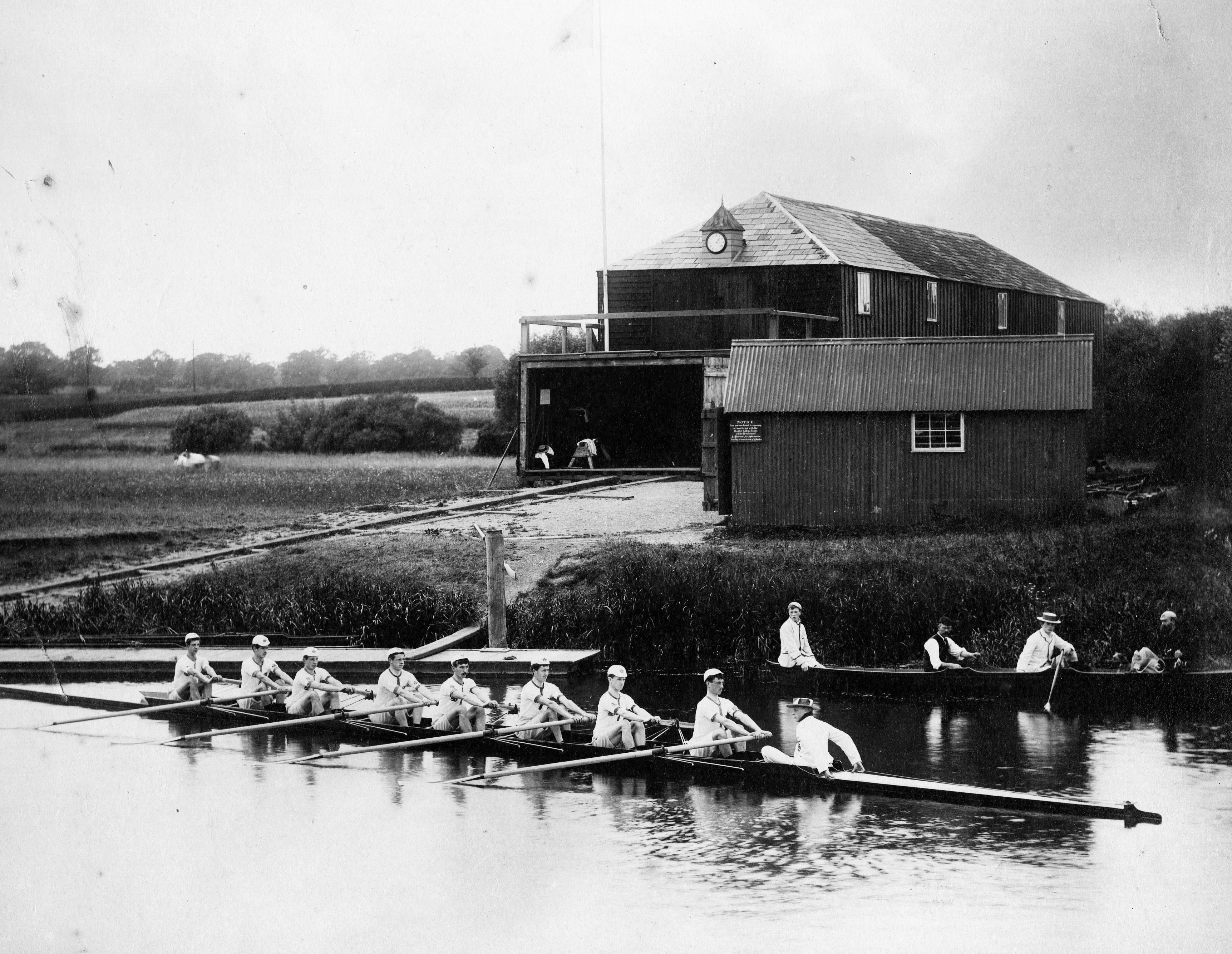
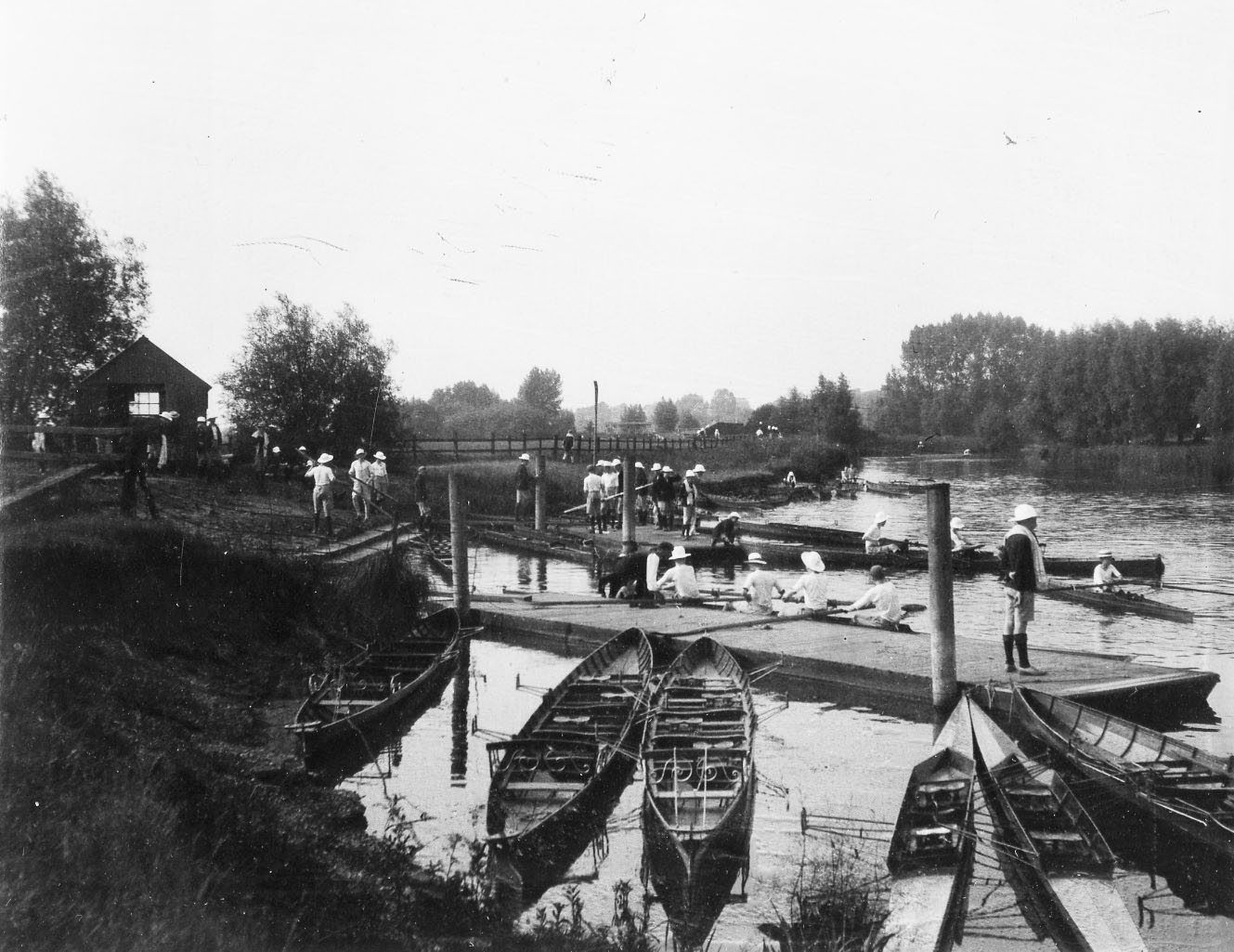
But the school’s finances were becoming more stable, more boys were encouraged to row and from 1886 it was possible to employ a boatman and to consider building a more permanent structure on the Berkshire bank. Radley College bought the field and the new building came into use in 1889, utilising the old building as its upper storey. It included a changing room for the 1st VIII and a clock. Rafts and a repair shed were added in the next few years. The lock-keeper’s services were dispensed with, to be succeeded by Oliver, a skilled boat-builder who built two Trial eights and some whiffs. He was succeeded by Robinson in 1899, followed by Partridge from 1903 until the latter retired in 1920.
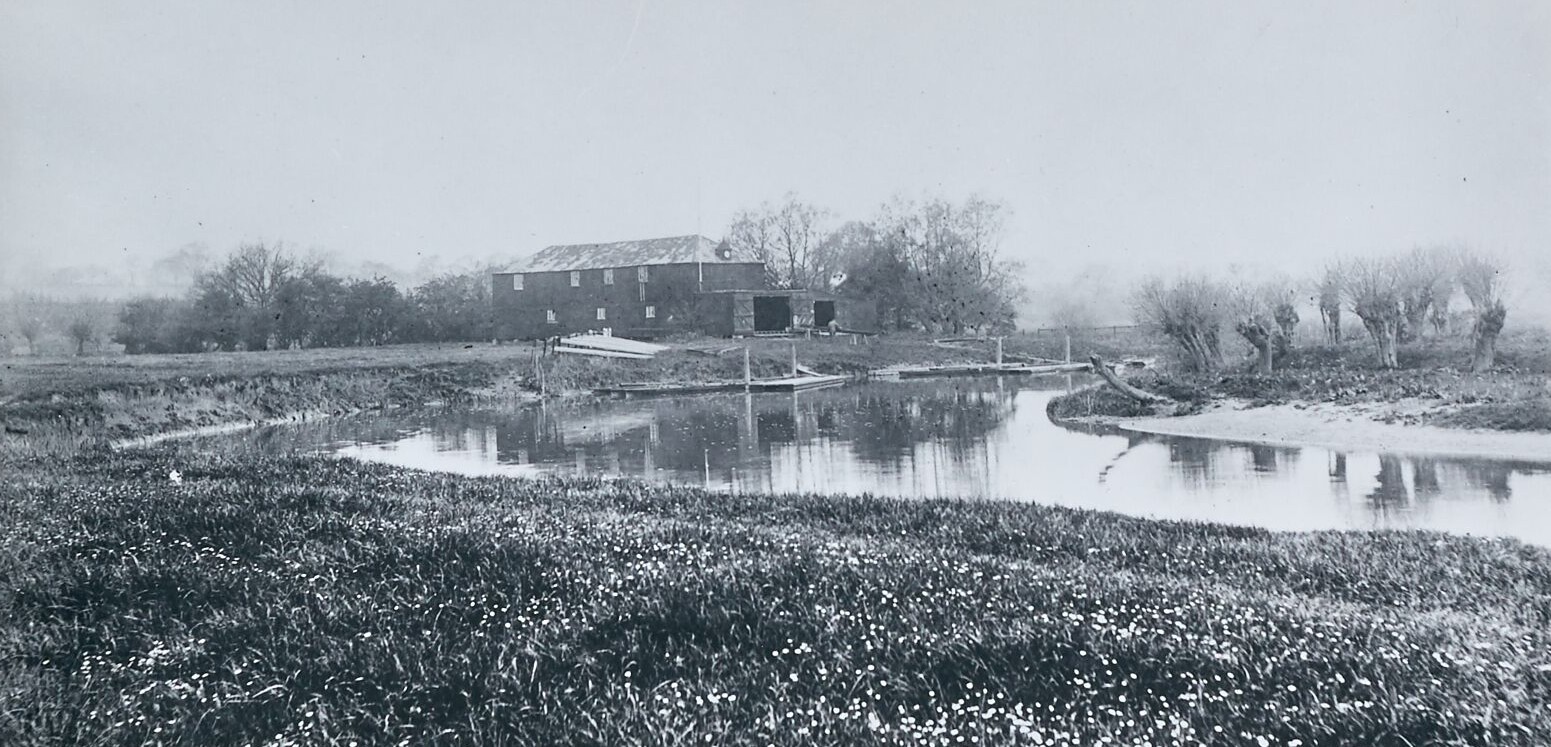
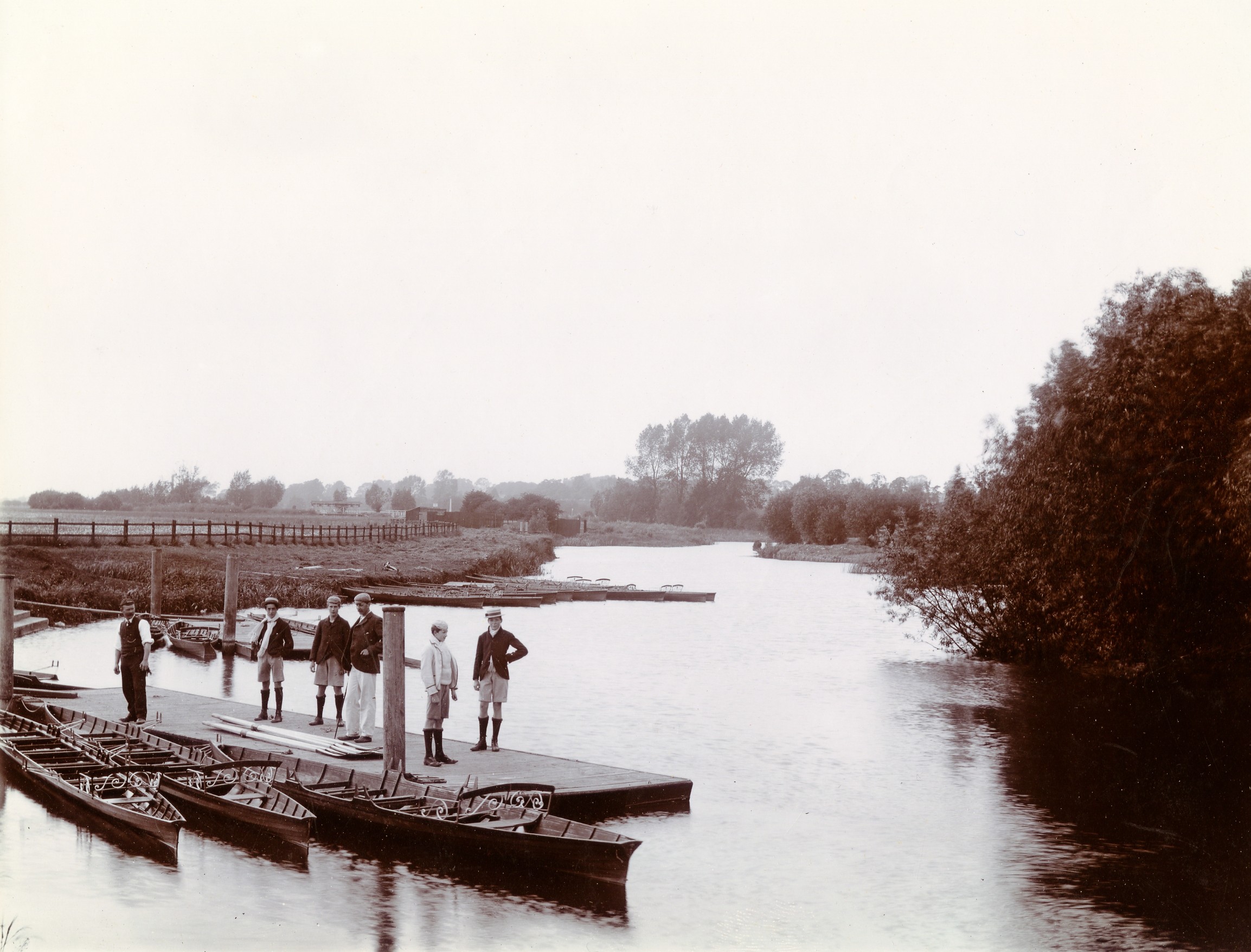
1911 – The Evans Boathouse
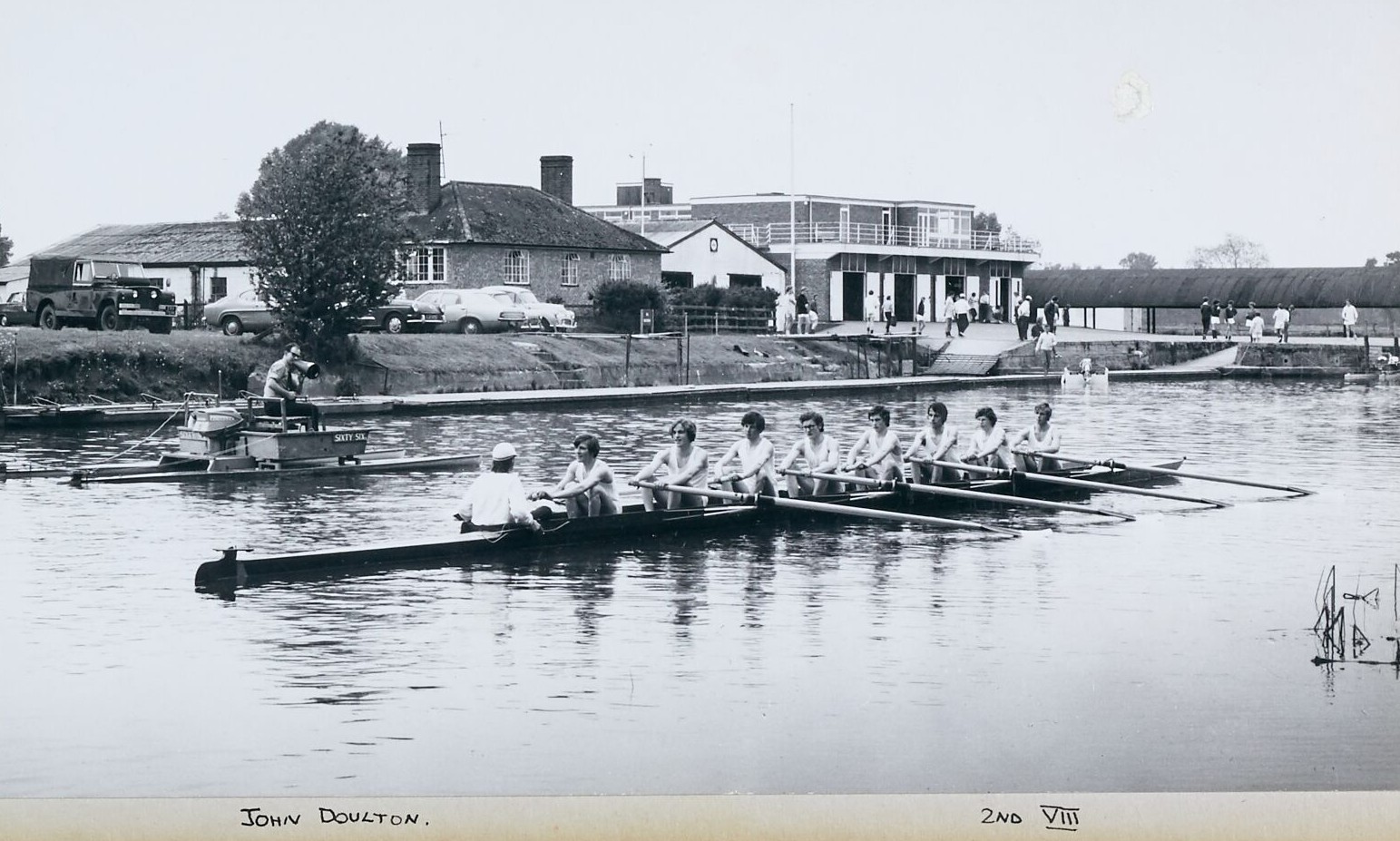
However, the boathouse at Sandford was a considerable distance away from the Abingdon reach and the 1st VIII had to make a tedious journey to their normal practice course below the Island. HM ‘Buffy’ Evans, OR, Sub-Warden, Master-in-Charge of Rowing and formerly coach of the 1st VIII, began to search for a better location. He arranged for a marquee much further downstream, specifically for use by the VIII. In 1903, Evans announced that negotiations had already begun to buy land at Nuneham for a new boathouse. These were still not complete when he died in 1909. Old Radleians decided that there could be no more fitting memorial than the boathouse he had worked to create. The building was designed in the Arts and Crafts style by an Old Radleian architect, Clifford Steward. It was converted into a private house in 1974.
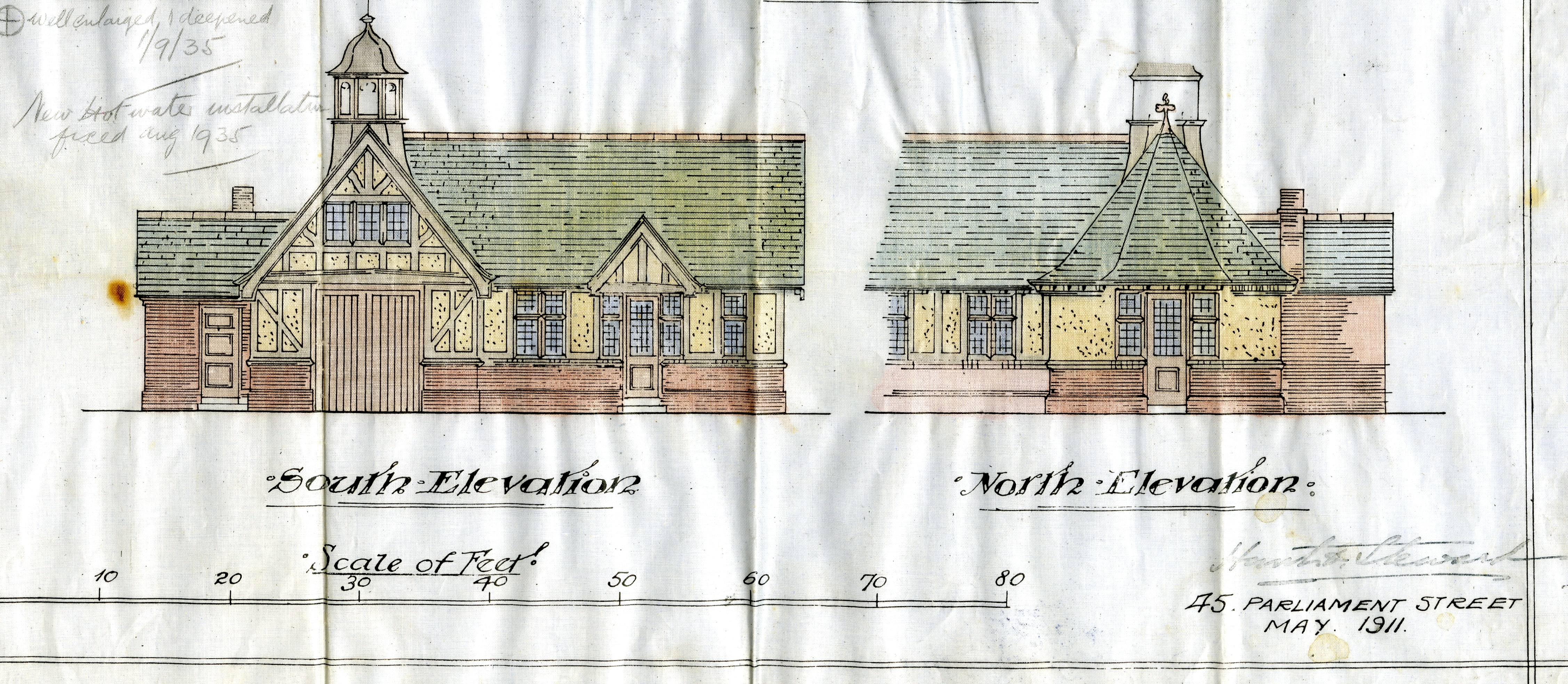
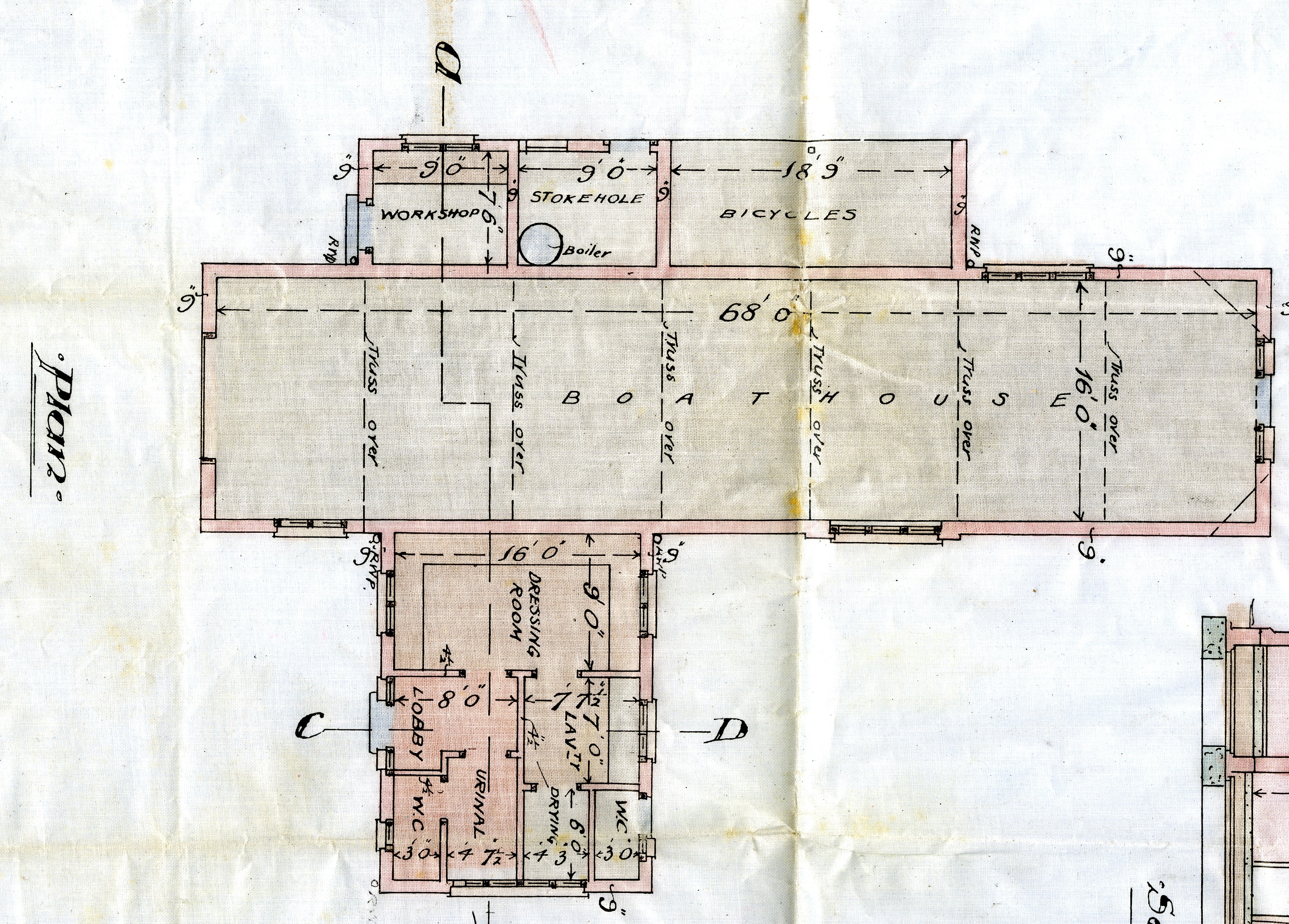
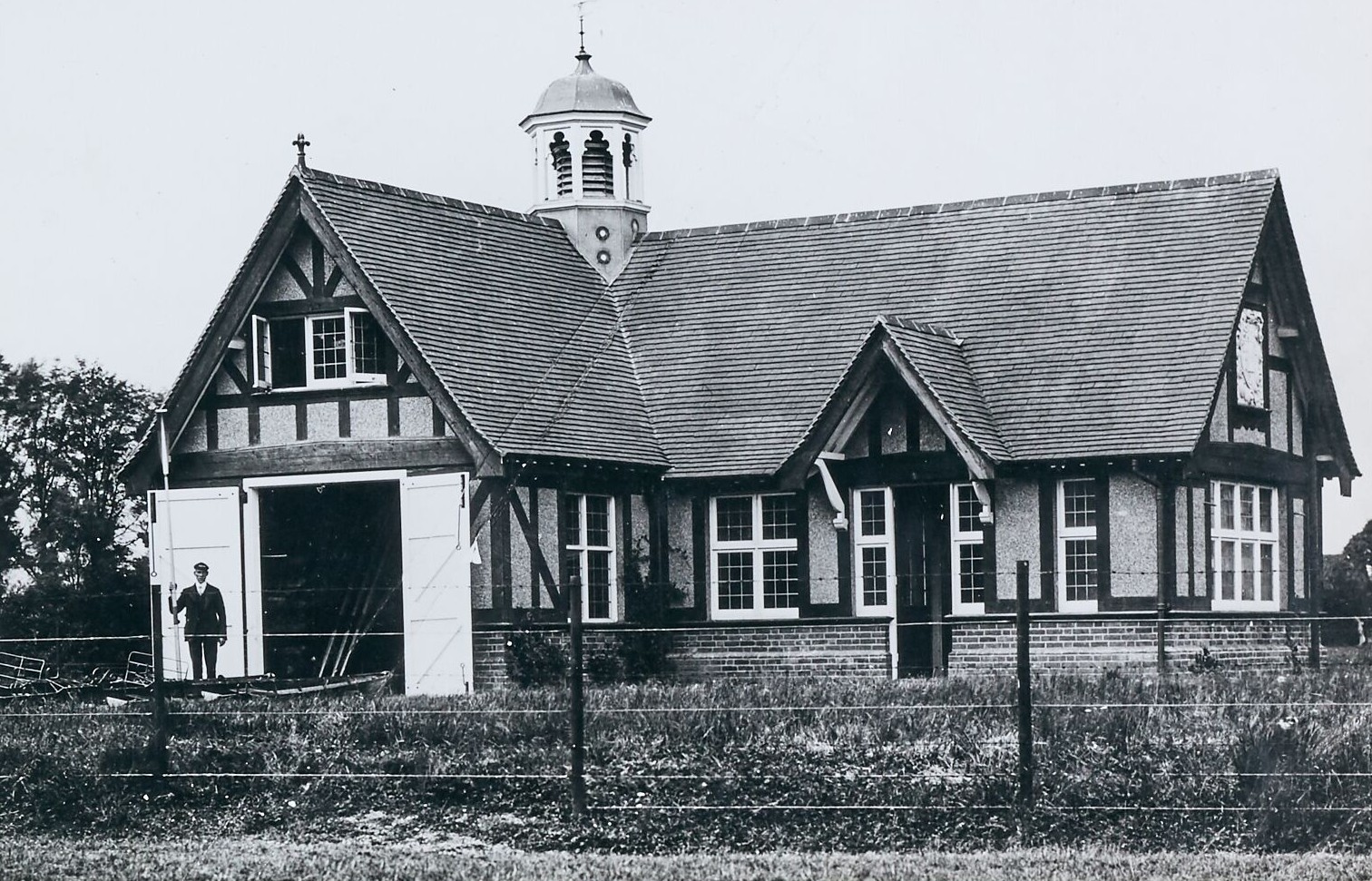
Controversy surrounded the new building. Evans’ own wish (it was claimed) was for a superb base only for the 1st VIII. However, no Old Radleian rowers could believe that the rest of the school should still be relegated to the long trek and inadequate facilities at Sandford. The Evans Boathouse was not large enough to accommodate the entire Boat Club, nor to provide a cottage for the boatman.
1921 – The Hope Boathouse
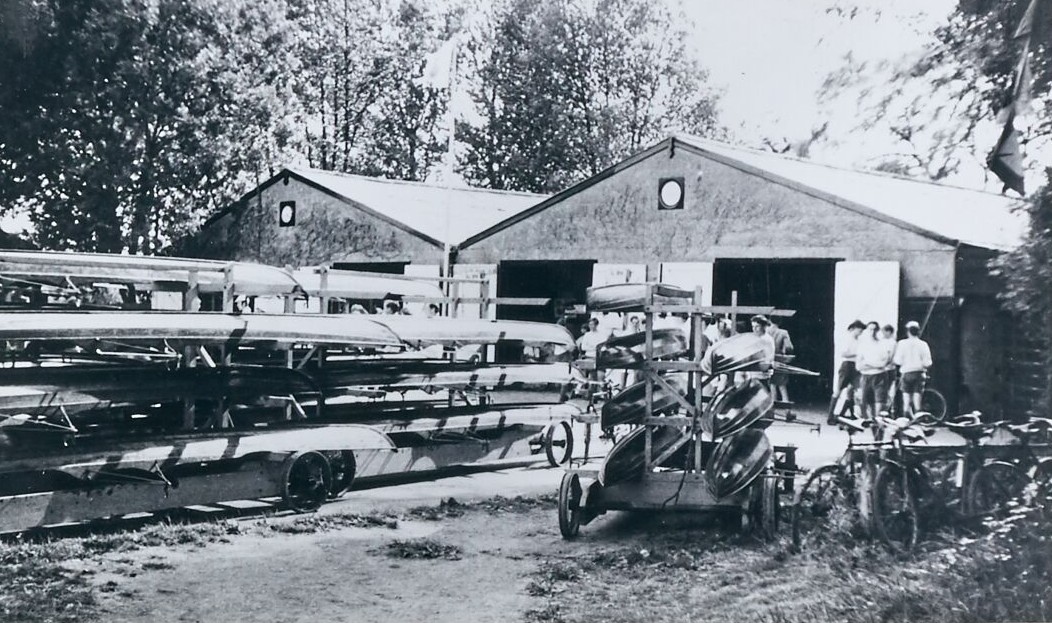
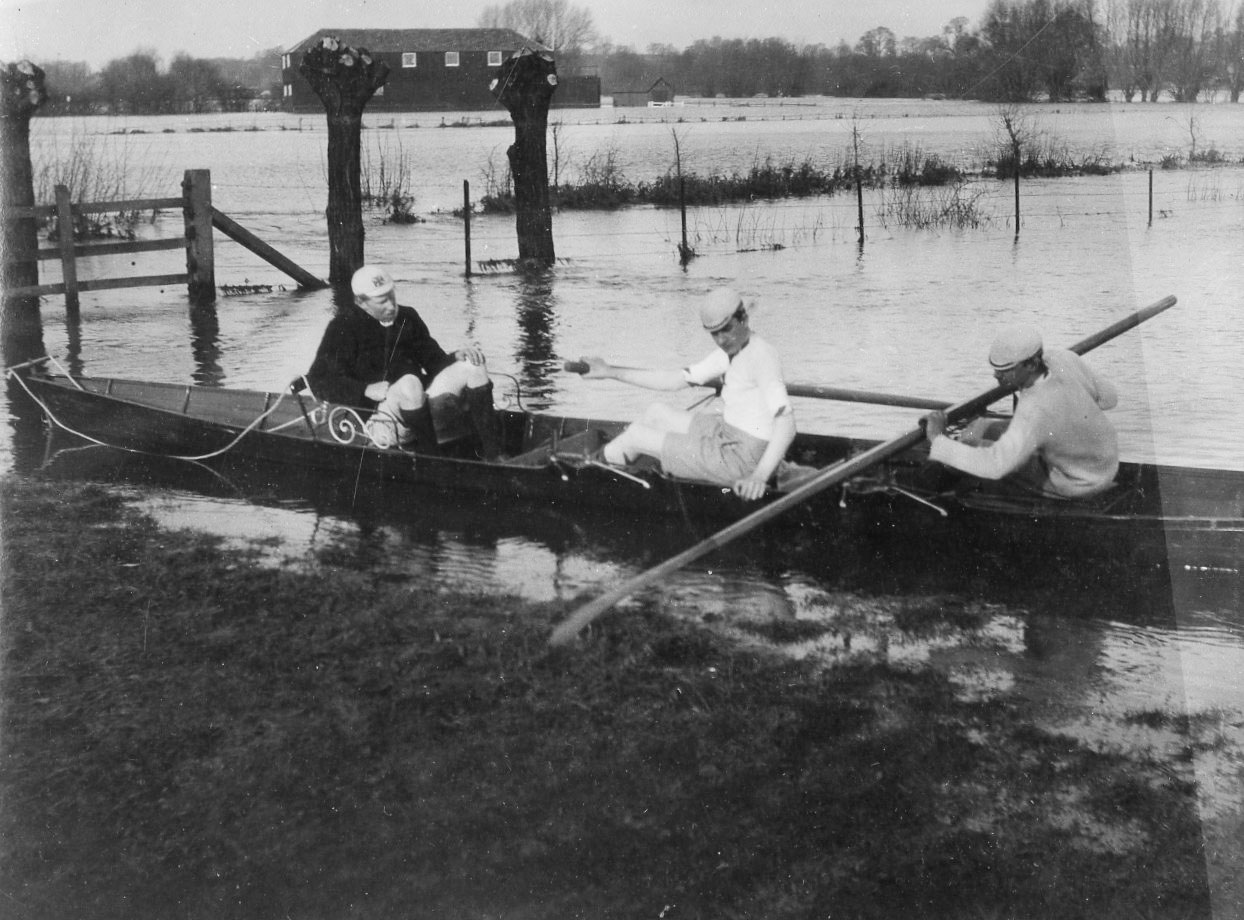
By 1919, the Sandford Boathouse needed £800 in repairs. Now was the opportunity to review the whole problem. Sandford was not ideal, not simply because of the distance, but also because the site so near the lock suffered severely from flooding. Some Trial eights had competed by rowing over the fields, whilst in a strong stream boats could be sucked up against the barges at the paper mill wharf or caught under the bridge. Vyvyan Hope and others retraced Singleton and Haskoll’s walk along the whole stretch of the river and ended up choosing a site very close to the earliest boathouse of the 1850s.
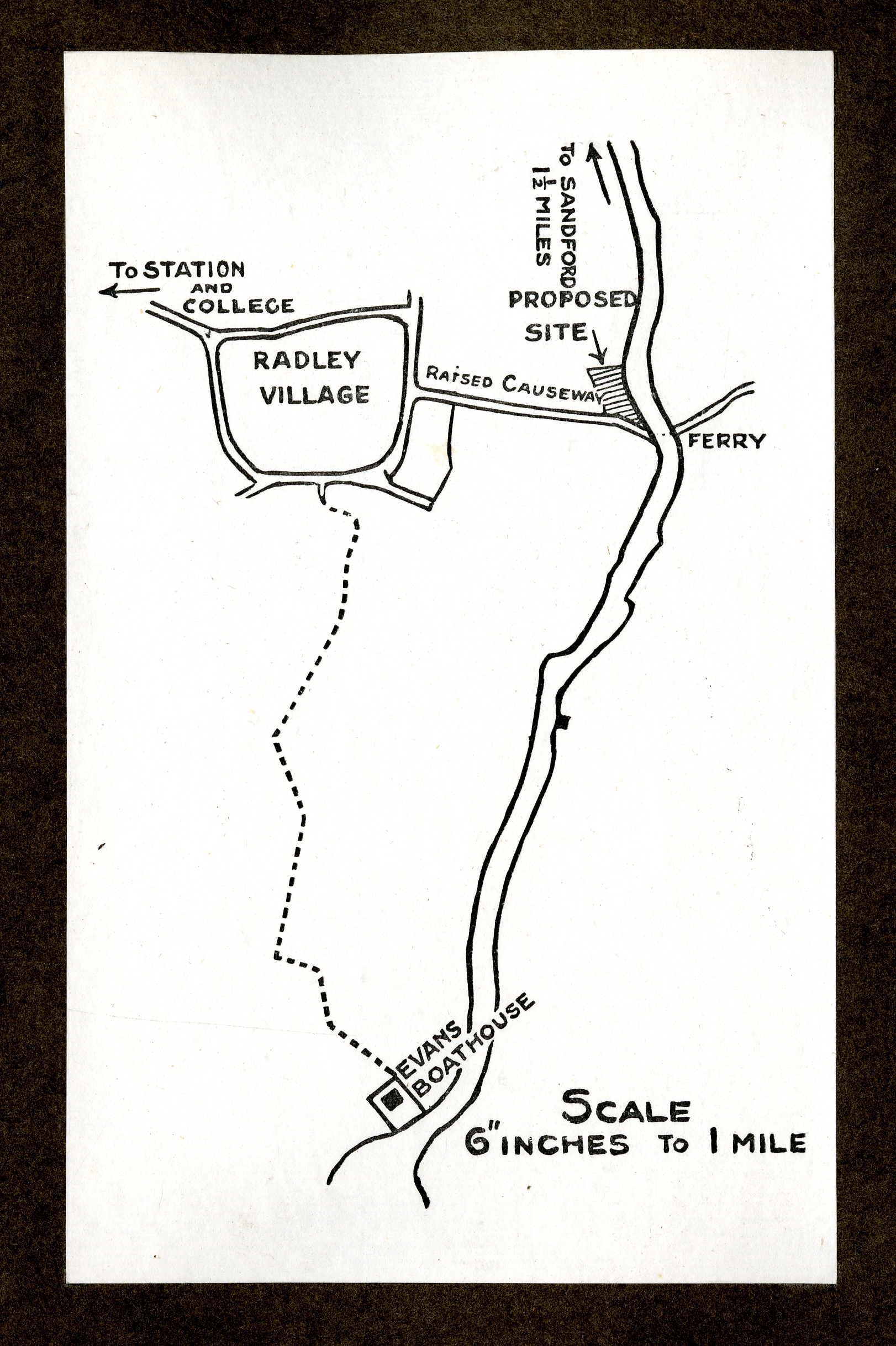
The proposed site was at the end of a causeway which had originally been planned to serve a bridge built by Mr Harcourt of Nuneham Courtney in the 1890s to connect his lands on either side of the river and to replace the Nuneham ferry. The bridge did not materialise. The ferry was still in use in the 1940s. The land on the Berkshire side was eventually sold to Josephine Docker-Drysdale of Wick Hall. Richard Bradshaw, Old Radleian and first President of Radley College Mariners, succeeded in buying the field next to the causeway, and gifted it to Radley College. Vyvyan Hope now had a viable site on a good stretch of river, easily accessible by bicycle from the school via the causeway. He set about fund-raising the necessary c£3500 for an ambitious four bay boat shed, with rafts, club room, changing rooms, workshops and cottage for the boatman. As far as possible, he planned to re-use materials from the now defunct Sandford boathouse, and the volunteer labour of a team of schoolboys and ORs working under the direction of two foremen. Doing all the work with this team over two Easter holidays, the new boathouse was in use by 1922.
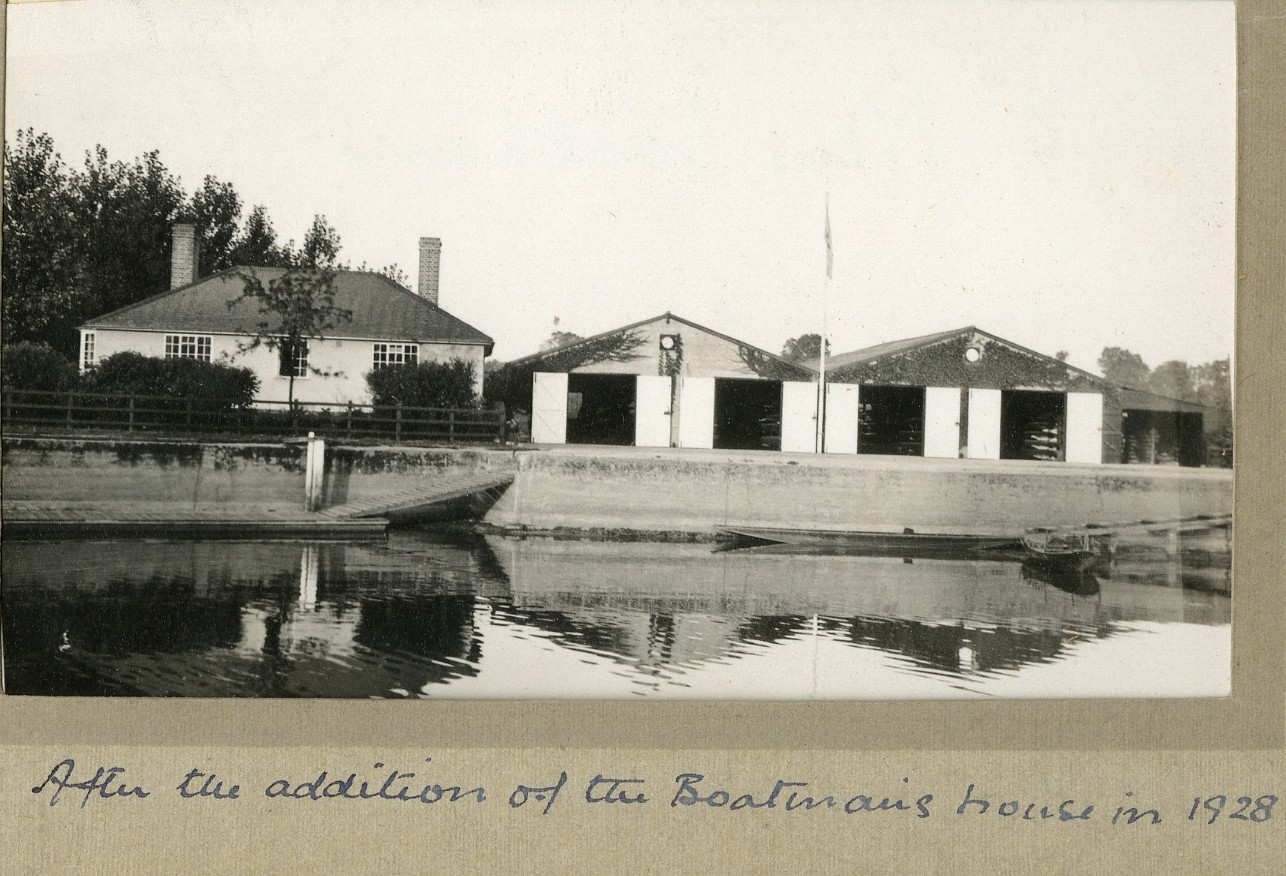
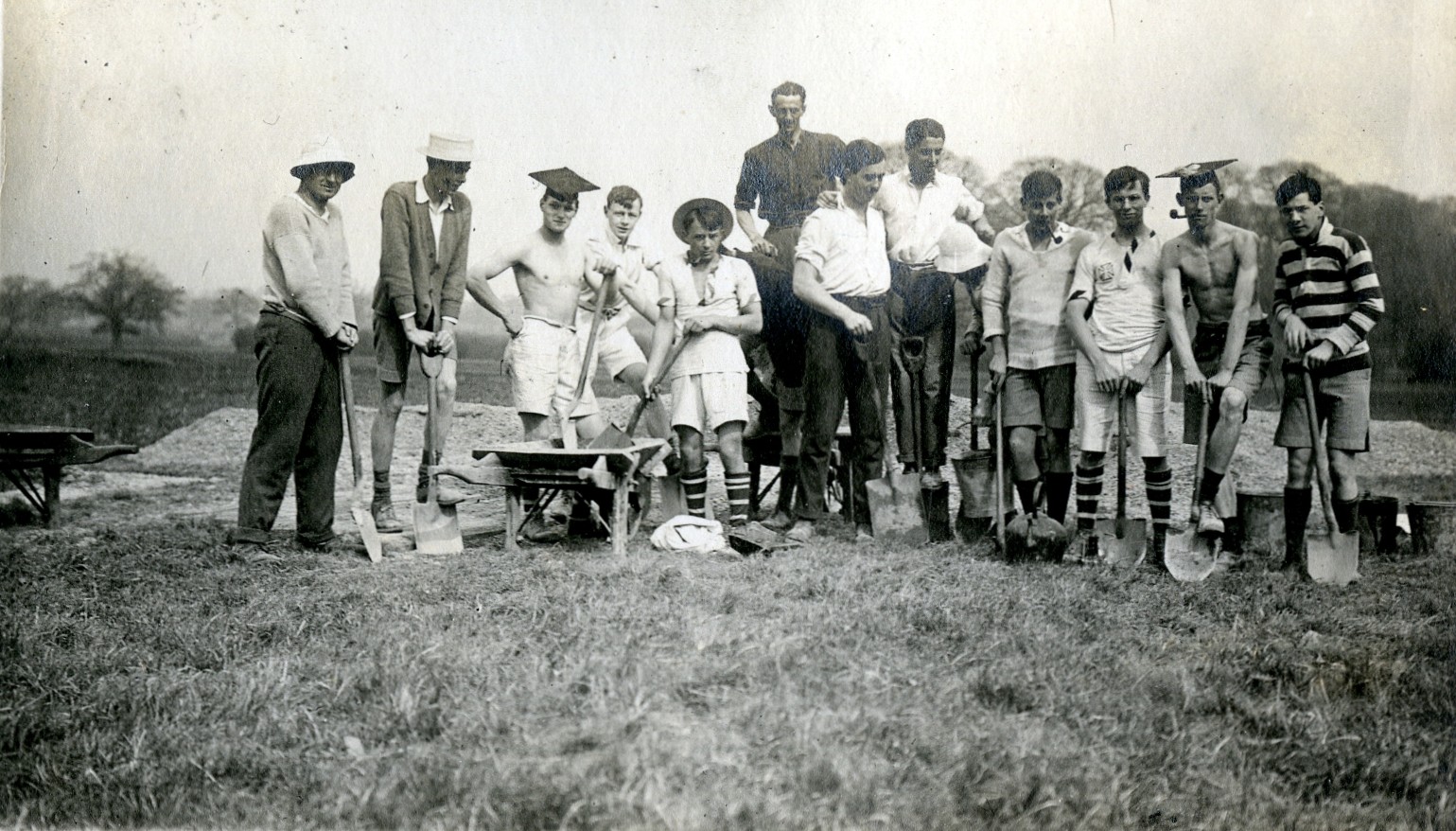
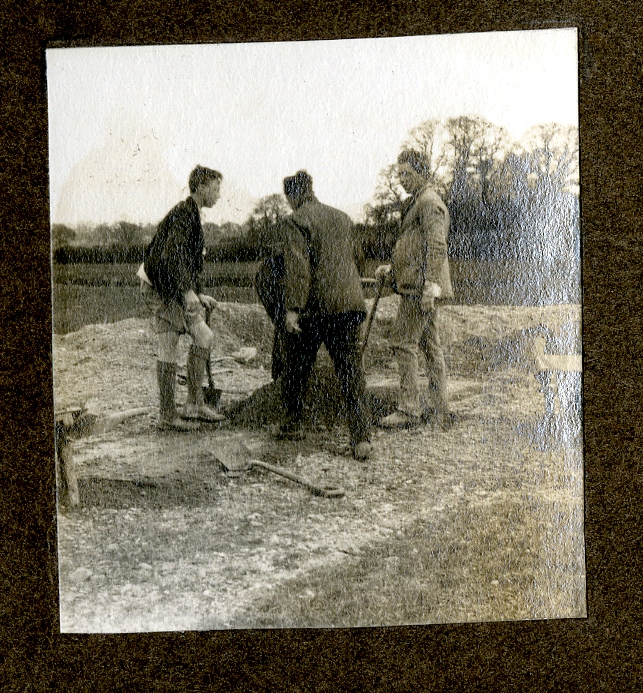
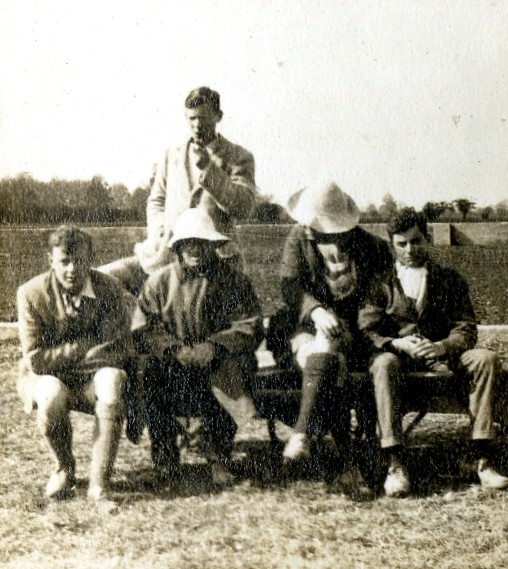
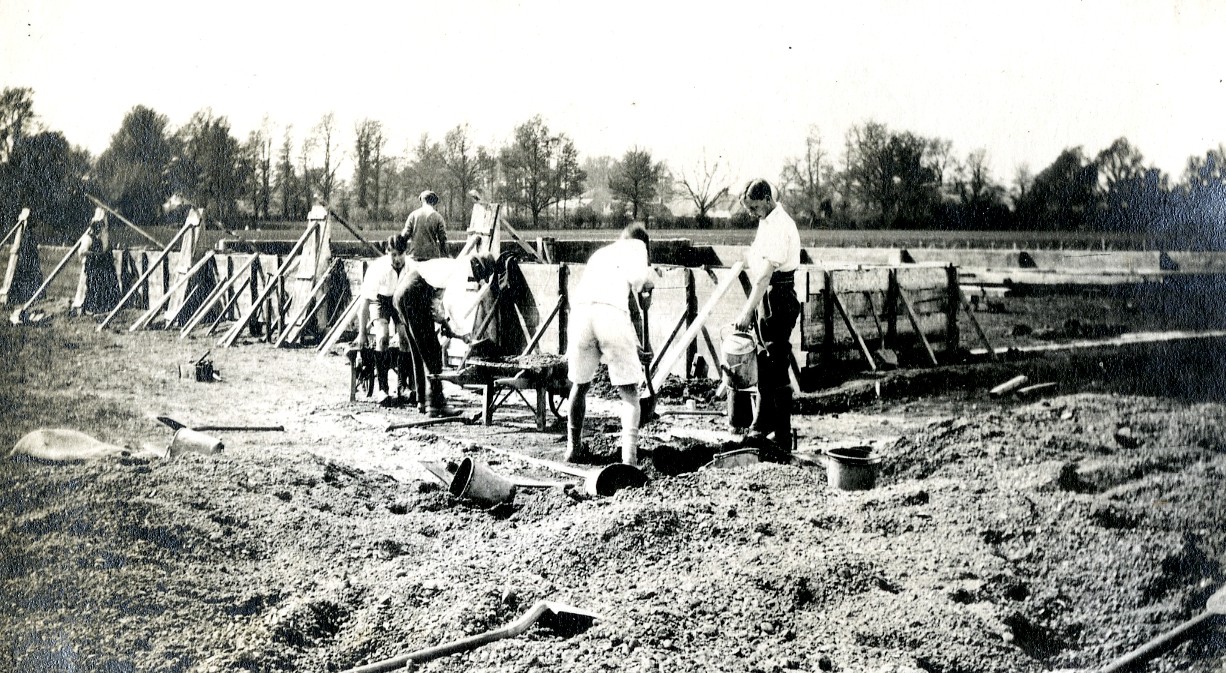
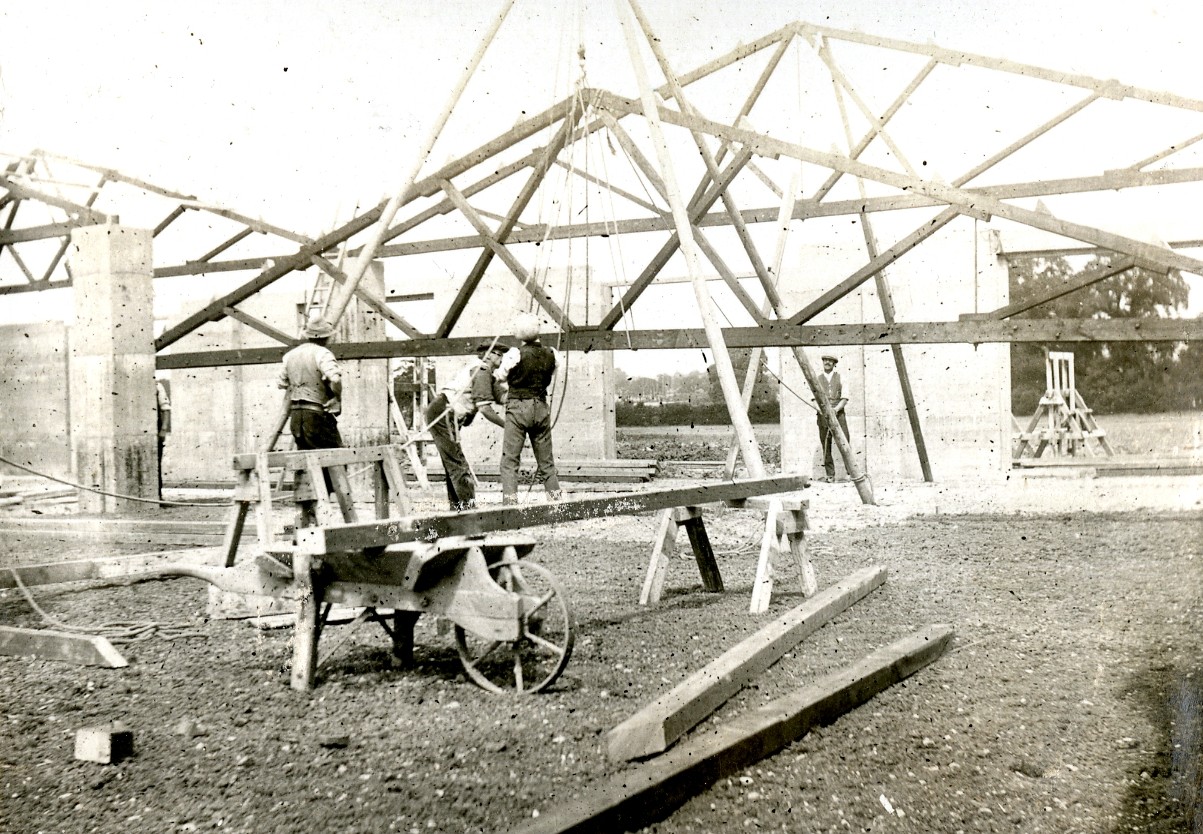
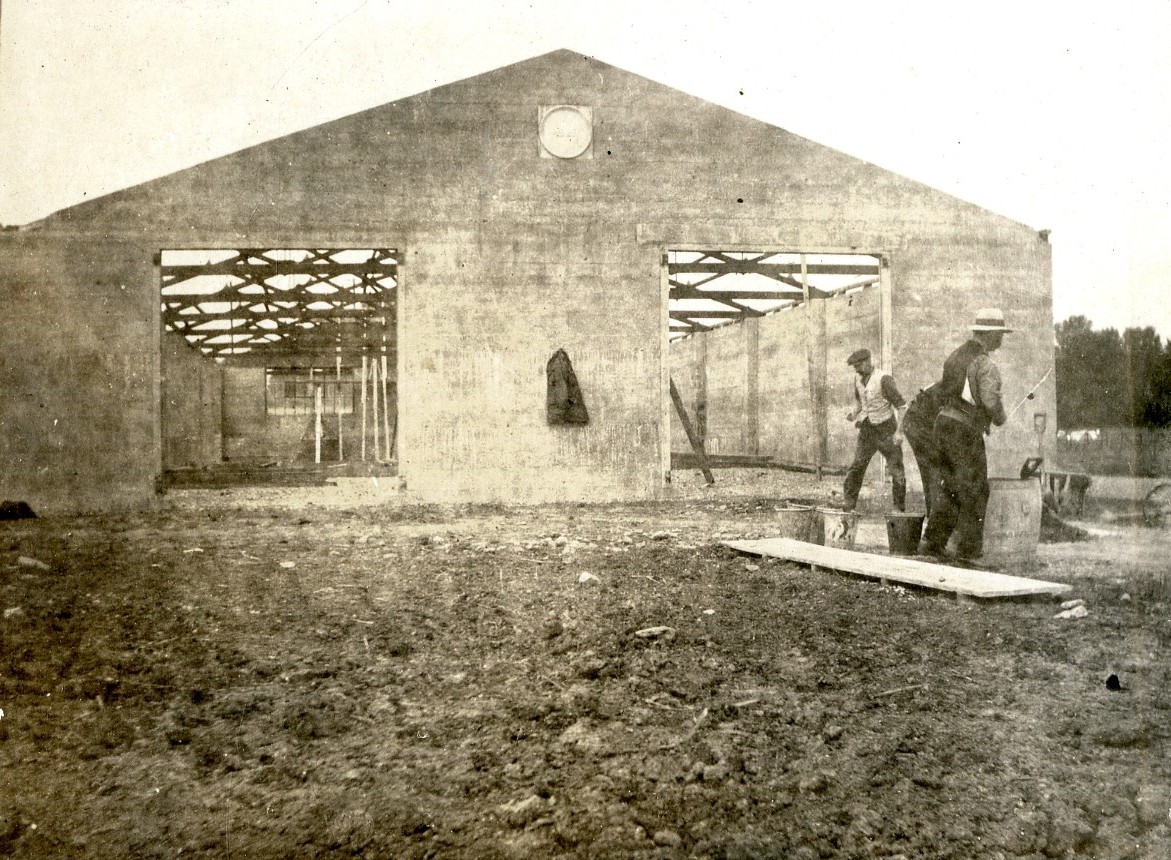
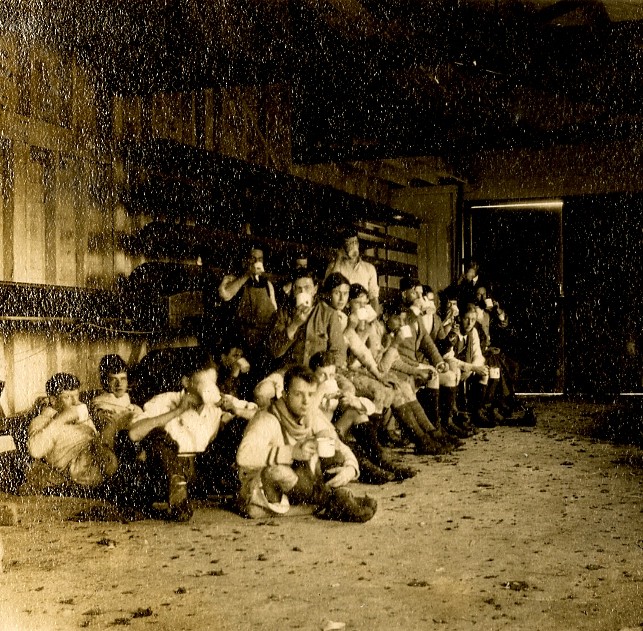
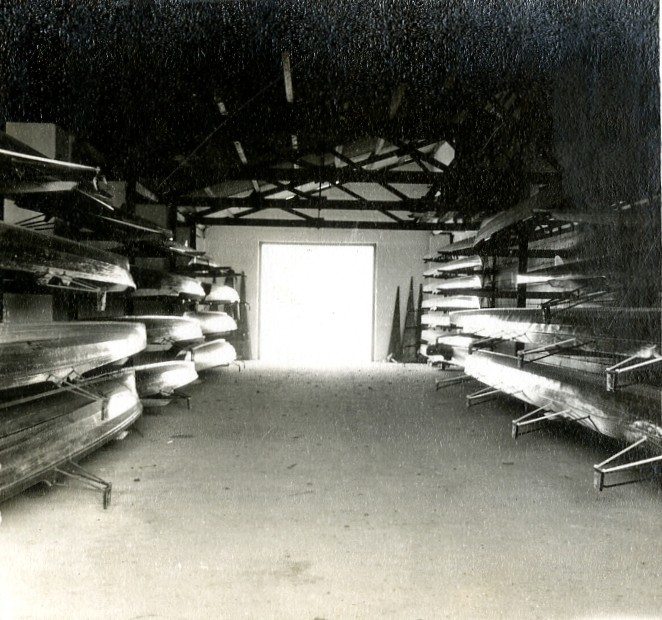
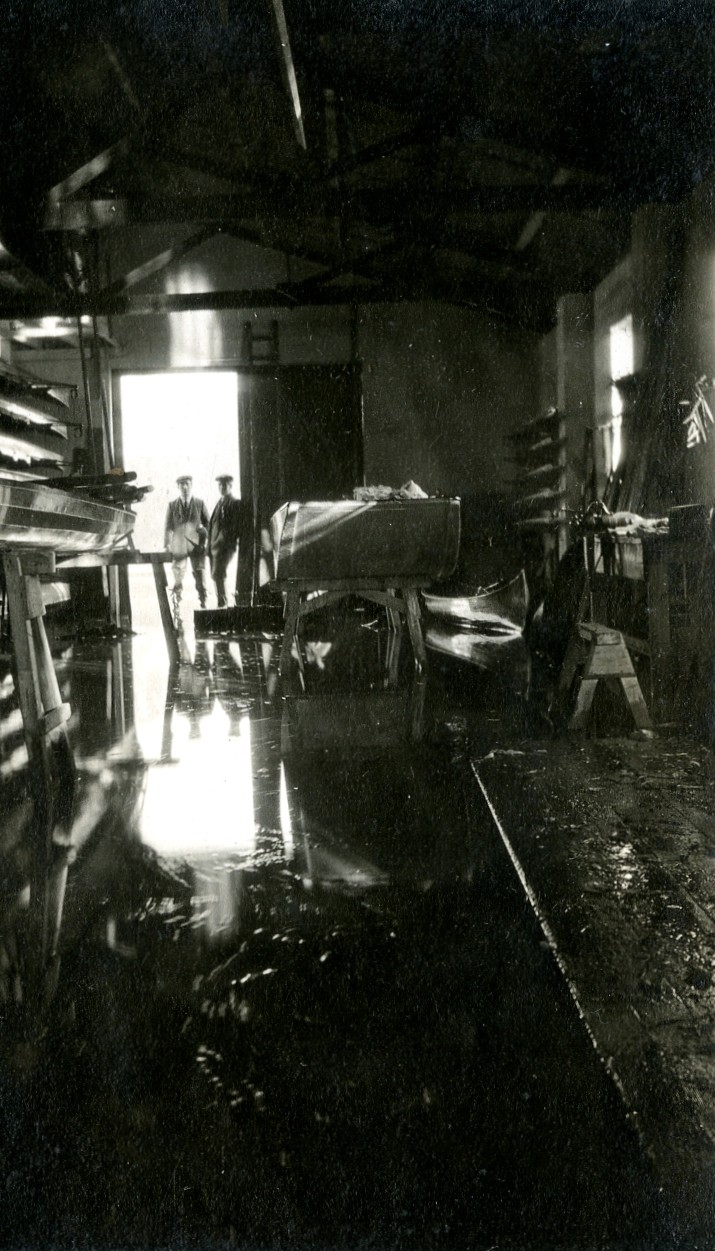
WE Bint took over from Partridge as boatman in 1921 as the building work was starting. ‘it is difficult to imagine anyone better fitted for the job. For twenty-five he was always at his post, smiling, wet or fine. He built many boats, including tub-fours and forty Fennies (Radley’s unique sculling boats). He was an expert with all rowing gear. And then he stayed on beyond the usual age, until 1946, to see us through the war, and for most of it he was single-handed. The Boat Club owes him a great debt.’ (Boyd, History of Radley College, p401)
1966 – The Howard Boathouse
A new boathouse with a new flat was built alongside the Hope Boathouse in 1966 and named after rowing coach Ronnie Howard.
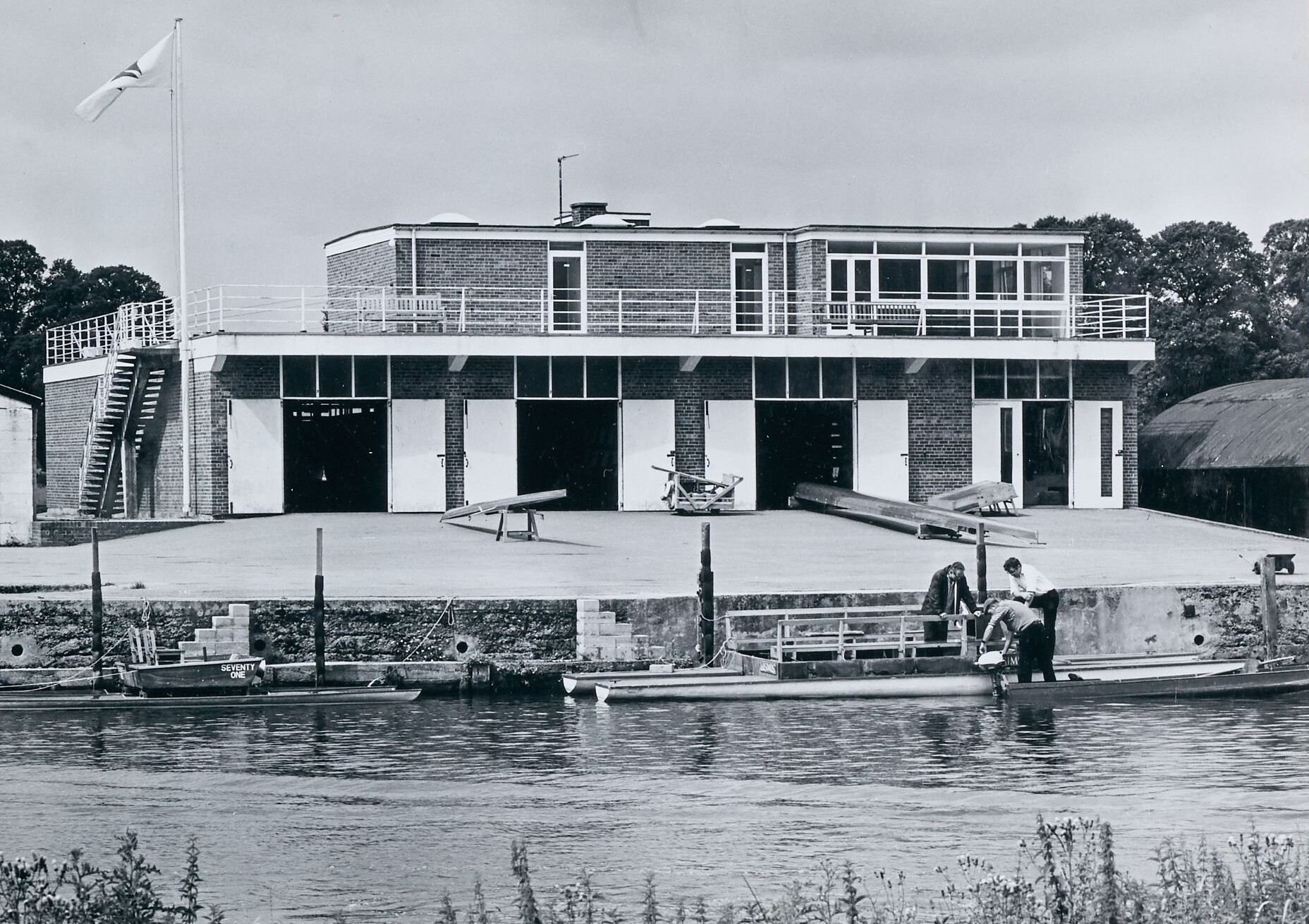
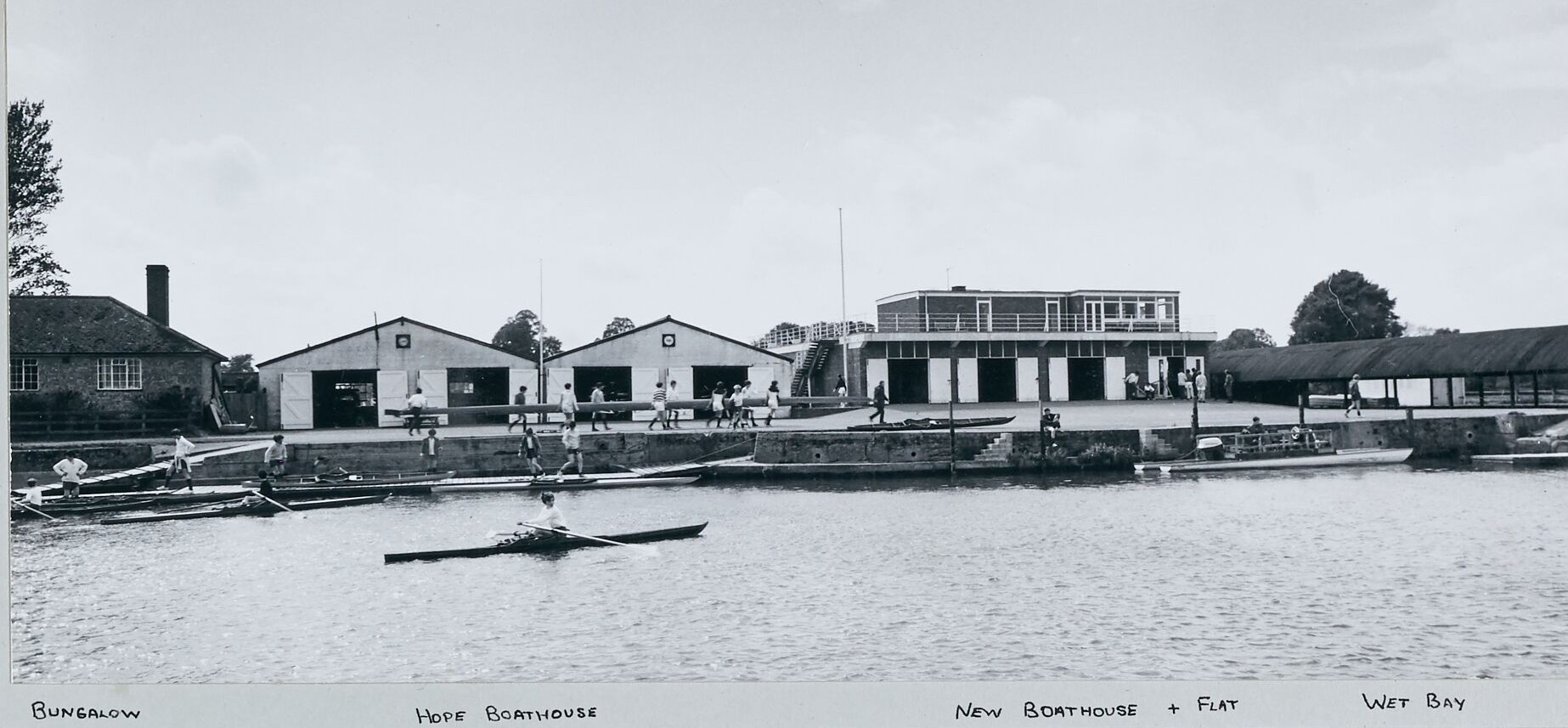
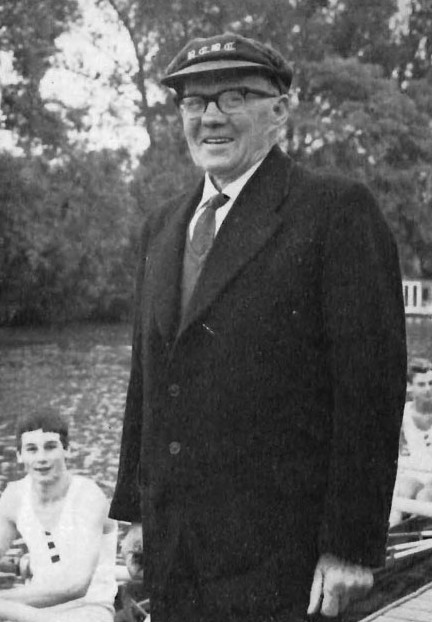
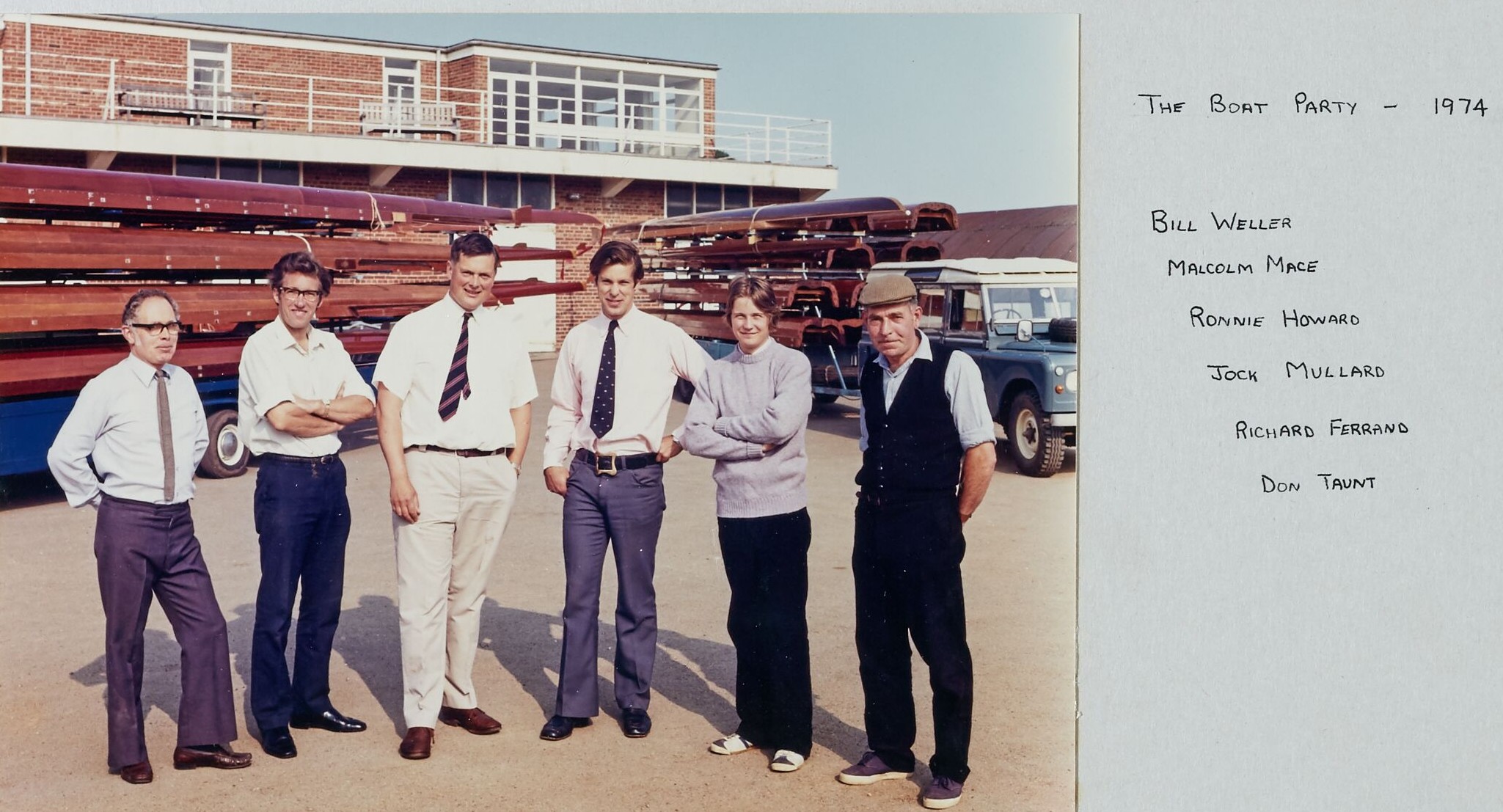
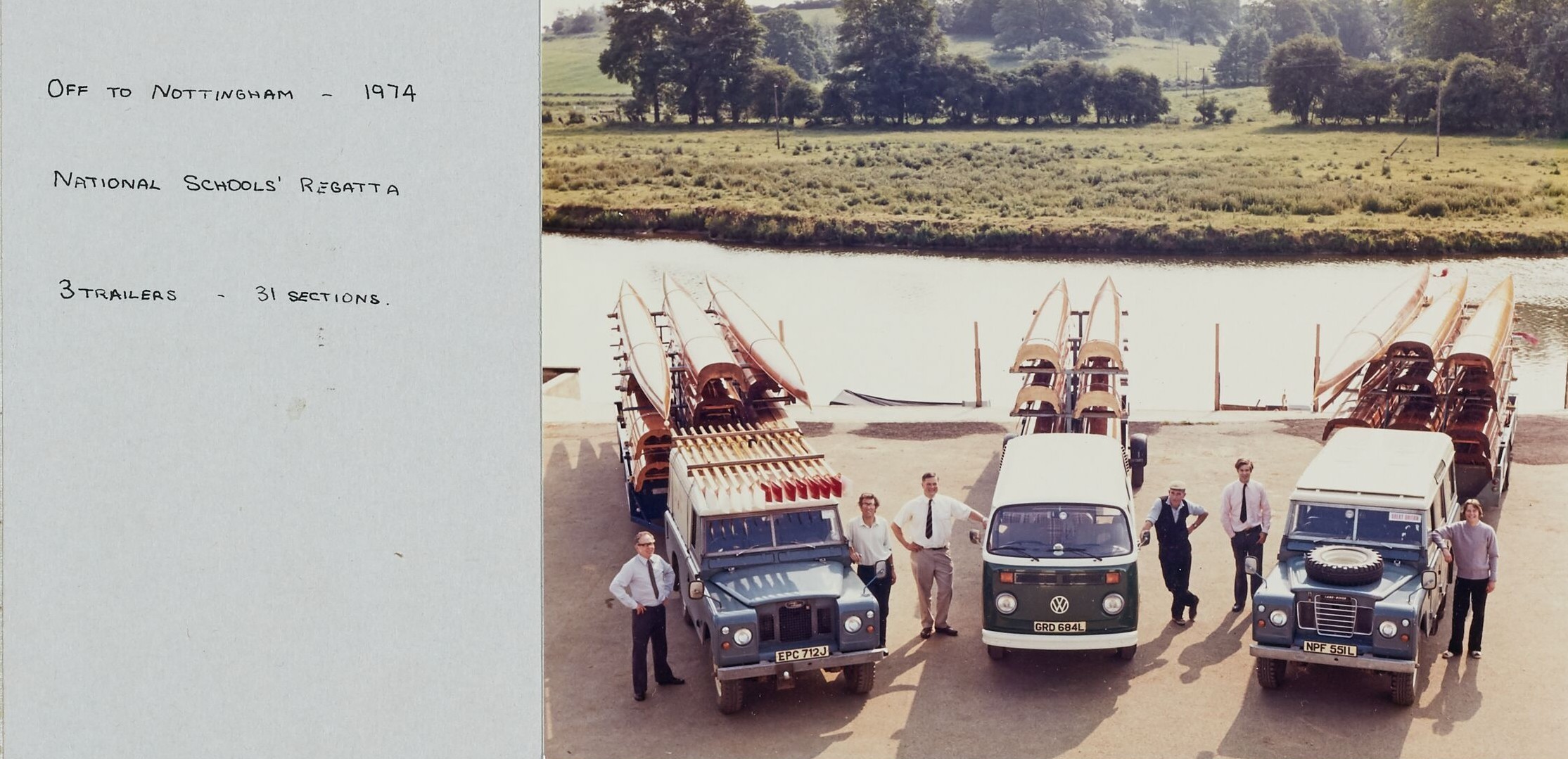
Mr Talboys succeeded WH Bint in 1947 and continued in post until the new boathouse was completed in 1966. Malcolm Mace then took over as boatman until 2004. Succeeded by Andy Thomas to the present.
Clare Sargent 2026
<<<More about rowing at Radley>>> Walter Woodgate’s earliest memories
<<<Read on>>> 1938 The Ladies’ Challenge Plate at Henley
<<<Read on>>> Boathouses
<<<Read on>>> Inter-Social Rowing
<<<Read on>>> Radley College v Tabor Academy, USA, 1938

